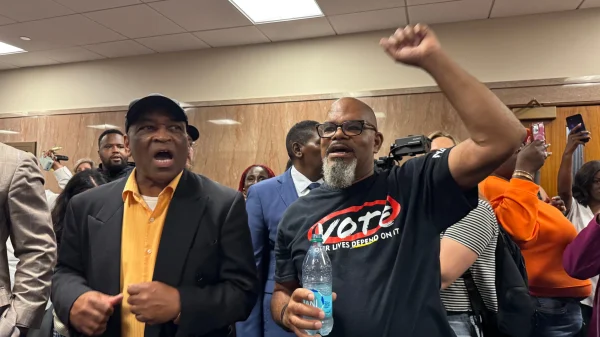
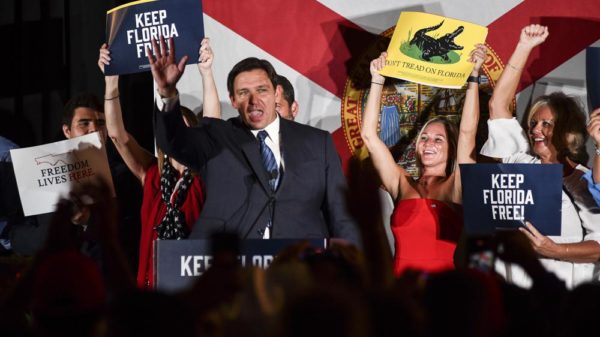
A wave of redistricting efforts is intensifying across the United States as Louisiana moves forward with a controversial congressional map and Georgia prepares to reopen its district boundaries ahead of the 2028 elections. The developments reflect a broader national struggle over voting maps following recent U.S. Supreme Court rulings that reshaped how race can be considered in district design.
Louisiana Moves Ahead With New Congressional Map
Lawmakers in Louisiana have advanced a new U.S. House map that could eliminate one of the state’s two majority-Black congressional districts before the upcoming elections. The proposal, backed by Republican senators, is expected to be taken up in a final Senate vote soon.
The revised map preserves a majority-Black district in New Orleans represented by Democratic U.S. Rep. Troy Carter, but significantly alters another district currently held by Democratic U.S. Rep. Cleo Fields. Under the proposal, that district would shift away from its current majority-Black configuration and instead be reorganized around more conservative-leaning areas in southern Louisiana.
Supporters of the plan argue it restores balance by reverting closer to earlier electoral maps. Critics, however, warn it could reduce minority representation in Congress and weaken protections under the federal Voting Rights Act.
Fields has not yet committed to seeking reelection, saying he will wait for final district boundaries. However, he emphasized he will not compete against Carter, underscoring growing uncertainty among Louisiana Democrats as the map changes unfold.
Supreme Court Ruling Drives Nationwide Map Changes
The redistricting push comes in the wake of a recent U.S. Supreme Court decision that struck down Louisiana’s previous congressional map, ruling that race had been used too heavily in its design. The ruling has prompted several Republican-led states to revisit district boundaries, particularly those with majority-minority seats.
Since the decision, states including Tennessee and Alabama have already implemented or advanced new maps that could shift political advantage in upcoming elections. South Carolina also considered similar changes, though its effort stalled in the state Senate.
Across the country, the redistricting battle has become increasingly partisan, with analysts estimating potential seat gains for both parties depending on how new maps are finalized.
Georgia Opens Early Path Toward 2028 Elections
In a significant development, Georgia Gov. Brian Kemp announced a special legislative session beginning June 17 to redraw state and congressional districts ahead of the 2028 election cycle. Unlike other states focusing on immediate electoral cycles, Georgia’s approach signals a longer-term strategy in shaping future political maps.
Kemp said the timing is intended to avoid disrupting the current election season, as ballots have already been cast in the state’s primary process. The move also comes amid political uncertainty over whether future governors might oppose or veto redistricting plans if delayed.
The proposal could affect multiple districts, including those currently represented by Black Democrats such as U.S. Rep. Sanford Bishop and several lawmakers in the Atlanta metropolitan area.
Democrats have strongly opposed the plan. U.S. Sen. Raphael Warnock condemned the effort, pledging resistance and accusing Republicans of attempting to weaken minority representation.
Broader Political Stakes Across Multiple States
Redistricting efforts are unfolding across roughly one-third of U.S. states, creating one of the most significant mid-decade map redrawings in recent history. The changes follow political pressure campaigns, shifting court interpretations, and competing strategies between Republicans and Democrats seeking electoral advantage.
Republicans argue that revised maps correct what they see as flawed race-based districting decisions. Democrats counter that the changes risk diluting minority voting strength and undermining civil rights protections established under federal law.
Legal Challenges and State-Level Impacts
In Louisiana, the current push follows a complex series of court rulings and legislative revisions over multiple election cycles. Earlier maps were struck down for violating voting rights protections, leading to repeated adjustments by lawmakers.


State Sen. Jay Morris, who sponsored the latest Louisiana proposal, said the revised map resembles configurations used in earlier elections that favored Republican outcomes.
Meanwhile, Louisiana Gov. Jeff Landry has delayed upcoming congressional primaries to allow time for district adjustments.
In Mississippi, Gov. Tate Reeves canceled a planned special session on judicial redistricting but indicated that broader map changes remain likely ahead of the 2027 and 2028 election cycles. The state continues to face legal scrutiny over whether current districts dilute Black voting power.
National Implications for 2028 Elections
Political analysts expect redistricting to remain a defining issue leading into the 2028 U.S. elections. With multiple states reconsidering boundaries, both parties are positioning themselves for potential gains in closely divided congressional races.
In Georgia, Republican leaders appear to be moving early to secure map advantages before possible shifts in gubernatorial control. In Louisiana, the outcome of the proposed House map could reshape representation for years to come, particularly in districts with significant minority populations.
As legal battles continue and additional states consider new maps, the redistricting landscape remains highly fluid, with outcomes likely to influence control of the U.S. House of Representatives in the next election cycle.