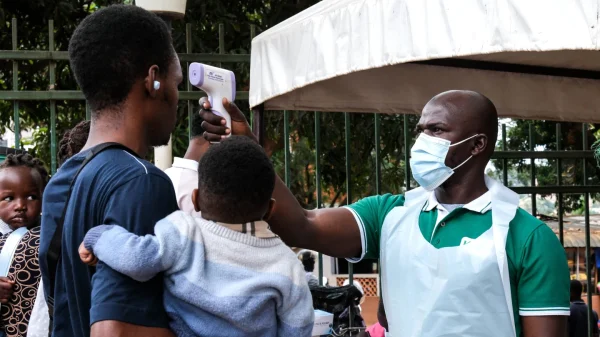
Health workers and aid volunteers responding to the deadly Ebola outbreak in eastern Democratic Republic of Congo are facing mounting hostility from local residents, complicating efforts to contain the rapidly spreading disease.
In the city of Bunia, which has become one of the centers of the outbreak, humanitarian workers say fear, misinformation, and public distrust are fueling attacks on medical teams and treatment facilities as suspected Ebola cases approach 1,000.
Aid Workers Face Threats While Raising Awareness
Volunteers with organizations such as the Red Cross are conducting door-to-door campaigns to educate communities about Ebola prevention and symptoms. However, many responders say they are increasingly being targeted by angry residents who accuse aid groups of spreading false information or exploiting the crisis.
Some volunteers reported being insulted, threatened, and even attacked with stones while carrying out public awareness campaigns in affected neighborhoods.
The outbreak involves the rare Bundibugyo strain of Ebola, a variant for which there is currently no approved vaccine or specialized treatment. Health officials warn that the lack of medical countermeasures makes community cooperation essential for controlling transmission.
Health Facilities Attacked Amid Rising Fear
Violence linked to the outbreak has escalated in recent days. Several Ebola treatment facilities have reportedly been attacked or destroyed by residents suspicious of the response efforts.
In one incident, armed individuals stormed a hospital treating Ebola patients, forcing medical workers to evacuate people receiving care. Elsewhere, a temporary treatment center operated by humanitarian organizations was set on fire, allowing multiple suspected patients to escape isolation.
Another facility was attacked after family members were prevented from retrieving the body of a relative suspected of dying from Ebola. Strict burial procedures are a key part of Ebola prevention because the virus can spread through contact with infected bodily fluids after death.
The attacks have heightened fears among international health agencies trying to stop the outbreak before it spreads further across the region.
Misinformation and Distrust Complicate Response
Public health experts say deep-rooted mistrust of authorities and aid organizations is one of the biggest challenges in controlling the outbreak.
Years of armed conflict, displacement, and insecurity in eastern Congo have left many communities suspicious of outsiders, including healthcare workers. False rumors about Ebola continue to circulate, with some residents denying the disease exists or claiming it is a foreign invention.
Humanitarian organizations say this skepticism discourages infected individuals from seeking treatment and makes contact tracing far more difficult.
Health specialists stress that building trust within local communities is just as important as medical treatment during an Ebola emergency. Without public cooperation, infected individuals may avoid hospitals, hide symptoms, or flee quarantine centers, increasing the risk of wider transmission.
Outbreak Continues to Expand
According to global health officials, the outbreak has already caused hundreds of suspected deaths and continues to spread rapidly across affected areas.
The World Health Organization has warned that the epidemic may be significantly larger than current confirmed figures suggest. Experts believe the outbreak circulated undetected for weeks before authorities identified the Bundibugyo strain as the cause.


Limited laboratory testing capacity, damaged infrastructure, and ongoing conflict have slowed emergency response operations in remote parts of eastern Congo.
Medical teams on the ground also report shortages of protective equipment and growing concerns that frontline health workers themselves are becoming infected. Several healthcare personnel in both Congo and neighboring Uganda have already tested positive while treating patients.
Cross-Border Risks Raise Regional Alarm
Uganda has confirmed a small number of Ebola-related cases connected to travelers arriving from Congo, increasing fears of regional spread.
Authorities in both countries have stepped up border monitoring, contact tracing, and public health awareness campaigns in an attempt to contain infections before they spread more widely.
Health experts emphasize that community engagement remains the most effective tool for controlling the outbreak, especially given the absence of a targeted vaccine for the Bundibugyo variant.
Aid organizations are urging local leaders, religious groups, and community volunteers to help rebuild trust and encourage residents to cooperate with medical teams.
As the outbreak intensifies, officials warn that overcoming fear and misinformation may prove just as critical as medical intervention in stopping the virus.