Authorities and residents in Uganda are expressing frustration over renewed global attention on the “Bundibugyo” strain of Ebola, a virus variant named after a remote western Ugandan district known more for cocoa farming and scenic mountain landscapes than disease outbreaks.
The concern comes as eastern Democratic Republic of Congo battles a growing Ebola outbreak linked to the Bundibugyo virus strain, with hundreds of infections reported and at least 160 suspected deaths across affected provinces.
A Quiet Ugandan District Drawn Into Global Headlines
Bundibugyo, located along Uganda’s border with Congo, is home to around 200,000 residents, many of whom rely on cocoa farming for their livelihoods. Despite its peaceful rural setting, the district’s name has become internationally associated with a dangerous Ebola subtype first identified there in 2007.
Health experts classified the outbreak at the time as a previously unknown form of Ebola, later officially named the Bundibugyo virus. The naming followed a long-standing scientific practice of identifying virus strains according to the locations where they were first detected.
The Ebola family already included other well-known strains such as the Sudan virus and the Zaire virus, both linked to regions where earlier outbreaks occurred. Ebola itself was originally named after a river in present-day Congo following the first recorded outbreak in 1976.
Ugandans Say the Name Creates Unfair Stigma
As the current Congo outbreak gains international attention, many Ugandans feel the continued use of the Bundibugyo name unfairly damages the district’s reputation and creates confusion about the outbreak’s location.
Ugandan government officials have emphasized that the present outbreak is centered in Congo, not Uganda. Government spokesperson Alan Kasujja publicly criticized the association, arguing that Bundibugyo’s identity should not be permanently tied to a deadly disease.
Local leaders and tourism advocates also fear that global headlines linking Uganda to Ebola could discourage travel and negatively affect the country’s image abroad.
Why the Bundibugyo Strain Worries Health Experts
Medical specialists say the Bundibugyo strain remains less studied than other Ebola variants, making it particularly concerning during outbreaks.
The virus first emerged in Uganda in 2007, where it killed at least 37 people before health authorities managed to contain it later that year. Another smaller outbreak linked to the same strain was reported in northeastern Congo in 2012.
Experts note that this year’s outbreak became more dangerous because the virus circulated in Congolese communities before officials identified Ebola as the source of illness. Delayed detection allowed infections to spread more widely before public health responses intensified.
Unlike some other Ebola strains, currently available vaccines and treatments are considered ineffective against the Bundibugyo variant, increasing the importance of rapid testing, contact tracing, and isolation measures.
Uganda Responds to Cross-Border Threat
Although Uganda has not been declared the center of the outbreak, authorities have confirmed several Ebola-related cases connected to neighboring Congo.
Among the reported cases was a Congolese patient who died in Kampala after seeking medical treatment. Ugandan officials later confirmed infections among individuals who had contact with the patient, including a healthcare worker and a driver.
In response, the Ugandan government has introduced stricter public health measures aimed at preventing wider transmission. Authorities have suspended some transportation links with Congo, increased border surveillance, and urged citizens to avoid physical contact such as handshakes.


President Yoweri Museveni also ordered the postponement of a major annual religious gathering expected to attract thousands of visitors from across the region.
Health officials say Uganda’s previous experience with Ebola outbreaks gives the country an advantage in handling the current threat. Uganda has faced multiple Ebola outbreaks over the past two decades, including a severe outbreak in 2000 that killed more than 200 people.
Contact Tracing Seen as Critical
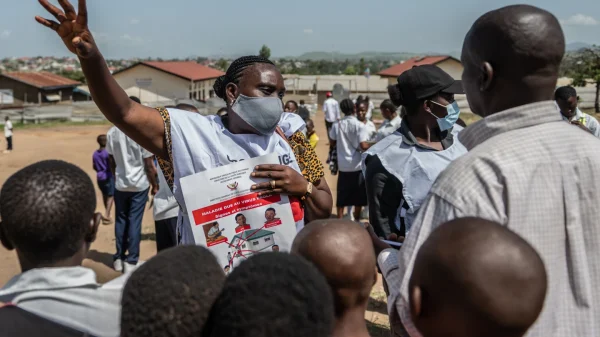
Public health specialists stress that aggressive contact tracing and strict infection-control procedures remain the most effective tools for containing the Bundibugyo strain.
The World Health Organization believes fruit bats are the natural carriers of Ebola viruses, which spread through contact with infected bodily fluids or contaminated materials.
With no approved vaccine specifically targeting the Bundibugyo variant, experts warn that early detection and swift isolation of infected individuals will be essential to stopping further spread across the region.