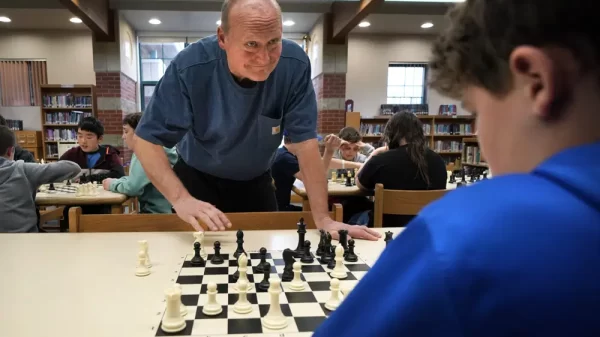
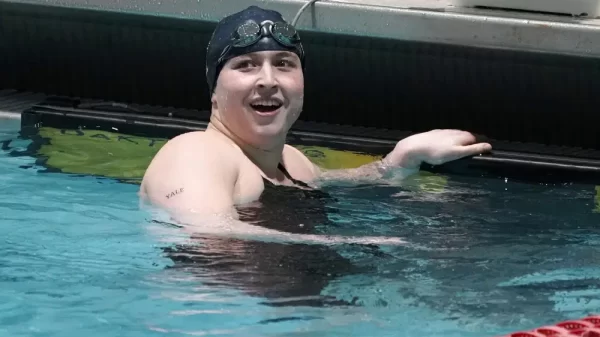
Organized sports remain widely viewed by Americans as an important part of childhood, offering children opportunities to build confidence, develop teamwork and stay active. But a new AP-Ipsos poll shows that participation is significantly more common among children from higher-income households.
The survey found that roughly half of U.S. parents with children in kindergarten through 12th grade say their children participate in organized sports. Among households earning at least $100,000 a year, however, participation rises to about 7 in 10. By comparison, roughly 4 in 10 parents in lower-income households report that their children play organized sports.
The gap highlights a persistent challenge in youth athletics: while families across income levels recognize the benefits, the cost of participation can make sports difficult to access for some children.
Costs can put organized sports out of reach
Youth athletics can involve much more than registration fees. Families may have to pay for uniforms, equipment, coaching, transportation, tournaments and travel.
About two-thirds of parents whose children play sports estimate that they spend as much as $2,000 each year on fees, equipment, training and travel. Around 2 in 10 report annual expenses between $2,000 and $5,000, while roughly 1 in 10 spend more than $5,000.
Higher-income sports households generally report spending amounts similar to families with lower incomes. However, the financial impact can be considerably greater for families with tighter budgets.
For some parents, keeping their children involved means making sacrifices elsewhere. Families may cut back on other household purchases or rely on contributions from relatives to cover sports-related expenses.
Parents see broad benefits from youth athletics
Despite the financial and logistical pressures, Americans overwhelmingly believe organized sports can benefit children.
The poll found that most adults consider learning teamwork, improving physical fitness, developing perseverance, making friends and understanding commitment among the important benefits of youth sports. Many also view athletics as a way to reduce children’s time spent on phones, computers and other technology.
Parents who have seen their children participate often point to improvements in confidence and social development as well as physical fitness.
Swimming, soccer, basketball and baseball or softball are among the sports commonly played by children, according to the survey.
Time and travel create additional challenges
Money is not the only obstacle facing sports families. About 8 in 10 parents with children in organized sports say scheduling, logistics or the time required for activities creates at least some difficulty for their household.
Travel, club and team fees, equipment and uniform expenses are also frequently cited as challenges. Competitive and club programs can require families to devote substantial amounts of time to practices, games and tournaments.
Even with those demands, approximately 8 in 10 sports parents say they feel extremely or very proud of their children’s participation, with a similar proportion describing themselves as happy about it.
College opportunities are part of the calculation
For some families, youth sports are also viewed as a possible pathway to future educational opportunities.


About 8 in 10 sports parents say improving a child’s chances of getting into college is at least a minor potential benefit of playing organized sports. Roughly 6 in 10 say the possibility of an athletic scholarship or stronger college application has played some role in their decision to enroll their child.
However, only about 3 in 10 say those considerations played a major role.
The poll also found differences based on household income. Parents from less affluent households were more likely to say potential college admissions advantages, athletic scholarships or future NIL earnings played a major role in their decision. Higher-income parents were more likely to say such factors had no role.
Most parents focus on the experience
Despite hopes about college and scholarships, many parents say they primarily value sports for the immediate benefits they provide.
Parents who played organized sports themselves are generally positive about the experience. About three-quarters say sports had a mostly positive effect on their childhood, while around 6 in 10 believe the experience positively affected their adult lives.
For many families, the goal is therefore less about producing professional athletes and more about helping children become healthier, more confident and socially connected.
The survey suggests that Americans broadly agree on the value of youth sports, but the income divide in participation underscores a larger question: how can communities make organized athletics accessible to children whose families cannot easily absorb the costs?
About the poll
The AP-Ipsos survey was conducted July 21-26, 2026, among 1,737 U.S. adults using Ipsos’ probability-based KnowledgePanel. The survey included 510 parents of school-aged children who participate in youth sports. The margin of sampling error was plus or minus 2.7 percentage points for all adults and plus or minus 4.9 percentage points for sports parents.