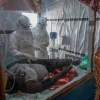
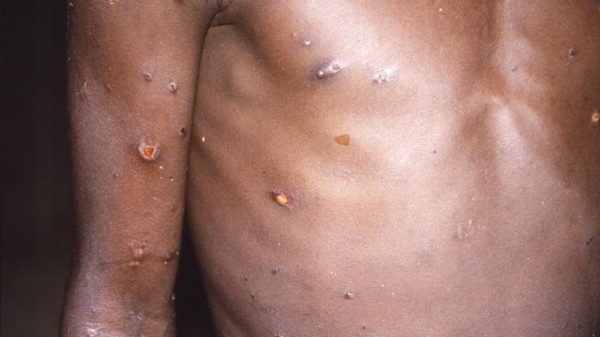
NIZI, Congo — Health workers battling a rapidly expanding Ebola outbreak in eastern Congo are struggling to track infections as the virus increasingly reaches people who were never identified as contacts of previous patients.
Community surveillance teams in affected areas investigate dozens of alerts every day, searching for people who may have been exposed and trying to move suspected patients into medical care before they can infect others.
But the scale of the outbreak is putting the system under severe pressure. Between 60% and 70% of newly identified Ebola cases are reportedly occurring among people who were not previously being monitored as contacts.
That means health authorities can discover infections only after patients develop symptoms, increasing the possibility that the virus will spread through additional chains of transmission.
“We are chasing the virus; the virus is ahead of us,” WHO regional director for Africa Dr. Mohamed Yakub Janabi said this week.
Death Toll Rises Rapidly
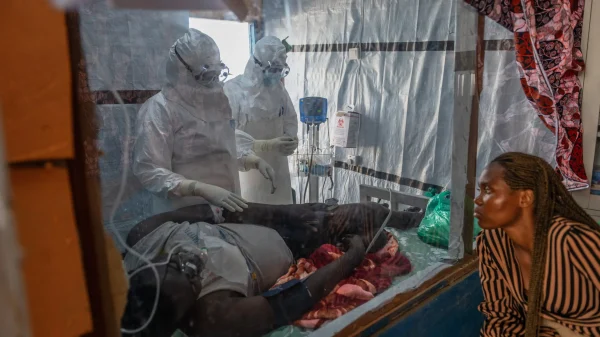
Government figures show that the outbreak has resulted in more than 2,200 deaths from over 4,700 reported cases.
The death toll has accumulated at a significantly faster rate than during the 2014-16 Ebola epidemic in West Africa, which remains the deadliest Ebola outbreak on record and killed more than 11,000 people.
The current outbreak is caused by the Bundibugyo Ebola virus, a relatively rare strain for which there are currently no approved vaccines or treatments, although clinical trials are underway.
The United Nations has announced an additional $30.5 million in emergency funding to support efforts to contain the outbreak.
Health Workers Face Exhausting Conditions
In Nizi, surveillance teams reportedly receive around 60 to 70 alerts each day. Workers travel through communities, investigate suspected cases, locate contacts and encourage people with symptoms to seek medical treatment.
The workload can continue late into the night.
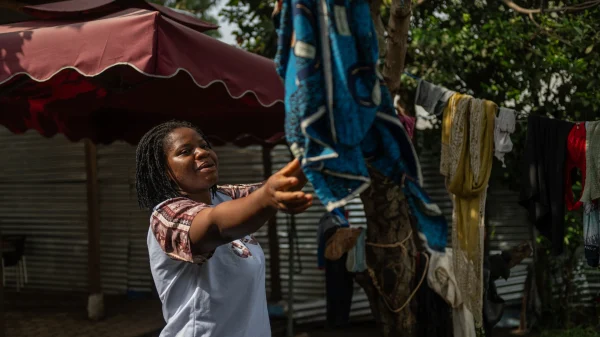
Community health workers also face shortages of basic protective supplies. Ana Ndroy Kasime, who conducts door-to-door outreach, said workers sometimes lack equipment such as protective footwear and disinfectant.
She said some community workers have been purchasing disinfectant with their own money.
The lack of resources is adding to concerns about worker safety as the epidemic continues to expand.
Unpaid Staff Add to the Pressure
The Ebola response is also being affected by disputes over health worker salaries.


Health workers at the Nizi Treatment Center went on strike Thursday, temporarily forcing the facility to close. Some workers involved in the response reportedly have not received their salaries for more than three months.
Africa CDC chief Jean Kaseya has urged the Congolese government to settle the outstanding payments, saying health workers should not be expected to continue operating under dangerous conditions without compensation.
Government officials have attributed the delays to payroll verification and a transition from cash payments to mobile money.
Community health workers who have received payments say their monthly income remains low compared with the risks and demands of the job.
Conflict and Displacement Complicate Contact Tracing
Eastern Congo’s security problems are making the Ebola response even more difficult.
Armed groups operate across parts of the region, while fighting has displaced communities and forced people to move between areas. Mining activity also contributes to population movements, making it harder for surveillance teams to locate people who may have been exposed.
Poor roads and insecurity can prevent health workers from reaching remote communities. Some aid and medical personnel have been forced to leave dangerous Ebola hotspots for safer areas.
The situation is particularly serious in Ituri province, which accounts for the overwhelming majority of reported Ebola cases and deaths in the country.
Misinformation and Community Distrust
Health authorities are also dealing with misinformation and resistance within some communities.
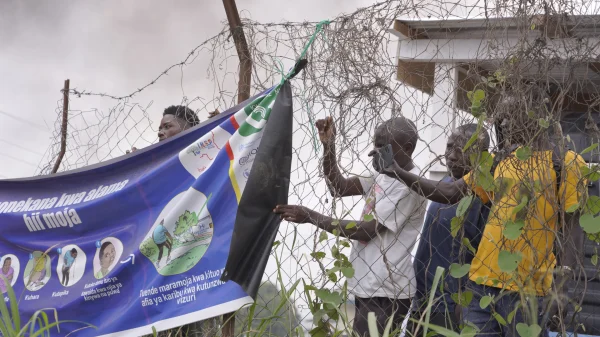
Local officials have recorded attacks against health facilities and medical personnel. In one reported incident, residents entered an Ebola treatment facility after attacking a hospital, forcing patients and workers to temporarily flee.
Some community anger has been linked to misinformation about Ebola and restrictions surrounding traditional burial practices. Health officials have long warned that contact with bodies of Ebola victims can increase the risk of transmission.
Despite these difficulties, surveillance teams in Nizi say cooperation with residents has improved as communities have become more familiar with their work.
Surveillance Remains Critical
For health workers on the ground, effective contact tracing remains one of the most important tools for stopping the outbreak from developing into larger transmission chains.
But the combination of exhausted staff, unpaid workers, limited protective equipment, insecurity, population displacement and difficult transportation is making that task increasingly difficult.
Despite the pressure, community health workers say they remain committed to protecting residents.
The challenge now is to strengthen the surveillance system quickly enough to regain ground against a virus that is spreading faster than health teams can track it.