BIDUR, Nepal — A school principal in Nepal is being credited with saving the lives of hundreds of students after acting swiftly to evacuate his school as catastrophic floodwaters surged through the Trishuli Valley.
Rajendra Dawadi, head teacher of Tribhuvan Trishuli Secondary School in Nuwakot district, was alerted to the rapidly developing danger while classes were underway. After receiving warnings about flooding in the area and seeing the threat escalate, he immediately ordered students and staff to leave the campus and move toward higher ground.
About 900 students were at the school that morning. Dawadi also contacted bus drivers and instructed them not to bring additional students to the campus.
One school bus had already arrived when Dawadi told its driver to turn around. The decision proved critical. The bus crossed a newly built bridge, while an older bridge nearby collapsed shortly afterward as floodwaters intensified.
Dawadi followed the students toward a nearby hillside. From there, he watched as floodwater, mud, rocks and debris overwhelmed the school building where he had once studied and later spent years teaching.
Two members of the school staff were unable to escape and remain missing.
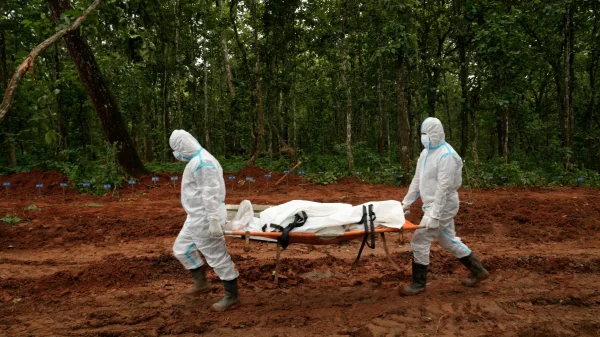
The devastating floods followed a glacial collapse in the Himalayan region and caused widespread destruction across Nepal and Tibet. Hundreds of people have been killed, while thousands more have reportedly been left missing as rescue teams continue searching affected areas.
For Dawadi, the loss of the school carries a deeply personal significance. The institution was not only his workplace but also the place where he received his own education.
“I have no words,” he said, describing the destruction and his connection to the school.
The disaster has also severely disrupted education across northern Nepal. Save the Children reported that at least 69 schools were destroyed, placing the education of nearly 19,000 children at risk.
The students who escaped Tribhuvan Trishuli Secondary School have now been left to cope with both the loss of their classrooms and the emotional impact of the disaster. Fourteen-year-old student Suvina Tamang said she hopes to thank Dawadi personally for helping save her life.
Parents have also expressed their gratitude. When Dawadi returned to the school site days after the flood, some parents embraced him and cried as they thanked him for evacuating their children in time.
Despite the praise, Dawadi does not consider himself a hero. He says he was simply carrying out his responsibility as a principal.
His focus has now shifted toward helping students recover. He believes many will need psychological support before they can return to normal lessons. Temporary arrangements may also be necessary while authorities work to rebuild the destroyed school.
Dawadi is urging the Nepalese government to prioritize rebuilding schools and restoring education for children whose studies have been interrupted by the disaster.


His decision to act before the full scale of the flooding became apparent turned a potentially far greater tragedy into a story of survival — giving hundreds of families a reason to be grateful amid one of Nepal’s most devastating recent disasters.