Republican Campaign Spending Surges
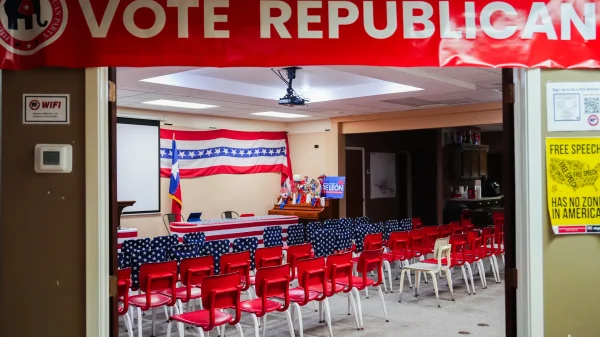
Republican candidates and groups aligned with President Donald Trump are directing substantial financial resources toward states and congressional districts that have historically favored the party, reflecting the increasingly competitive nature of the 2026 midterm elections.
From Texas and Ohio to Iowa and Alaska, Republican campaigns are confronting concerns over economic conditions, fuel prices and voter dissatisfaction with federal policies. At the same time, Democratic candidates are expanding their efforts in several states that have traditionally been Republican strongholds.
Data analyzed by The Associated Press from AdImpact shows that three Trump-aligned groups — MAGA Inc., No Going Back PAC and Safety and Affordability PAC — spent more than $163 million on advertising and reserved airtime between September 1 and September 23.
More than $63 million of that spending went toward states and congressional districts where Trump won by at least 10 percentage points in the 2024 presidential election.
The spending covered 12 House districts and three states with major Senate contests.
Texas Senate Race Draws Major Spending
Texas has emerged as one of the biggest areas of Republican campaign investment.
Republican groups have committed nearly $107 million to advertising and future ad reservations aimed at supporting Attorney General Ken Paxton in his Senate campaign against Democratic state Rep. James Talarico.
The amount represents nearly four times the Democratic advertising expenditure in the race, according to AdImpact. Trump carried Texas by almost 14 percentage points in 2024.
The heavy investment illustrates the importance Republicans are placing on defending seats and candidates even in states that have traditionally been considered firmly Republican.
Ohio Race Also Sees Millions in Advertising
Ohio is another major focus of campaign spending.
Republican groups have spent more than $152 million to support Sen. Jon Husted, while approximately $90 million has been spent on behalf of Democratic nominee Sherrod Brown, according to AdImpact.
Ohio Republican strategist Terry Casey described the national and economic environment as uncertain for both parties, with voter turnout expected to play an important role in determining the results.
Democrats Expand Their Reach Into Republican States
Democrats are also investing heavily in states that Trump won by significant margins in 2024.
Texas, Iowa, Ohio and Alaska have all attracted increased attention as Democratic candidates attempt to make traditionally Republican territory more competitive.


Kansas has also drawn attention. Vice President JD Vance recently visited the state to campaign for Republican Sen. Roger Marshall, who is facing Democratic challenger Adam Hamilton.
Democratic activists have pointed to growing enthusiasm around Hamilton’s campaign, while Republicans continue working to maintain their support among voters.
Vance has also campaigned in Iowa, Ohio, Maine and North Carolina. Trump has likewise increased his campaign activity, including a rally in North Carolina alongside former Republican National Committee Chairman Michael Whatley.
Candidates Navigate Trump and Economic Issues
Some Republican candidates have sought to distinguish themselves from Trump on issues that are creating political challenges.
In Wisconsin and Michigan, Republican gubernatorial nominees Tom Tiffany and John James have called for an end to the war in Iran.
Michigan Republican Senate candidate Mike Rogers has also highlighted the conflict and rising household costs in campaign advertising. He has called for measures including suspending gas taxes and addressing fuel prices.
In Iowa, Republican Rep. Ashley Hinson has similarly raised concerns about the effect of the conflict and higher costs on families.
However, Hinson did not join Iowa Republicans Zach Nunn and Mariannette Miller-Meeks in voting with Democrats on a resolution aimed at limiting Trump’s ability to continue military action without congressional approval.
Immigration Creates Another Point of Tension
Immigration policy has also become a sensitive issue for some Republican candidates.
Rep. Maria Elvira Salazar, who is defending her South Florida congressional seat in a competitive district with a large Hispanic population, recently released an advertisement criticizing aspects of the Trump administration’s immigration approach.
Other Republican candidates have reduced prominent references to Trump on their campaign websites, including Florida gubernatorial candidate Byron Donalds, according to reports.
These moves illustrate the differing approaches Republican candidates are taking as they balance their relationship with Trump against the political concerns of voters in their individual states and districts.
Republican Leaders Say They Are Focused on Turnout
Despite concerns about several races, Republican officials say they have significant financial resources available for the final stage of the campaign.
Republican National Committee spokesperson Natalie Baldassarre said the party is concentrating on voter turnout and is aware of the historical tendency for the party controlling the White House to lose congressional seats during midterm elections.
Republican officials remain focused on defending and expanding their congressional majorities.
White House spokesperson Davis Ingle has also emphasized Trump’s role in the Republican campaign effort, describing him as the party’s central political figure and messenger.
Cost of Living Remains a Major Campaign Issue
Economic concerns are becoming an increasingly prominent theme as candidates campaign ahead of November’s elections.
Ohio Republican Sen. Bernie Moreno acknowledged that voters continue to face financial pressures while arguing that Republicans need additional time to pursue their agenda.
Louisiana Sen. John Kennedy has similarly acknowledged concerns about the cost of living and voter uncertainty surrounding the war in Iran.
Senate Majority Leader John Thune of South Dakota offered a cautious assessment of the political landscape, describing the election environment as highly competitive.
With campaigns entering the final stretch, both parties are devoting significant resources to races across the country. The scale of spending and increased competition in traditionally Republican states underscore the importance both parties are placing on turnout and voter concerns ahead of the November midterms.