









President Donald Trump’s order for U.S. and Israeli strikes that killed Iranian Supreme Leader Ayatollah Ali Khamenei marked a sharp shift from his earlier caution on regime change in Tehran. Just eight months ago, Trump had rejected Israeli proposals to target Khamenei, concerned it could destabilize the region.
From Caution to Action
- June 2025: Trump allowed strikes on Iranian nuclear facilities but drew a red line on killing Khamenei, issuing thinly veiled threats instead.
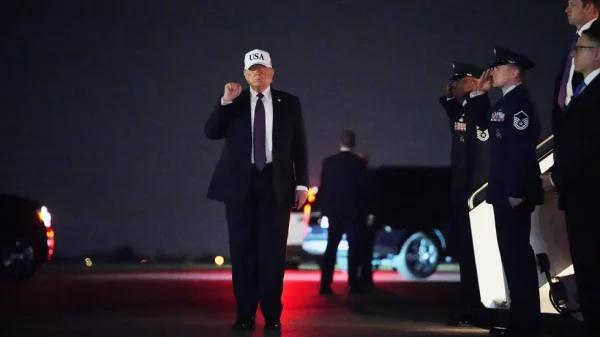
- March 2026: Trump, coordinating with Israeli Prime Minister Benjamin Netanyahu, authorized a military plan that successfully targeted Khamenei, Iran’s defense minister, and the commander of its Revolutionary Guard.
“There was not a thing he, or the other leaders that have been killed along with him, could do,” Trump said, framing the strikes as a historic opportunity for the Iranian people.
Drivers of the Decision
- Iran’s Rejection of Diplomacy: Despite months of negotiations and offers—including free nuclear fuel for civilian programs—Iran continued to pursue enriched uranium for weapons purposes, frustrating U.S. officials.
- Past Military Precedents: Trump’s previous actions, including withdrawing from the Iran nuclear deal and ordering the drone strike on General Qassem Soleimani, showed limited negative fallout, reinforcing his tolerance for risk.
- Geopolitical Calculations: Trump and aides viewed the strikes as a way to pressure Tehran while demonstrating U.S. military capability, especially after observing Iran’s weakened economy and military post-2025 war.
- Leverage from Other Operations: Success in prior interventions, such as the Venezuelan operation against Nicolás Maduro, provided confidence in deploying a massive military presence to achieve objectives quickly and decisively.
Risk Assessment and Public Messaging
- Trump’s administration publicly highlighted Iran’s ballistic missile program as a threat to justify the strikes.
- Vice President JD Vance and Secretary of State Marco Rubio reassured that the operation would not draw the U.S. into a prolonged conflict.
- The timing followed recent diplomatic efforts that failed to elicit Iranian compliance, signaling that Trump had exhausted non-military options.
“The way this unfolded was inevitable, because there was no way that the Ayatollah was going to show flexibility,” said Jonathan Schanzer, a former Treasury Department official.
Implications
Trump’s actions represent a dramatic recalibration of U.S. risk tolerance, moving from measured strikes to regime-targeted military intervention. The decision underscores the administration’s willingness to combine strategic leverage, military capability, and diplomacy to achieve objectives in the Middle East.