The United States has initiated a sweeping naval blockade of Iranian ports, marking a dramatic escalation in tensions between Washington and Tehran amid an ongoing regional conflict. President Donald Trump confirmed that American forces began enforcing the blockade on Monday, describing the move as necessary to counter what he called Iran’s attempts to “blackmail” global trade.
Strategic Pressure on Tehran
According to U.S. officials, the blockade targets all vessels entering or leaving Iranian ports along the Persian Gulf and the Gulf of Oman. The action is intended to pressure Iran into reopening the strategically vital Strait of Hormuz and returning to negotiations aimed at ending the six-week-long conflict.
The Strait of Hormuz remains one of the world’s most critical energy routes, with roughly 20% of global oil shipments passing through it under normal conditions. Disruptions in the area have already driven oil prices sharply higher, with ripple effects felt across international markets.
Immediate Impact on Shipping
Early signs of disruption emerged quickly. Maritime tracking data indicated that at least two oil tankers reversed course shortly after the blockade began. While transit between non-Iranian ports remains technically open, vessels in the region are encountering heightened military presence and growing uncertainty.
The United Kingdom’s maritime security agency warned that the blockade effectively covers Iran’s entire coastline, including key energy infrastructure hubs.
Iran Issues Strong Warnings
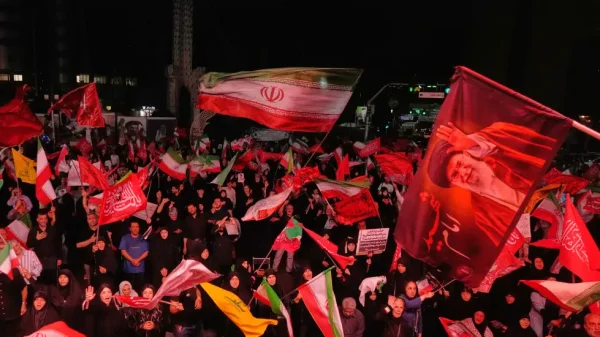
Iran responded with forceful rhetoric, signaling potential retaliation across the region. Officials warned that if Iranian ports are restricted, other regional ports may also face security risks. A statement carried by state media emphasized that maritime safety in the Persian Gulf must be “shared by all or by none.”
Senior Iranian figures dismissed the U.S. move as political pressure but cautioned it could further destabilize global markets. Tehran has also raised the possibility of targeting U.S.-allied nations it accuses of supporting military actions against it.
Fragile Diplomacy Continues
Despite rising tensions, diplomatic efforts remain ongoing. Sources familiar with negotiations say both sides are considering another round of talks following a failed weekend meeting that ended without agreement.
President Trump indicated that communication channels remain open, suggesting that Iran has shown interest in resuming dialogue. However, major sticking points persist, including Iran’s nuclear program, sanctions relief, and demands for war-related compensation.
Economic and Global Risks
The blockade has intensified fears of a broader economic fallout. Oil prices have surged close to $100 per barrel, compared to approximately $70 before the conflict began. Analysts warn that prolonged disruption could lead to higher fuel and food costs worldwide, further straining already fragile economies.
Experts also question the long-term effectiveness of the blockade, noting that enforcing such a measure could prove complex and potentially risky for U.S. forces operating in the region.
Legal and Military Uncertainty
Under international law, naval blockades must be applied impartially and allow for humanitarian access. Legal analysts are closely watching how the U.S. enforces these rules, particularly regarding aid shipments to Iran.
Meanwhile, the U.S. military has deployed significant naval assets to the region, although details about enforcement tactics remain limited.
Ceasefire on the Brink
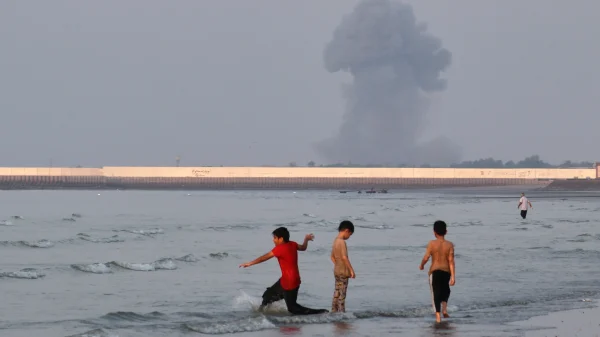
The blockade comes as a temporary ceasefire—set to expire on April 22—hangs in the balance. The conflict, which began in late February, has already claimed thousands of lives across Iran, Lebanon, Israel, and neighboring states.
With tensions escalating and diplomacy uncertain, the situation in the Middle East appears increasingly volatile, raising concerns about the potential for a wider regional conflict.