Dubai, June 10, 2026: The Middle East witnessed a dangerous escalation on Wednesday after the United States launched airstrikes against Iranian military targets, following Washington’s accusation that Tehran was responsible for the loss of a U.S. Army Apache helicopter near the Strait of Hormuz.
The latest military exchange has intensified fears of a broader regional conflict, threatening ongoing diplomatic efforts aimed at stabilizing tensions between the United States, Iran, and Israel.
U.S. Conducts Strikes on Iranian Military Infrastructure
According to U.S. military officials, American fighter aircraft carried out precision strikes targeting Iranian air-defense systems, surveillance facilities, and command-and-control installations near the strategic Persian Gulf region.
The operation was described by U.S. Central Command as a measured response to recent attacks against American forces and commercial shipping operating in regional waters.
Iranian authorities acknowledged that military sites near Bandar Abbas and Qeshm Island were struck but did not immediately release details regarding casualties or infrastructure damage.
Iran Responds with Regional Missile Attacks
Shortly after the U.S. operation, Iran launched retaliatory attacks targeting locations associated with American military presence across the region.
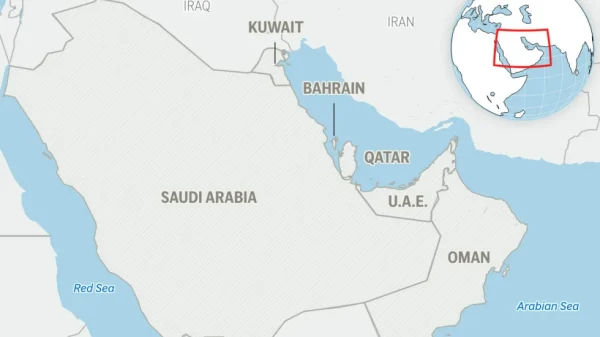
Authorities in Bahrain and Kuwait activated air-defense systems and emergency alerts as incoming threats were detected. Meanwhile, Jordan’s military reported intercepting five missiles that were allegedly aimed at the Muwaffaq Salti Air Base, a facility known to host U.S. military assets.
Jordanian officials confirmed that no casualties were reported and that security teams were investigating debris recovered from the intercepted projectiles.
Helicopter Incident Becomes Flashpoint
The crisis intensified after the crash of a U.S. Army AH-64 Apache helicopter near the Strait of Hormuz.
American officials stated that preliminary investigations indicate the aircraft collided with an Iranian drone during a patrol mission off the coast of Oman. While investigators have not publicly determined whether the collision was intentional, the incident quickly became the catalyst for the latest round of military action.
Both crew members survived the crash and were rescued during a complex recovery mission involving autonomous maritime technology and military aircraft.
U.S. President Donald Trump publicly blamed Iran for the incident and signaled that Washington would respond to what it viewed as an attack on American forces.
Regional Stability Under Increasing Pressure
The renewed hostilities come despite ongoing international mediation efforts aimed at converting a fragile ceasefire into a lasting peace agreement.
Diplomatic negotiations have faced repeated setbacks as both Washington and Tehran continue to disagree over key issues, including sanctions relief, frozen assets, and Iran’s stockpile of highly enriched uranium.
The situation has been further complicated by continued fighting involving Israel and Hezbollah in Lebanon, creating multiple flashpoints across the region.


Economic Impact Felt Beyond the Middle East
Since the outbreak of hostilities earlier this year, the conflict has had significant economic consequences globally.
Energy markets have experienced repeated volatility, while disruptions to shipping routes and supply chains have contributed to rising costs for fuel, food, and essential goods in several countries.
The Strait of Hormuz remains one of the world’s most critical energy transit corridors, making any escalation in the area a major concern for international markets and governments.
Shipping Security Concerns Continue
Security threats have also expanded into key maritime routes.
A cargo vessel operating in the Gulf of Aden reportedly came under attack from armed individuals traveling in a small boat. The crew exchanged fire and successfully repelled the assault.
Although no group immediately claimed responsibility, maritime security analysts note that regional instability has increased risks for commercial shipping, particularly in waters near Yemen and the Red Sea.
Diplomatic Efforts Face New Challenges
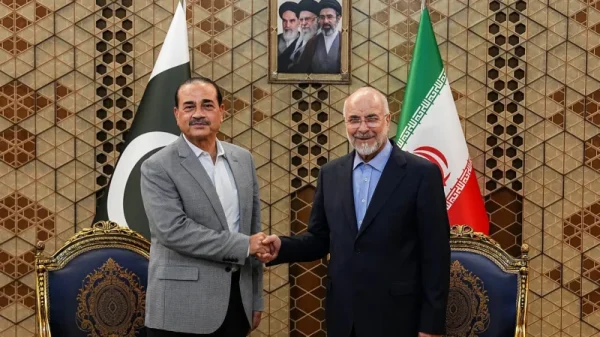
Despite the military escalation, diplomatic channels remain active as mediators continue working to prevent a wider war.
Iranian officials warned that foreign military forces operating near the country’s borders remain vulnerable to future retaliation, while U.S. officials have maintained that military actions are intended to deter further attacks rather than trigger a prolonged conflict.
With tensions rising across multiple fronts, international observers are closely monitoring developments to determine whether diplomatic efforts can prevent the crisis from evolving into a larger regional confrontation.
The coming days are expected to be critical for both military and diplomatic decision-makers as the Middle East navigates one of its most volatile periods in recent years.