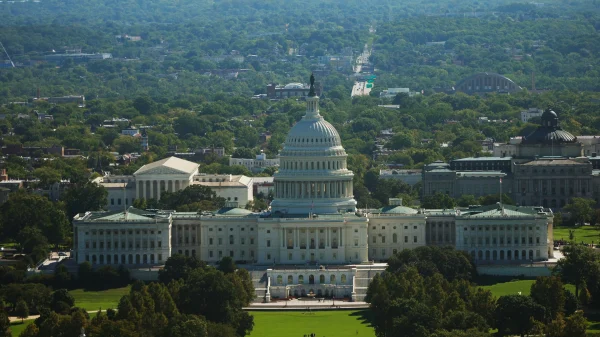
WASHINGTON, D.C. — President Donald Trump’s newly announced agreement with Iran is facing immediate scrutiny on Capitol Hill, where lawmakers from both parties are demanding detailed briefings before offering support for the deal aimed at ending the recent conflict in the Middle East.
The agreement, unveiled over the weekend, seeks to restore stability in the region by reopening the strategically vital Strait of Hormuz, ending U.S. naval restrictions in nearby waters, and establishing a framework for economic incentives tied to Iran’s future compliance obligations.
However, members of Congress say many critical details remain unclear.
Republicans Seek Answers on Enforcement and Compliance
Several Republican senators expressed caution, emphasizing that they have not yet received sufficient information about the terms of the agreement.
Senate Majority Leader John Thune stated that lawmakers need a clearer understanding of how the deal will be implemented and monitored before making any judgments.
Questions remain about how Iran’s commitments will be verified, what enforcement mechanisms will be used if violations occur, and whether Tehran will permanently limit its nuclear activities under the proposed framework.
Republican lawmakers also raised concerns regarding potential financial benefits for Iran, stressing that any sanctions relief or economic assistance should be strictly tied to measurable compliance.
White House Promises Release of Agreement Details
Vice President JD Vance indicated that the administration plans to release the text of the agreement in the coming days, arguing that public scrutiny will demonstrate that financial incentives are conditional upon Iran fulfilling its obligations.
According to administration officials, the understanding includes provisions related to sanctions relief, access to previously frozen assets, and the possibility of international support for reconstruction efforts if Iran meets specific benchmarks.
Despite those assurances, lawmakers from both parties insist they must review the complete document before deciding whether to support it.
Nuclear Program Remains Central Concern
One of the largest unanswered questions involves Iran’s nuclear infrastructure.
Congressional leaders are seeking clarification on how enriched uranium stockpiles will be handled, who will oversee inspections, and what safeguards will prevent Tehran from rebuilding its nuclear capabilities.
National security experts have noted that the success of the agreement will depend heavily on independent verification and long-term monitoring mechanisms.
Several senators warned that any deal lacking strict inspection procedures could face strong opposition in Congress.
Congress May Play Key Role in Approval Process
Lawmakers are also debating whether the agreement should undergo formal congressional review.


Under existing legislation governing nuclear agreements with Iran, Congress has authority to examine and potentially vote on major arrangements involving Iran’s nuclear program.
Some senators have argued that a lasting agreement requires legislative approval to ensure continuity across future administrations.
Others believe the administration should retain flexibility to negotiate diplomatic solutions without immediate congressional intervention.
Democrats Compare Deal to Previous Iran Agreement
Democratic lawmakers questioned whether the new framework offers stronger protections than the 2015 Iran nuclear agreement negotiated during President Barack Obama’s administration.
Several senators pointed out that the earlier deal included international oversight and participation from multiple global powers, creating a broader system of accountability.
They are now seeking explanations regarding what has changed and how the new arrangement will produce better security outcomes.
Democrats also raised concerns about the economic costs associated with the conflict and the broader impact on American taxpayers.
Political and Strategic Debate Intensifies
The emerging debate reflects deeper divisions in Washington over U.S. policy toward Iran.
Supporters argue that diplomacy offers an opportunity to reduce tensions, avoid prolonged military involvement, and stabilize global energy markets.
Critics, meanwhile, caution that Iran’s government has a history of disputes with international inspectors and must be held to strict compliance standards.
As lawmakers await the full text of the agreement, both supporters and skeptics agree on one point: the details will determine whether the deal represents a breakthrough in diplomacy or merely a temporary pause in a long-running conflict.
With a formal signing ceremony reportedly planned in Geneva later this week, congressional scrutiny is expected to intensify as more information becomes available.