

















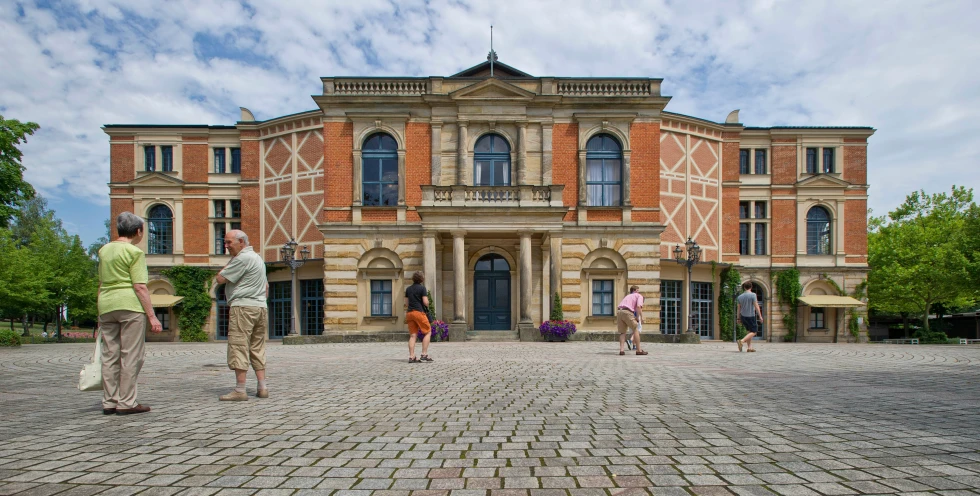
An ambitious experiment using artificial intelligence during one of the world’s most prestigious opera festivals has sparked mixed reactions, with audience members expressing both admiration and frustration following a performance at Germany’s renowned Bayreuth Festival.
The AI-assisted production of Richard Wagner’s “Götterdämmerung” received a noticeably divided response on Saturday evening, as applause for the performers contrasted with loud boos directed at the creative team responsible for the digital staging.
Innovative Technology Takes Center Stage
Festival organizers described the production as the first in Bayreuth’s history to incorporate artificial intelligence as a visual creative tool during a live performance.
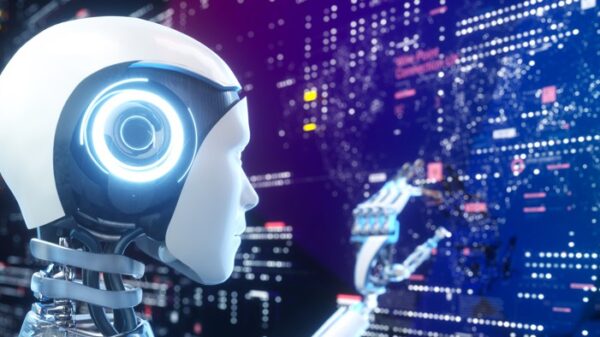
Rather than replacing performers, the technology generated evolving digital imagery projected around the singers, creating an ever-changing visual environment designed to accompany Wagner’s epic opera.
The concept aimed to blend historical references, artistic symbolism and digital creativity into a dynamic stage experience that would differ with every performance.
Audience Left Divided
According to reports from Germany, many attendees appeared uncertain about the meaning behind several AI-generated visuals displayed throughout the performance.
Among the projected images were references to previous Bayreuth productions alongside notable moments in German and international history, including former German Chancellor Helmut Kohl, imagery associated with the September 11 attacks in the United States, and a commemorative stamp celebrating German reunification.
The unconventional mix of historical and symbolic visuals prompted confusion among sections of the audience, leading to boos and whistles when curator Marcus Lobbes and his production team appeared on stage after the performance.
Performers Receive Strong Praise
While the experimental staging divided opinions, the musical performance itself earned widespread appreciation.
The audience warmly applauded the opera’s cast and orchestra, with conductor Christian Thielemann receiving particularly enthusiastic recognition for his interpretation of Wagner’s score.
The contrast highlighted a clear distinction between criticism of the visual concept and admiration for the artistic performance.
Festival Explores New Creative Direction
Marcus Lobbes, who leads the Academy for Theater and Digitality in Dortmund, developed the AI-assisted visuals using a carefully selected collection of historical and artistic images prepared in advance by his creative team.
Festival organizers explained that artificial intelligence served as an image-generating partner rather than a performer, continuously combining and transforming visual material throughout the opera.
They also noted that no two performances would be identical, as the AI-generated projections continually evolve and create new visual associations during each presentation.
More Performances Planned
Despite the mixed public response, the Bayreuth Festival is expected to continue presenting the AI-assisted production, with two additional performances already scheduled.

The experiment represents another example of how artificial intelligence is increasingly being explored in the performing arts, raising broader discussions about the balance between technological innovation and traditional artistic expression.
Whether the production ultimately becomes a milestone in opera staging or remains a controversial experiment, it has already succeeded in generating significant debate among audiences and the wider cultural community.