













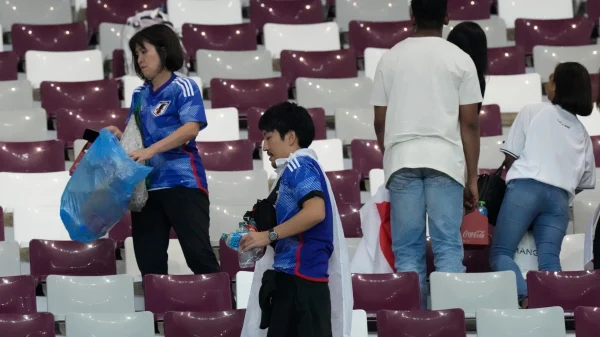









From sweeping stands to collecting litter after thrilling World Cup matches, Japanese football fans have become globally recognized not just for their passion for the game, but for their remarkable post-match stadium cleanups. This unusual yet admired practice has continued for decades, leaving a lasting impression on international audiences.
A Global Tradition That Began in 1998
The world first took notice of Japanese supporters’ cleaning habits during the 1998 FIFA World Cup in France, when fans were seen picking up trash and restoring stadium seats after matches. What appeared surprising to many foreign spectators quickly became a recurring scene at every major international tournament Japan participates in.
Since then, similar acts of cleanliness have been observed in World Cups held in Russia (2018) and Qatar (2022), reinforcing a consistent cultural behavior rather than a one-time gesture.
More Than Just Cleanliness: A Cultural Value
Experts say this behavior is deeply rooted in Japan’s education system and social values. From an early age, students in Japan are taught to clean their classrooms and school grounds themselves, as many schools operate without janitorial staff. This early training encourages responsibility and respect for shared spaces.
A well-known Japanese phrase often used to describe this mindset is “Tatsu tori ato wo nigosazu,” which roughly translates to “leave no mess behind” or “leave things as you found them.”
The Role of Social Responsibility
Japanese society places strong emphasis on avoiding inconvenience to others, a concept known as meiwaku. This cultural principle encourages individuals to be mindful of how their actions affect the collective environment.
With limited public trash bins in many areas, residents are also accustomed to carrying their waste home, further reinforcing habits of personal responsibility and cleanliness in public spaces.
Collective Mindset Over Individualism
Sociologists note that Japan’s group-oriented culture plays a key role in these behaviors. Unlike more individual-focused societies, Japanese culture often prioritizes harmony and collective well-being.
According to cultural researchers, this mindset naturally extends to public events, where fans feel a shared responsibility for maintaining order and cleanliness in stadiums.
A Practice Reinforced by Global Recognition
What began as an everyday habit has now gained international praise. As global media highlighted Japanese fans cleaning stadiums, the practice evolved into a symbol of national pride.
Over time, this recognition has reinforced the behavior, with supporters continuing the tradition not only at World Cups but also at international matches and tournaments around the world.
Beyond Football: A Wider Habit
The cleanup tradition is not limited to football stadiums. Japanese fans and athletes have been seen doing the same at various sporting events, including youth tournaments and international friendlies.
Observers say this reflects a broader cultural belief: leaving any shared space in better condition than it was found.
A Unique Sporting Identity
While Japan’s national football team continues to compete on the global stage, its supporters have earned a reputation that goes beyond the game itself. Their actions highlight a cultural identity built on respect, discipline, and collective responsibility—values that continue to capture worldwide admiration.