


















North Korea has denied responsibility for land mine explosions that injured three South Korean soldiers near the heavily fortified border, accusing Seoul of fabricating evidence and warning of retaliation if South Korean forces fire on North Korean troops.
Kim Yo Jong, the sister of North Korean leader Kim Jong Un and a senior figure in Pyongyang, rejected South Korea’s preliminary findings in a statement carried by North Korean state media. She described Seoul’s conclusions as a politically motivated attempt to create justification for confrontation.
Three South Korean Soldiers Injured in September Blast
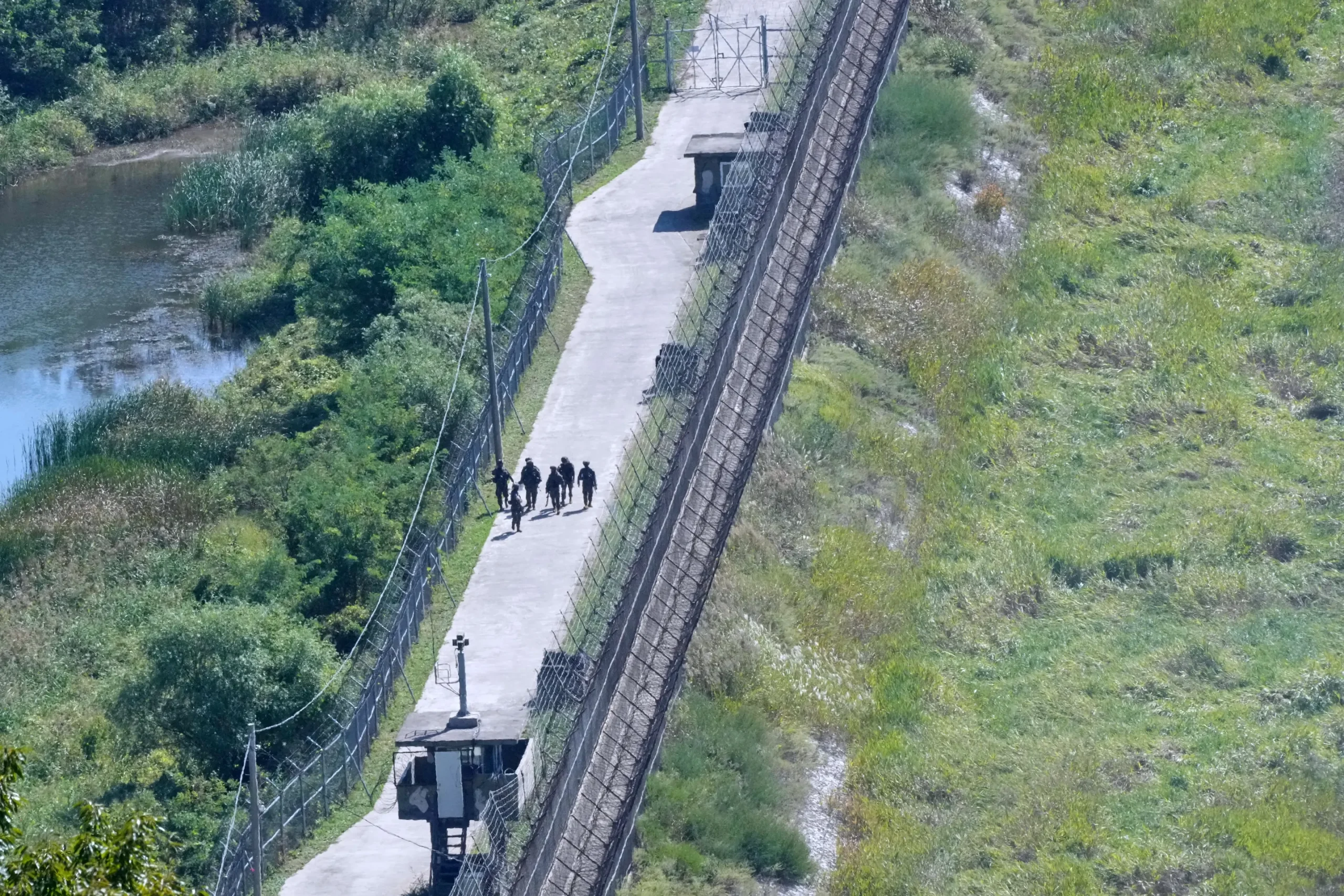
The explosions occurred on Sept. 21 near the Military Demarcation Line in the western portion of the Demilitarized Zone, or DMZ.
Three South Korean military personnel were injured in two explosions while troops were working to establish a patrol route through a densely vegetated area.
South Korea’s Joint Chiefs of Staff later said a joint inspection with the U.S.-led United Nations Command found that North Korean land mines were highly likely to have caused the blasts. Investigators also discovered another North Korean mine near the site during a follow-up inspection.
North Korea Calls Seoul’s Findings Fabricated
Kim Yo Jong rejected the South Korean assessment and accused Seoul of using the incident to support what she described as provocative military actions.
She also warned that North Korean border units would respond immediately if South Korean troops moved beyond warning shots and fired on North Korean soldiers working on border fortifications.
The warning comes as North Korea continues construction and other military activities along parts of the inter-Korean border.
UN Command Says Armistice Was Violated
The U.S.-led United Nations Command said North Korea had violated the armistice agreement that ended the 1950-53 Korean War.
The armistice prohibits hostile acts within or against the DMZ and restricts unauthorized movement across the Military Demarcation Line.
South Korean officials have demanded that Pyongyang acknowledge responsibility and take steps to prevent similar incidents. Defense Minister Kang Shin-chul said Seoul would consider corresponding measures if the investigation ultimately confirms that North Korean forces planted the mines.
Border Tensions Continue to Rise
The dispute comes amid deteriorating relations between North and South Korea.
North Korea has expanded military barriers and other defensive infrastructure along its side of the border, while South Korea has raised concerns about North Korean troops operating close to the Military Demarcation Line.
The latest mine incident has added another potential flashpoint between the two countries, which technically remain at war because the Korean conflict ended with an armistice rather than a peace treaty.
DMZ Remains Heavily Mined
The 248-kilometer-long DMZ is one of the world’s most fortified border areas. It contains land mines, barbed-wire barriers, tank obstacles and military positions established during and after the Korean War.

A similar mine incident in 2015 seriously injured two South Korean soldiers and triggered a sharp escalation in tensions. The two sides exchanged threats and resumed border propaganda activities before high-level talks helped ease the confrontation.
The latest dispute remains unresolved, with Pyongyang denying responsibility while South Korean and United Nations investigators maintain that evidence points toward North Korean mines.