









BELFAST, Northern Ireland —
A second night of serious disorder broke out in parts of Belfast as police used water cannons and riot-control tactics to disperse crowds protesting after a violent stabbing incident that has intensified tensions across Northern Ireland.
The unrest followed a court appearance by a Sudanese national accused of attempted murder in a case that left a local man severely injured and triggered anti-immigration demonstrations that escalated into widespread violence.
Court Appearance Linked to Stabbing Incident
Authorities confirmed that a 30-year-old Sudanese man appeared before Belfast Magistrates’ Court via video link, where he faced charges of attempted murder following a knife attack on a man in Belfast.
Prosecutors allege the victim suffered life-altering injuries, including severe facial trauma. The accused is also charged with possession of a knife and making threats while receiving medical treatment after the incident.
During the arrest response, investigators reported that the suspect was found at the scene holding a kitchen knife. Authorities further stated that he allegedly made threatening remarks while in hospital care following the attack.
The suspect was remanded in custody after declining legal representation during the hearing.
Violence Spreads Across Belfast Streets
Following the court proceedings, unrest escalated for a second consecutive night in several neighborhoods of Belfast, including east Belfast and surrounding areas.
Masked groups reportedly dismantled street infrastructure, including bricks and fencing, which were then used as projectiles against police officers. Makeshift barriers were also constructed from debris to shield protesters during clashes.
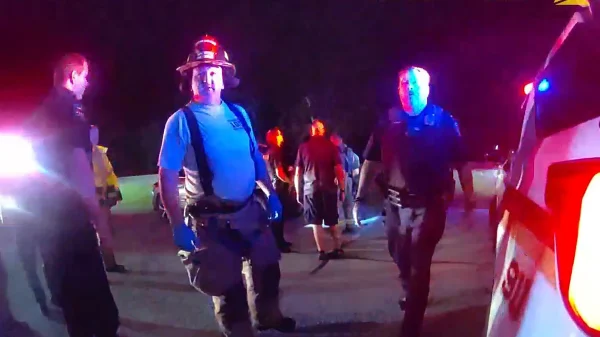
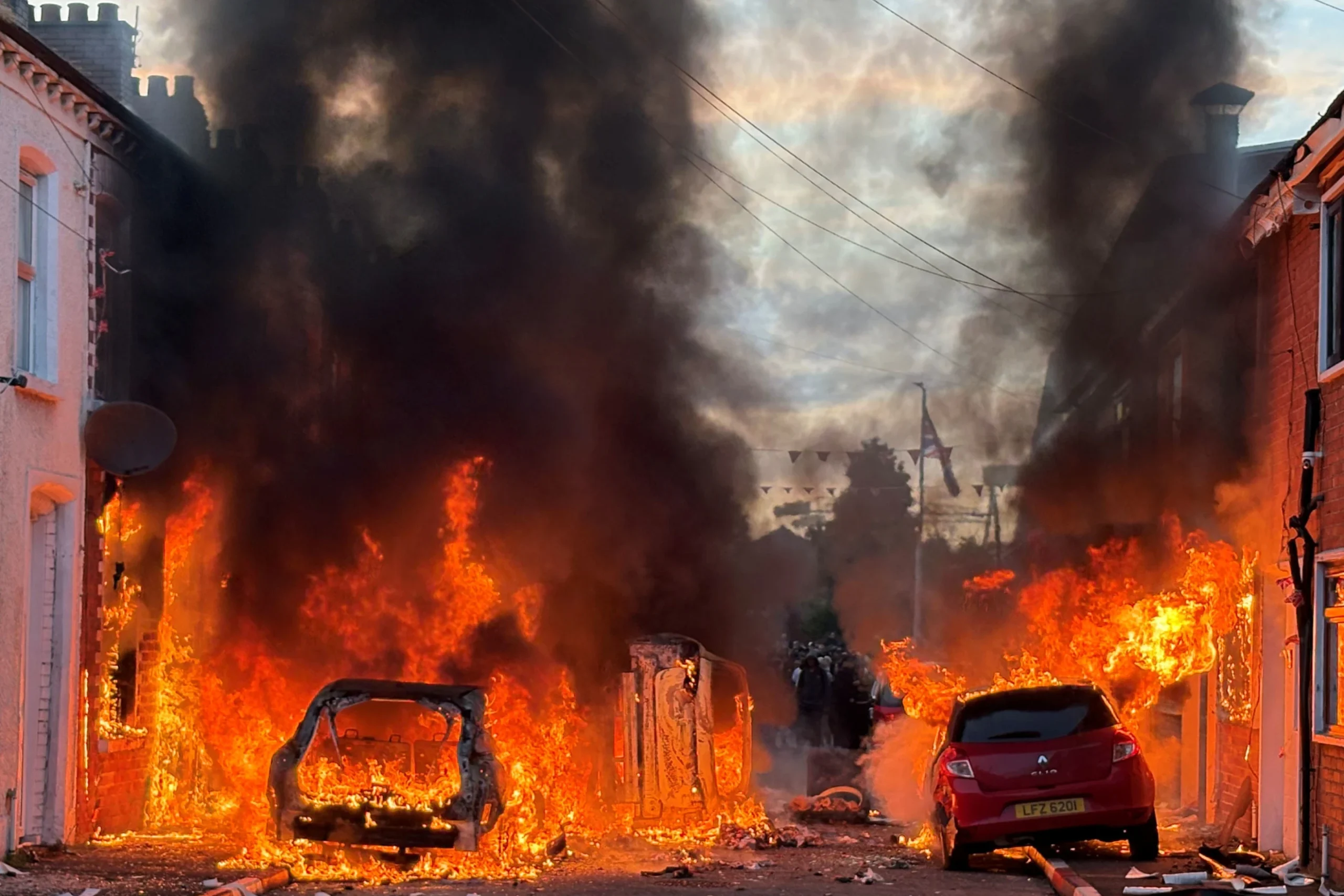
Riot units responded with water cannons as fires were set in public spaces, including burning bins and damaged vehicles. Emergency services confirmed that several homes and cars were set alight during the disturbances.
Fire crews rescued residents from affected properties, while dozens of people were displaced after their homes were damaged or destroyed.
Police Response and Security Measures
The Police Service of Northern Ireland (PSNI) deployed additional officers across the city in response to rising tensions. Reinforcements were brought in from other regions as authorities prepared for further demonstrations.
Officials described the violence as unacceptable and warned that public safety resources were being stretched due to coordinated disorder.
Transport operators also announced early service shutdowns due to security concerns linked to anticipated further unrest.
Community Impact and Rising Fear
Local residents, including members of immigrant communities, described scenes of fear and uncertainty as violence spread through residential areas.
Some families were evacuated for their safety, while others were temporarily housed in police stations and emergency shelters.

Community members expressed concern over the targeting of homes based on perceived nationality or ethnicity, with several residents reporting being forced to flee their properties during the chaos.
Political and Public Reaction
Leaders across Northern Ireland’s political spectrum condemned the violence.
Officials from both nationalist and unionist parties described the attacks on homes and civilians as unacceptable, urging calm and restraint.
The First Minister of Northern Ireland, representing Sinn Féin, called the attacks “cowardly acts of intimidation,” while the Deputy First Minister from the Democratic Unionist Party said violence against innocent people was “completely unjustifiable.”
UK leadership also responded, with Prime Minister Keir Starmer condemning the unrest and warning that violence targeting individuals based on background or nationality would not be tolerated.
Justice officials further criticized online groups accused of amplifying tensions, warning that misinformation was fueling real-world disorder.
Wider Context and Ongoing Investigation
Authorities have confirmed that the stabbing investigation is not currently being treated as terrorism-related. However, the incident has fueled wider political debate about immigration, policing, and border policy between Northern Ireland and the Republic of Ireland.
The unrest has also revived concerns about community tensions in areas with historical paramilitary influence, where social and political divisions remain sensitive.
Police say investigations into both the stabbing and subsequent rioting are ongoing, with multiple arrests expected as CCTV and video evidence is reviewed.
Conclusion
Belfast remains on heightened alert as authorities work to restore order following two nights of escalating violence. While officials continue to emphasize that the criminal case is separate from the unrest on the streets, tensions remain high amid ongoing investigations and increased security presence.