
















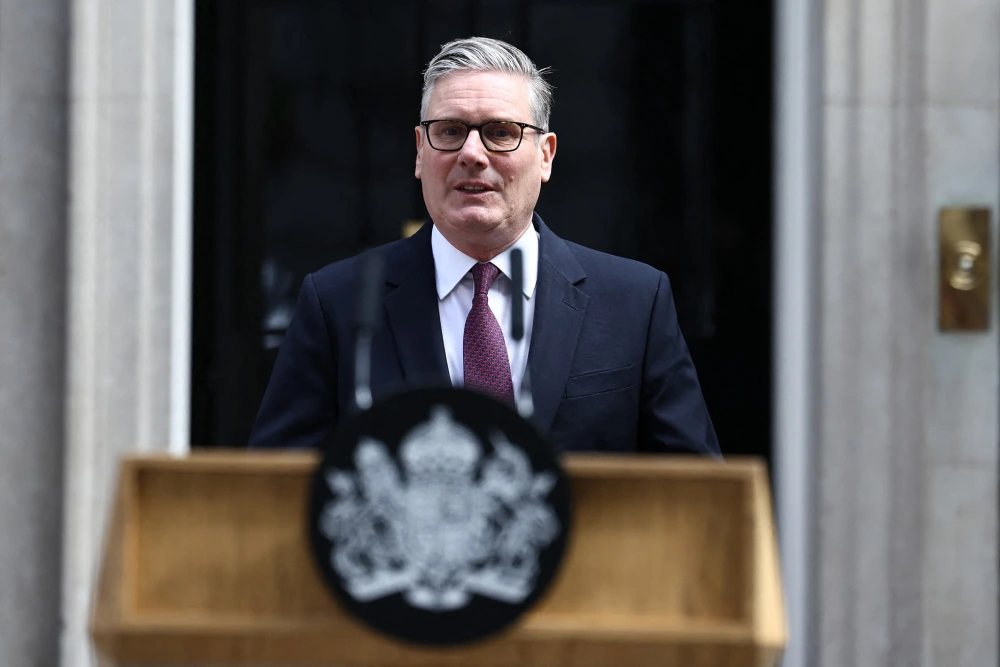
LONDON, United Kingdom — British Prime Minister Keir Starmer announced his decision to step down on Monday, bringing an abrupt end to his leadership after mounting pressure from within the ruling Labour Party.
The resignation follows weeks of internal unrest, declining public support, and growing calls from Labour lawmakers for a change in leadership. Starmer’s departure is expected to trigger a leadership contest that could reshape the future of British politics.
Labour Government Faces Leadership Transition
Starmer made the announcement outside 10 Downing Street, confirming speculation that had intensified in recent weeks over his political future.
His exit marks a dramatic reversal for a leader who secured a commanding general election victory in 2024, ending more than a decade of Conservative rule and returning Labour to power with a strong parliamentary majority.
However, political momentum shifted rapidly as the government struggled with economic challenges, policy disputes, and a series of controversies that weakened confidence among party members and voters alike.
Andy Burnham Emerges as Leading Successor
Attention is now turning to Andy Burnham, who is widely viewed as the frontrunner to replace Starmer.
Burnham recently returned to Parliament after winning a high-profile by-election, strengthening his position within Labour ranks. Long regarded as one of the party’s most influential figures, he has increasingly positioned himself as a voice for political renewal and economic reform.
His allies argue that Labour needs a fresh direction to reconnect with voters ahead of future elections.
Electoral Setbacks Intensified Pressure
Calls for Starmer’s resignation grew louder following disappointing results in local and regional elections earlier this year. The setbacks fueled concerns within Labour that the party was losing support despite being relatively new to government.
The rise of Nigel Farage and the growing popularity of Reform UK added to the pressure, with many Labour MPs expressing concern over voter dissatisfaction on issues including immigration, energy policy, and the cost of living.
Several senior figures within the government also departed in recent months, exposing divisions at the highest levels of the administration.
Economic Challenges Undermined Reform Agenda
Since taking office, Starmer’s government has faced a difficult economic environment marked by slow growth, fiscal constraints, and pressure on public services.
Many of Labour’s flagship promises encountered obstacles, forcing ministers to scale back or delay key projects. Critics argued that the government struggled to deliver the transformative change promised during the election campaign.
Analysts say balancing public spending commitments with fiscal discipline became one of the administration’s biggest challenges.
Political Controversies Added to Difficulties
Starmer’s tenure was also overshadowed by several controversies that generated intense scrutiny. Opposition parties and some Labour members questioned decision-making at the highest levels of government, while repeated disputes over appointments and policy direction contributed to declining confidence in the prime minister’s leadership.

The controversies became a focal point for critics who argued that Labour had failed to maintain the momentum that brought it to power.
Britain Set for Another Prime Minister
The upcoming leadership transition means the United Kingdom will soon welcome its seventh prime minister in just ten years, highlighting a prolonged period of political instability in Westminster.
Labour Party officials are expected to begin the process of selecting a new leader in the coming weeks. The outcome will determine not only the party’s future but also the direction of government policy on the economy, public services, immigration, and international affairs.
As Britain enters another period of political uncertainty, attention is now focused on who can unite Labour and restore public confidence ahead of the next electoral challenge.