

















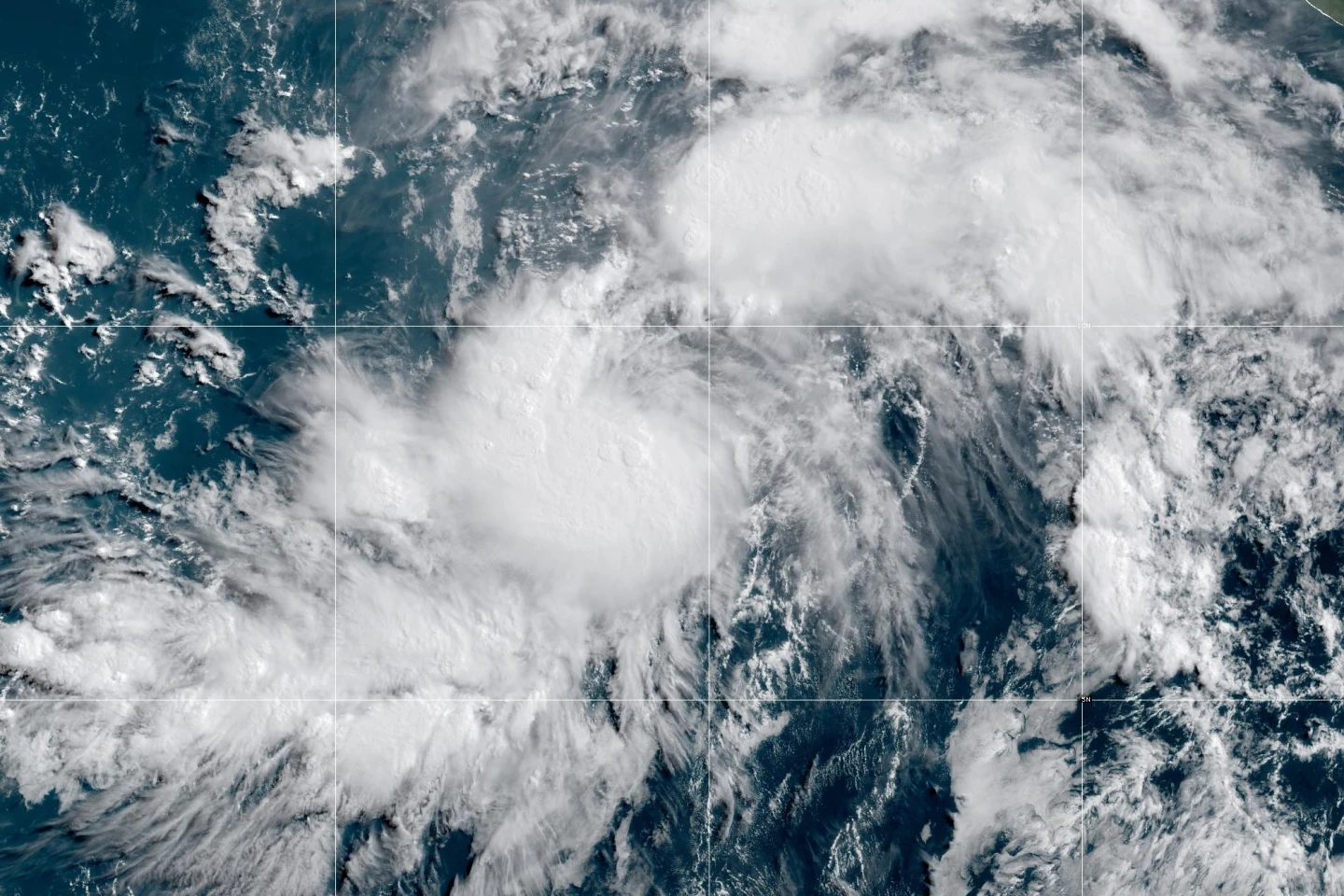
Miami: Hurricane Genevieve has strengthened into a Category 1 hurricane in the Pacific Ocean southwest of Mexico, but forecasters say the storm is expected to remain far offshore and does not currently pose a direct threat to coastal areas.
According to the National Hurricane Center (NHC) in Miami, Genevieve reached maximum sustained winds of 80 mph (130 kph) on Saturday. Meteorologists expect the storm to continue gaining strength and potentially become a major hurricane (Category 3 or higher) in the coming days.
Storm Moving Away From Mexican Coast
The center of Hurricane Genevieve was located approximately 500 miles (810 kilometers) south-southwest of Manzanillo, Mexico, and was moving west-northwest at around 15 mph (24 kph).
No coastal watches or warnings have been issued because the storm is forecast to remain over open waters.
However, the National Hurricane Center warned that ocean swells generated by Genevieve could create dangerous surf and life-threatening rip current conditions along parts of Mexico’s southwestern coastline.
These conditions were expected to continue affecting coastal areas through the weekend, with possible impacts reaching southern portions of the Baja California Peninsula by Sunday night or Monday.
Hurricane Fausto Continues Across Pacific
Meanwhile, another storm system, Hurricane Fausto, remained active farther west in the Pacific Ocean.
Fausto was classified as a Category 2 hurricane with maximum sustained winds of 100 mph (155 kph). The storm was located about 1,060 miles (1,705 kilometers) east of Hilo, Hawaii, and was moving west at approximately 13 mph (20 kph).
Forecasters expect Fausto to weaken into a tropical storm in the coming days, but officials continue to monitor the system because it could still produce dangerous ocean conditions near the Hawaiian Islands.
Officials Urge Coastal Awareness
Although neither Genevieve nor Fausto is currently expected to make landfall, meteorologists are advising residents and visitors near affected coastlines to remain alert for changing conditions, especially dangerous waves and strong currents.
The Pacific hurricane season continues to produce multiple active systems, highlighting the importance of monitoring official weather updates throughout the season.