










Diplomatic efforts to end the war in Ukraine are entering a critical phase this week, with U.S., Ukrainian, and Russian officials engaging in a fresh round of negotiations aimed at narrowing deep divisions that have stalled progress toward a cease-fire. The renewed push follows a revised U.S. peace proposal and a series of high-level meetings in Europe and the United States.
The U.S.-led initiative gained momentum after Washington and Kyiv updated the original draft peace plan in Geneva last week. The initial version had alarmed Ukrainian leaders, who feared it leaned too heavily toward Moscow’s demands. The revised proposal has since drawn cautious approval from both sides: Ukrainian President Volodymyr Zelenskyy called it potentially “workable,” while Russian President Vladimir Putin said it could serve as a “basis” for more detailed negotiations. U.S. President Donald Trump added that there is “a good chance we can make a deal.”
Still, the central disputes remain unresolved. Ukraine has refused to consider giving up territory, while Russia insists that Ukrainian forces must withdraw from regions Moscow claims to have annexed. Questions about security guarantees for Ukraine—and whether NATO membership is off the table—also loom large over the talks.
U.S. Shuttles Between Kyiv and Moscow
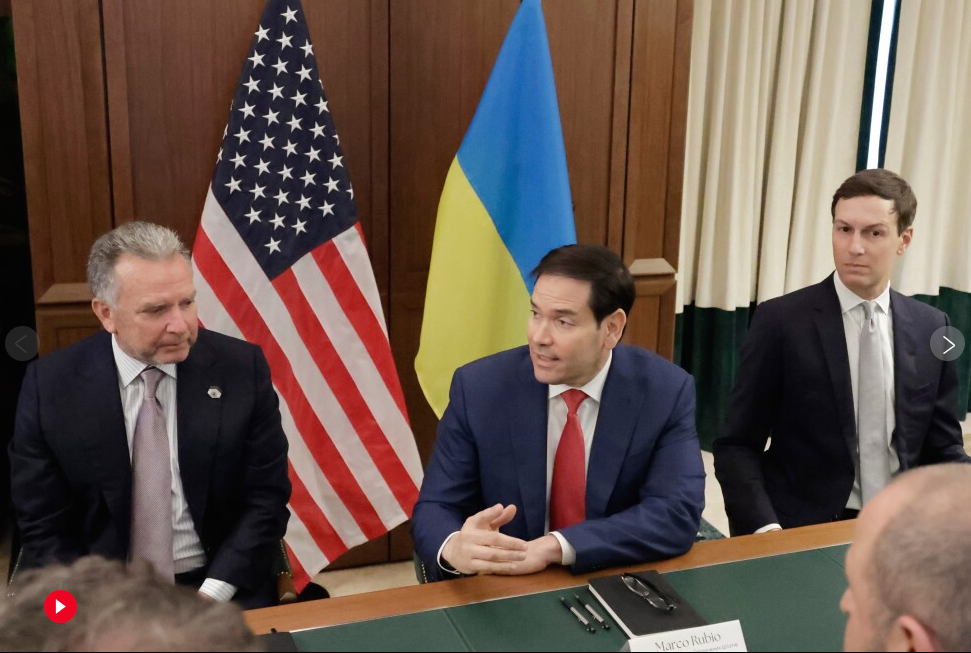
American officials met Ukrainian negotiators in the United States over the weekend for a four-hour strategy session. The Ukrainian delegation included National Security Council chief Rustem Umerov, armed forces commander Andrii Hnatov, and presidential adviser Oleksandr Bevz. U.S. Secretary of State Marco Rubio described the meeting as “productive” but acknowledged that significant gaps remain.
The diplomatic landscape shifted abruptly on Friday when Andrii Yermak, Zelenskyy’s former chief of staff and the country’s previous lead negotiator, resigned amid a corruption scandal. Although officials stressed that neither Yermak nor Zelenskyy is accused of wrongdoing, his departure complicates Ukraine’s negotiating posture at a delicate moment.
President Trump is now sending his special envoy, Steve Witkoff, to Moscow for direct talks with the Kremlin. Russian officials confirmed that President Putin is expected to host Witkoff early in the week. Trump has floated the possibility of an eventual meeting with both Putin and Zelenskyy but says such a summit would require substantial progress first.
Witkoff’s involvement drew attention after reports that he had advised senior Kremlin aide Yuri Ushakov on how to present Russia’s position to Trump. Both Washington and Moscow dismissed the report as insignificant.
Key Sticking Points
While both Kyiv and Moscow have publicly welcomed continued diplomacy, neither side has shifted on core demands. Putin has reiterated that Russia will only end its offensive when Ukrainian forces withdraw from four regions Russia claims to have annexed in 2022—territory it still does not fully control. He emphasized that if Ukraine does not retreat voluntarily, Russia will “achieve this by force.”
Ukraine remains firm in its refusal to cede land. Negotiator Oleksandr Bevz recently stressed that the territorial question must be discussed directly between Zelenskyy and Trump. Zelenskyy also continues to argue that NATO membership is the strongest long-term security guarantee for Ukraine, even as Trump maintains his opposition to Ukraine joining the alliance.
Russia, for its part, rejects any proposal involving Western peacekeeping forces on Ukrainian soil and insists that preventing NATO influence in Ukraine remains one of its primary objectives.
Pressure on Kyiv, Confidence in Moscow
Zelenskyy faces political pressure at home following Yermak’s resignation, though Ukrainian anti-corruption activists argue the departure could strengthen reform efforts. The president has vowed not to repeat past mistakes and reaffirmed Ukraine’s commitment to pushing for a “just” end to the war.
Meanwhile, Putin appears increasingly confident about Russia’s battlefield position. Analysts say the Kremlin believes time is on its side, expecting that sustained military pressure will eventually push Kyiv toward concessions. According to Tatiana Stanovaya of the Carnegie Russia and Eurasia Center, Putin is convinced he can either benefit from U.S. diplomatic pressure—or continue the war until Ukraine “must negotiate on Russia’s terms.”
Europe Confronts Its Own Dilemma
As Washington takes the lead in peace efforts, European governments are scrambling to define their role. NATO and the European Union are holding multiple meetings this week to discuss military aid for Ukraine and strategies for long-term European security.
A major point of contention is the fate of billions in frozen Russian assets held in Belgium. Europe had considered using those funds for Ukraine’s reconstruction, but legal and financial concerns—along with fear of Russian retaliation—have stalled the plan.
Analysts warn that Europe’s limited influence in the negotiations exposes its strategic weakness. Despite being Ukraine’s largest economic and military supporter, European governments have largely been responding to, rather than shaping, the U.S.-driven peace framework.

As diplomats gather across Brussels, Moscow, and Washington this week, hopes for progress remain tempered by longstanding mistrust and unresolved demands. Any agreement, officials say, will require significant concessions that neither side appears ready to make.