









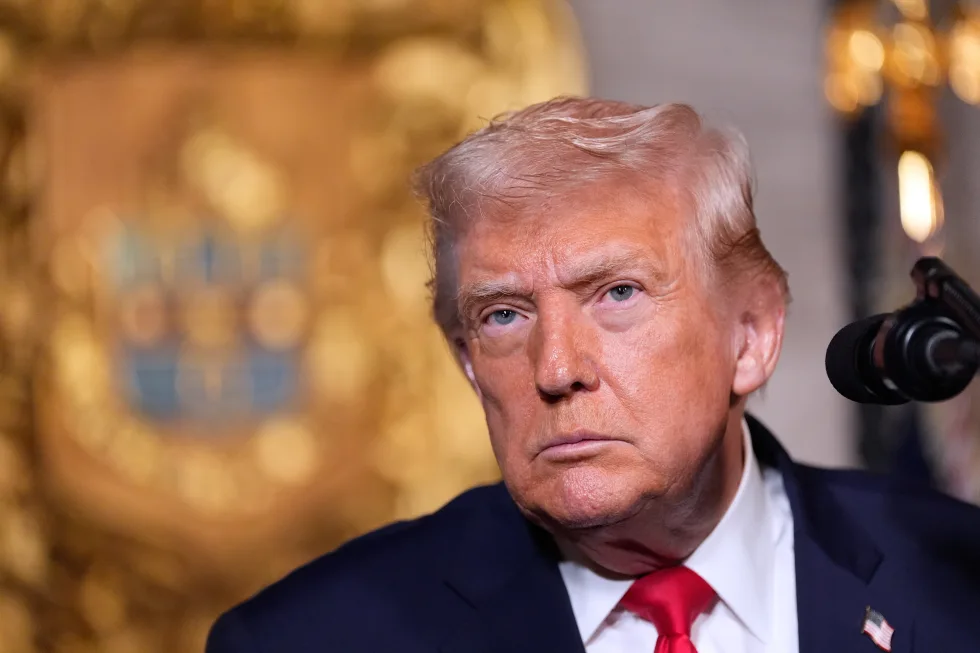
WASHINGTON / ABUJA — President Donald Trump said the United States carried out airstrikes against Islamic State-linked militants in Nigeria, describing the operation as a forceful response to extremist violence that he said has targeted Christian communities in the country.
In a Christmas Day message posted on social media, Trump said U.S. forces launched a “powerful and deadly” strike against Islamic State fighters operating in Nigeria. He did not disclose details about the locations targeted or the scale of damage caused.
A U.S. defense official, speaking on condition of anonymity, confirmed that the strikes were conducted in coordination with Nigeria’s government and with its approval. Nigeria’s Ministry of Foreign Affairs later said the cooperation involved intelligence sharing and strategic coordination consistent with international law and respect for national sovereignty.
Focus on Extremist Violence
Trump has repeatedly criticized Nigeria’s government in recent weeks, accusing it of failing to protect Christians from extremist attacks. In his statement, he said the militants targeted in the strikes had been “viciously killing innocent Christians.”
Nigerian officials responded by emphasizing that extremist violence affects communities across religious lines. “Terrorist violence in any form, whether directed at Christians, Muslims, or other communities, remains an affront to Nigeria’s values,” the Foreign Ministry said.
Nigeria, Africa’s most populous nation, is nearly evenly divided between Christians and Muslims and faces complex security challenges involving multiple armed groups.
Possible Target: Lakurawa Militant Group
Security analysts believe the strikes may have targeted the Lakurawa group, an Islamic State-affiliated faction that has expanded its presence in northwestern Nigeria over the past year. The group operates in remote areas, particularly in Sokoto and Kebbi states, where weak state presence has allowed militants to establish bases in forested regions.
Analysts say Lakurawa has increasingly attacked rural communities and security forces, contributing to growing instability in the northwest. Nigeria is also battling the Islamic State West Africa Province, an offshoot of Boko Haram that operates primarily in the northeast.
Broader U.S. Pressure on Nigeria
The airstrikes follow a series of escalating measures by the Trump administration. Last month, Trump ordered the Pentagon to prepare contingency plans for possible military action in Nigeria. The State Department has also announced visa restrictions for Nigerians and their family members implicated in violence against Christians.
In addition, the U.S. recently designated Nigeria a “country of particular concern” under the International Religious Freedom Act, a move that can trigger diplomatic and economic consequences.
Trump said U.S. defense officials had carried out “numerous perfect strikes” and pledged that the United States would not allow extremist groups to thrive.
Defense Secretary Pete Hegseth echoed that message, posting that U.S. forces were “always ready” and praising Nigeria’s cooperation. His message, posted on Christmas night, said the strikes sent a clear warning to extremist groups.
A Complex Security Landscape
Nigeria has long struggled with insecurity driven by a mix of factors, including extremist ideology, disputes between farmers and herders over land, ethnic tensions, and separatist movements. While some attacks are religiously motivated, others stem from economic and political grievances.
The U.S. military presence in Africa has been reduced in recent years, meaning any expanded involvement in Nigeria would likely require redeploying forces from other regions.
Despite those constraints, the Trump administration has maintained pressure on Nigeria following a series of deadly attacks on schools, villages, and places of worship. Experts and residents say such violence has affected both Christians and Muslims, underscoring the complexity of the conflict.