










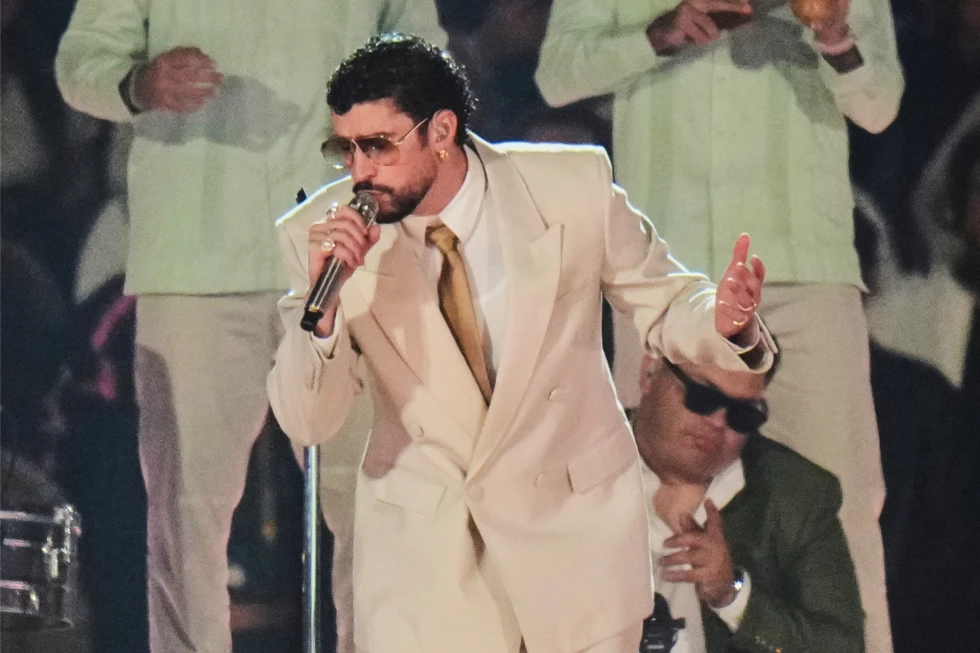
As anticipation builds for Sunday’s Super Bowl halftime show, fans across the United States are racing to learn Spanish — inspired by headliner Bad Bunny, who is widely expected to perform his entire set in the language.
The Puerto Rican superstar, born Benito Antonio Martínez Ocasio, has made no secret of his intentions. During his opening monologue on Saturday Night Live last October, he proudly spoke in Spanish before switching to English to deliver a challenge: anyone who didn’t understand had “four months to learn.” The moment went viral and set the tone for what many now see as a historic halftime performance.
A social media language sprint
In recent weeks, social platforms have filled with videos of fans dissecting Bad Bunny’s lyrics, practicing pronunciation, and sharing progress updates. Puerto Rican creators have explained regional slang, while non-Spanish speakers document the challenges of mastering fast-paced verses and island-specific dialects.
Niklaus Miller, 29, began studying Bad Bunny’s songs shortly after the SNL appearance. What started as curiosity quickly became a personal mission.
“It felt like something I could actually do,” Miller said. “And honestly, it also felt like a form of protest — a way to show appreciation and solidarity.”
Miller now posts videos chronicling his progress, saying viewers frequently tell him they feel seen and valued, especially families watching together across generations. While he hasn’t memorized the singer’s entire catalog, he’s learned portions of several likely halftime tracks, including “Tití Me Preguntó,” “DtMF,” and “Baile Inolvidable.”
Cultural moment meets political tension
Interest in Bad Bunny’s performance surged further after he made history at the 2026 Grammy Awards, where his album Debí Tirar Más Fotos became the first Spanish-language album to win Album of the Year. During his acceptance speech, he addressed immigration enforcement directly, a moment that resonated with supporters and intensified criticism from conservative commentators.
Bad Bunny has been outspoken against federal immigration crackdowns and previously canceled the U.S. leg of a tour, citing concerns that fans could be targeted by Immigration and Customs Enforcement. Former President Donald Trump has publicly criticized the NFL’s decision to book him, calling the choice divisive, while conservative groups have organized alternative events in response.
Despite the controversy, the NFL and Apple Music have stood by the selection, pointing to Bad Bunny’s global popularity and cultural influence.
Learning Spanish through music
For many fans, the halftime show is simply the latest catalyst in a broader trend. According to Vanessa Díaz, an associate professor of Chicano and Latino studies at Loyola Marymount University, Latin music has been driving interest in Spanish for years.
“The Super Bowl adds momentum to something that was already happening,” Díaz said. She noted that Bad Bunny’s clear messaging and cultural authenticity make listeners more inclined to engage deeply with the language.
Spanish is the second-most spoken language at home in the U.S., behind English, with more than 13% of residents aged 5 and older using it, according to Census data.
New York-based actor and content creator O’Neil Thomas, 28, began learning Spanish the day Bad Bunny was announced as the halftime act. His videos, which show him practicing songs like “NUEVAYoL,” have drawn encouragement from Puerto Rican viewers proud to see outsiders engage with their culture.
Challenging — but rewarding
Both Thomas and Miller say Puerto Rican Spanish presents unique hurdles, from rapid delivery to dropped consonants and region-specific phrasing. Listening casually is one thing; learning lyrics word-for-word is another.
“The rewind button is my best friend,” Thomas said. “It’s fun, but it’s work.”

Still, the challenge is part of the appeal. Fans describe the process as stressful, exciting, and meaningful — especially at a time when Spanish-speaking communities feel increasingly politicized.
A landmark moment for representation
Scholars say Bad Bunny’s presence on one of the biggest stages in American entertainment underscores a shift in cultural visibility, even if it doesn’t instantly change political realities.
“Spanish has long been marginalized in the U.S.,” Díaz said. “Bad Bunny is helping reframe it as something aspirational.”
As millions tune in on Sunday, some will be watching for spectacle, others for controversy. But for many fans, the halftime show represents something deeper: a celebration of language, culture, and identity — and a reason to finally roll those r’s.