












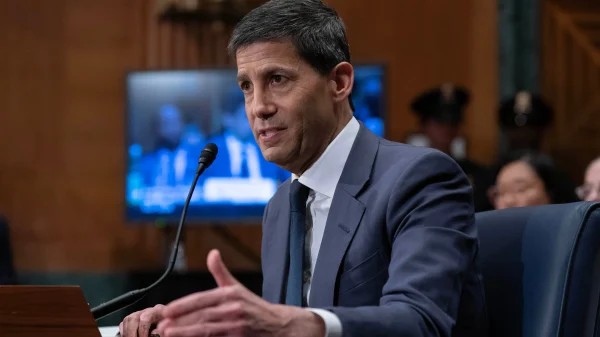


U.S. Defense Secretary Pete Hegseth is set to appear before lawmakers for the first time since the outbreak of the Iran conflict, facing intense scrutiny over the war’s cost, strategy, and oversight.
The hearing before the House Armed Services Committee comes as part of discussions on the administration’s proposed 2027 defense budget, which seeks to raise military spending to an unprecedented $1.5 trillion. Hegseth will be joined by Dan Caine, chairman of the Joint Chiefs of Staff.
Budget Debate Overshadowed by War Concerns
While the session is officially focused on defense funding, lawmakers—particularly Democrats—are expected to center their questioning on the ongoing war with Iran. Critics argue the conflict was initiated without congressional authorization, raising constitutional concerns over executive power.
The administration of Donald Trump launched military operations in late February, with support from Israel, sparking a broader regional conflict. Despite efforts, Congress has not passed legislation requiring formal approval of continued military engagement.
Democratic lawmakers are also likely to press officials on mounting financial costs, the depletion of U.S. weapons stockpiles, and controversial incidents during the war, including reported civilian casualties.
Military Readiness Under the Spotlight
Another key issue expected to dominate the hearing is military preparedness. Lawmakers may question whether U.S. forces were adequately equipped to defend against Iranian drone attacks, some of which reportedly breached defenses and caused American casualties.
In response to evolving threats, Pentagon officials are expected to emphasize the need for expanded investment in advanced military capabilities, including drones, missile defense systems, and naval assets.
Political Divisions Persist
Republicans have largely supported the administration’s handling of the conflict, citing concerns over Iran’s nuclear ambitions and the strategic risks of withdrawal. However, some within the party have expressed unease about the war’s duration and long-term implications.
Senator Thom Tillis has publicly questioned leadership decisions at the Pentagon, particularly the recent removal of senior military officials. He noted that such changes during an active conflict raise serious concerns about stability within defense leadership.
Similarly, Representative Austin Scott criticized the dismissal of top Army leadership, calling it a risky move during a time of heightened military engagement.
Leadership Shake-Ups Add Pressure
Hegseth is also expected to address his recent overhaul of military leadership, which included the removal of several high-ranking officers such as Randy George. These decisions have drawn bipartisan attention and could further intensify questioning during the hearing.
Lawmakers are likely to seek clarity on the rationale behind these changes and their potential impact on military operations.
Strategic Stalemate and Global Impact
Although a ceasefire is currently in place, tensions remain high. Iran’s closure of the Strait of Hormuz has disrupted global energy markets, driving up fuel prices and adding economic pressure worldwide.
The U.S. has responded by expanding its military presence in the region, including deploying multiple aircraft carriers and enforcing a naval blockade aimed at restricting Iranian trade.
Diplomatic efforts to resolve the conflict have so far yielded limited progress, leaving both sides in a prolonged standoff.

High-Stakes Test for Pentagon Leadership
The upcoming hearings, including a follow-up session before the Senate Armed Services Committee, will mark a critical moment for Hegseth. Facing bipartisan scrutiny, he will be expected to defend both the administration’s wartime strategy and his leadership of the Pentagon during one of the most challenging periods in recent years.