
























A little-known Republican candidate has emerged as an unexpected factor in California’s congressional primary elections, potentially complicating Democratic efforts to gain additional seats in the U.S. House following the state’s recent redistricting overhaul.
Michael Stansfield, a technology support specialist with no established political organization, limited funding, or campaign staff, found himself unexpectedly competing for a coveted spot in the general election after preliminary primary results showed a stronger-than-anticipated performance in California’s 6th Congressional District.
The development has raised questions about how effectively political parties can predict election outcomes even after carefully redrawing district boundaries.
An Unconventional Campaign Draws Attention
Stansfield entered the race largely to promote his personal views on peace and coexistence in the Middle East rather than to launch a traditional congressional campaign.
According to preliminary election results, his status as the only Republican listed on the ballot may have helped consolidate support from GOP voters, allowing him to remain competitive in a crowded field that included numerous Democratic candidates dividing their party’s vote.
His unexpected showing has attracted attention from political strategists across California, particularly because the district was viewed as an important target in Democrats’ broader plan to expand their congressional representation.
Redistricting Plans Face an Early Test
California voters approved new congressional district boundaries aimed at reshaping the political landscape ahead of the 2026 midterm elections. Democratic leaders hoped the revised map would improve the party’s chances of capturing several additional House seats.
The 6th Congressional District was widely considered one of those opportunities. The redesigned district combines parts of the Sacramento region with neighboring suburban communities, creating a more politically competitive electorate.
However, early primary results suggest that voter behavior can sometimes disrupt carefully designed electoral strategies.
Political analysts note that redistricting may influence the makeup of a district, but candidate dynamics, voter turnout, ballot structure, and campaign messaging can still produce unexpected outcomes.
California’s Primary System Adds Uncertainty
California uses a nonpartisan “top-two” primary system in which all candidates compete on a single ballot regardless of party affiliation. The two candidates receiving the most votes advance to the general election.
This system can occasionally create unusual scenarios, including the possibility that candidates from the same party face each other in November or that a party is entirely excluded from the general election despite substantial overall support among voters.
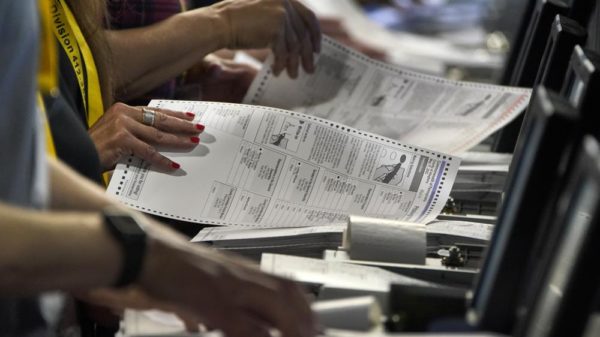
Because thousands of mail ballots remain uncounted, election experts caution that final results could still shift significantly in the coming days and weeks.
Candidate Brings Unique Political Background
Stansfield’s political journey has been unconventional. Previously associated with the Democratic Party, he later changed affiliations and has described his campaign as an effort to challenge political divisions and advocate for greater understanding among different religious and cultural communities.
His campaign focused heavily on international issues, particularly the Israeli-Palestinian conflict, rather than traditional district-specific concerns.

Despite minimal campaign infrastructure, his candidacy demonstrates how voter dynamics can sometimes elevate unexpected contenders in highly competitive elections.
Democratic and Republican Strategists Watch Closely
Both major parties are closely monitoring the vote count as additional ballots are processed.
Many analysts still believe Democratic candidates could gain ground once remaining mail-in votes are tabulated, potentially altering the final ranking of candidates. Nevertheless, the race has already become a case study in the limitations of relying solely on demographic and redistricting calculations.
The outcome may also influence how parties approach future primary contests under California’s unique election system.
Broader Implications for the Midterm Elections
The 6th Congressional District race underscores a larger lesson for both political parties: election outcomes are not determined solely by district boundaries.
Candidate quality, voter engagement, ballot design, and unforeseen political circumstances continue to play major roles in shaping electoral results.
As California completes its vote-counting process, the race remains one of the most closely watched contests in the state, offering an early glimpse into the challenges and surprises that could shape the upcoming midterm election cycle.