






















KANCHANABURI, Thailand — A long-submerged railway station linked to one of World War II’s darkest chapters has resurfaced in western Thailand after falling water levels exposed the historic site for the first time in decades.
The remains of Nithe Station, once a key stop along the notorious Thailand-Burma Railway, have emerged from beneath a reservoir near the Vajiralongkorn Dam, attracting historians, researchers, and visitors eager to explore a significant wartime landmark before it disappears underwater again.
Rare Opportunity for Historians
The station became visible after Thailand’s electricity authority lowered water levels in the reservoir to carry out maintenance work on the dam. The temporary exposure has created a unique opportunity for experts to document and study structures that have remained submerged for years.
Researchers have rushed to the area, knowing the window for investigation is limited. Seasonal rains and the completion of maintenance operations are expected to refill the reservoir in the coming months.
Using wartime aerial photographs, maps, and field surveys, historians are examining the site to better understand its layout and recover artifacts connected to the railway’s construction and operation.
A Symbol of Wartime Suffering
Nithe Station formed part of the 415-kilometer railway built by Japanese forces during World War II to connect Thailand and Burma, now known as Myanmar. The route served as a critical military supply line through Southeast Asia.
The project became infamous because of the immense human cost involved in its construction. Tens of thousands of Allied prisoners of war and hundreds of thousands of Asian laborers were forced to work under brutal conditions.
Historical records estimate that more than 12,500 Allied POWs and approximately 75,000 Asian laborers lost their lives during the railway’s construction, earning it the enduring nickname “The Death Railway.”
Researchers Trace Family Connections
For many visitors, the site holds deep personal significance.
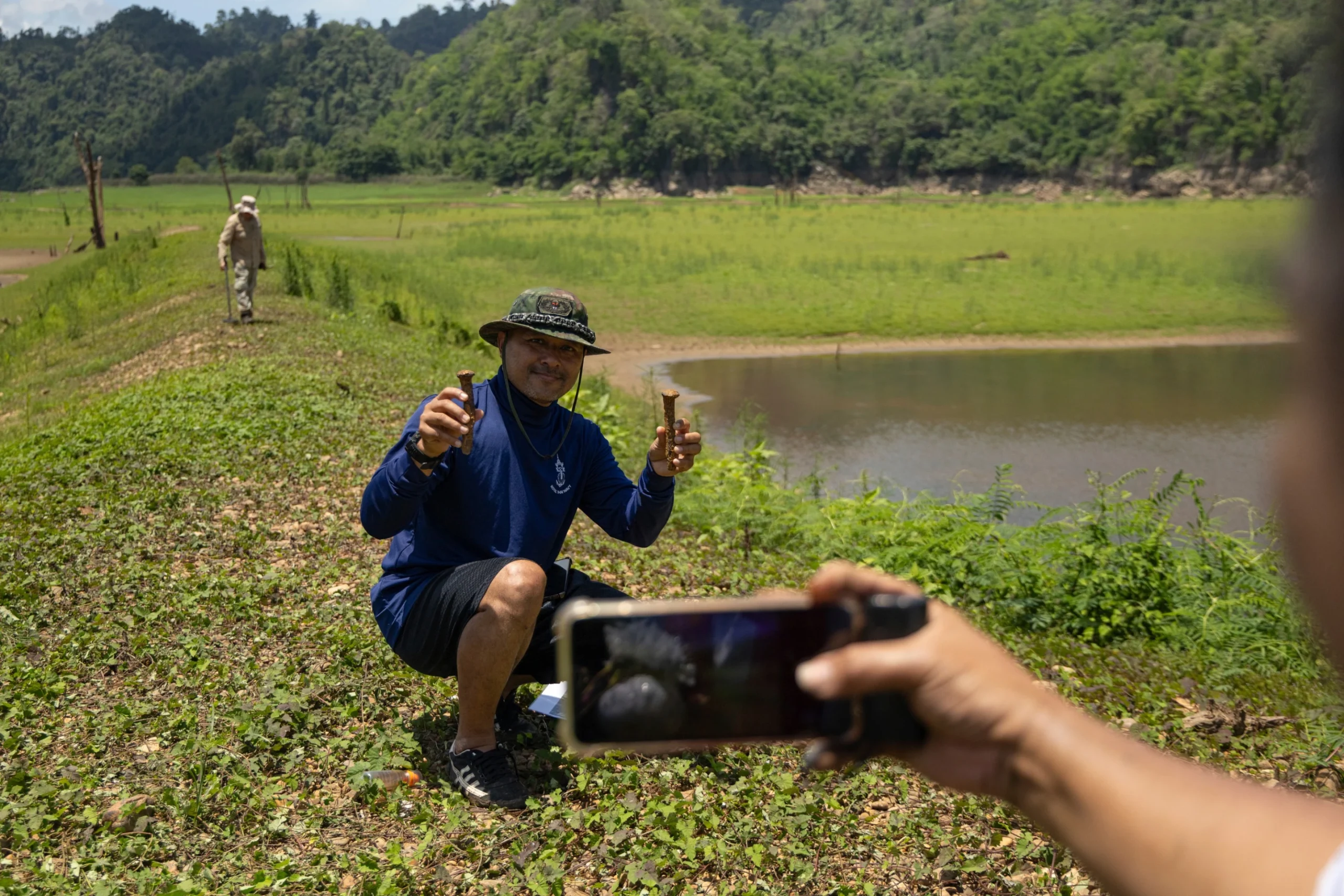
Australian researcher Martyn Fryer traveled from Perth to examine the exposed station and surrounding railway infrastructure. His grandfather was among the Allied prisoners captured during the war and later died while working on the railway.
Armed with a metal detector and historical records, Fryer searched the area for remnants of the wartime railway. Among the items recovered were iron spikes, bridge components, and other pieces of railway hardware.
Researchers are also comparing wartime maps and aerial imagery to identify the locations of former prisoner-of-war camps and work sites that once surrounded the station.
Public Interest Surges
The unexpected reappearance of Nithe Station has generated widespread attention across Thailand.
Photos and videos shared on social media have attracted millions of views, inspiring hundreds of visitors to travel to the remote location. Many see the site as an important reminder of the sacrifices made by those who suffered and died during the railway’s construction.
Visitors have described the exposed station as a powerful historical monument that helps preserve the memory of both prisoners of war and civilian laborers who endured extreme hardship during the conflict.

Legacy of the Death Railway Lives On
The Thailand-Burma Railway remains one of the most recognized symbols of World War II in Southeast Asia. Its story has been immortalized through books, films, and documentaries, including the acclaimed movie The Bridge on the River Kwai.
Nearby historical attractions such as Hellfire Pass continue to draw large numbers of international visitors each year. Preservation efforts at these sites aim to educate future generations about the devastating human cost of war.
Historians believe the temporary resurfacing of Nithe Station offers a valuable chance to deepen understanding of this tragic period while ensuring that the stories of those who lived, worked, and died along the railway are not forgotten.
As researchers continue their work, the station stands as a rare and poignant reminder of a wartime history that still resonates more than eight decades later.