














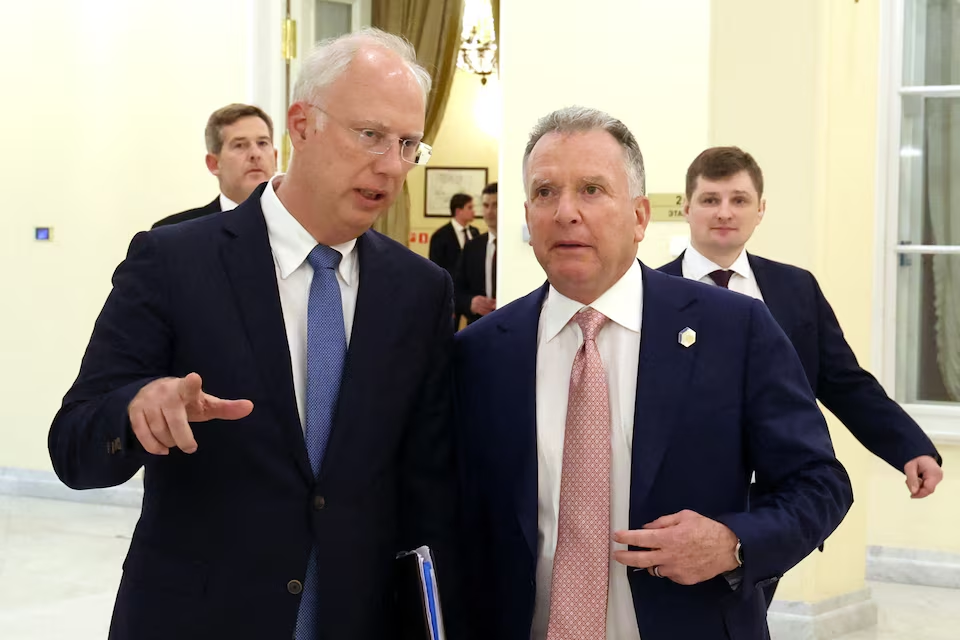
WASHINGTON — A recent Miami meeting involving Trump administration officials and a sanctioned Russian envoy has raised alarms across Washington and European capitals, sources tell Reuters. The meeting, held in late October, included Trump’s son-in-law Jared Kushner, special envoy Steve Witkoff, and Kirill Dmitriev, head of the Russian Direct Investment Fund (RDIF), who has been blacklisted by the U.S. since 2022 following Russia’s invasion of Ukraine.
A 28-Point Plan Draws Criticism
The gathering reportedly produced a 28-point proposal aimed at ending the war in Ukraine. However, the plan has stirred confusion among U.S. officials and sparked criticism for appearing to favor Russian interests. Ukrainian President Volodymyr Zelenskiy reaffirmed that Ukraine would not compromise its sovereignty. The plan reportedly calls for Ukraine to make territorial concessions in eastern regions, recognize Crimea as Russian, and refrain from joining NATO.
Limited Coordination With U.S. Agencies
Several senior officials, including State Department personnel and National Security Council members, were reportedly not briefed before the plan was drafted. Special Envoy Keith Kellogg, who has been working with Ukraine on negotiations, was also excluded from discussions led by Witkoff and Dmitriev. While Secretary of State Marco Rubio was later briefed, multiple sources say significant parts of the plan were previously rejected by the State Department.
Russian Envoy Kirill Dmitriev in Focus
Dmitriev, a close ally of President Vladimir Putin, has engaged with U.S. officials in multiple capacities, even amid sanctions. He previously collaborated with Kushner during Trump’s first administration, including on ventilator deliveries during the pandemic, raising concerns about compliance with U.S. sanctions. Dmitriev has also promoted U.S.-Russia trade ties at forums including the World Economic Forum in Davos.
Political and Security Concerns
Lawmakers and experts have expressed skepticism about the plan, warning that it could undermine Ukraine’s position. Senator Roger Wicker called the proposal “highly problematic,” emphasizing that Ukraine should not be forced to surrender territory. Intelligence and security officials have voiced unease about the influence of Dmitriev, noting his history of engagement with U.S. political and business circles.
Next Steps and Reactions
The Trump team reportedly shared the proposal with Ukraine through Turkey before presenting it directly in Kyiv. White House spokeswoman Karoline Leavitt stated the plan seeks “security guarantees and economic incentives for both Ukraine and Russia” and aims for a “win-win scenario.” Trump indicated he expected Zelenskiy to endorse the plan around Thanksgiving, warning that military assistance could be limited if Ukraine did not comply.
The meeting and the resulting plan have sparked debate over interagency coordination, potential conflicts with sanctions policy, and the broader geopolitical implications of direct engagement with Russian officials outside formal diplomatic channels.