



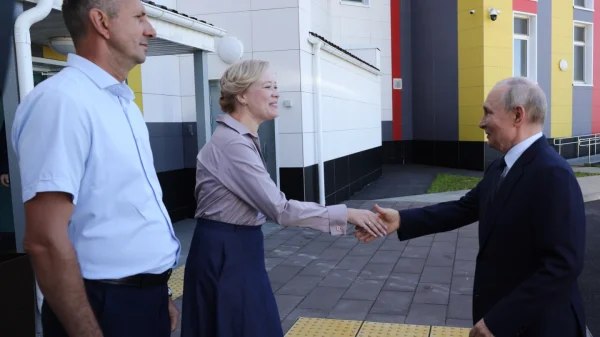







NEW DELHI — Russian President Vladimir Putin will arrive in India this week for a high-stakes summit intended to strengthen economic, defense, and energy cooperation. The visit comes at a sensitive time for New Delhi, which is striving to maintain strategic ties with both Washington and Moscow amid the prolonged war in Ukraine.
Putin is expected in New Delhi on Thursday, with formal talks scheduled on Friday with Indian Prime Minister Narendra Modi. According to officials, the two leaders will assess current progress in bilateral ties, address key global and regional issues, and sign several government-to-government and commercial agreements.
India Stands Firm on Russian Oil Imports Despite U.S. Tariffs
India has continued purchasing discounted Russian crude, even as U.S. officials warn that such imports help sustain Moscow’s wartime economy. In response, U.S. President Donald Trump recently imposed an additional 25% tariff on Indian goods—bringing the total duty to 50%—in an attempt to pressure New Delhi.
Indian officials have defended the oil purchases as essential to meeting the energy demands of a nation with 1.4 billion people. They argue that India is acting in line with global trade rules and prioritizing national energy security.
Putin last traveled to India in 2021. Modi visited Moscow in 2024, and the two leaders also spoke briefly during a Shanghai Cooperation Organization summit in China earlier this year.
A Diplomatic Test for New Delhi
The summit comes as Washington steps up efforts to rally support for a Ukraine peace plan. Earlier this week, Putin met with U.S. presidential envoy Steve Witkoff and Trump’s son-in-law Jared Kushner to discuss the proposals. Russian officials described the talks as “productive,” while acknowledging major differences remain.
Modi has avoided publicly criticizing Moscow over the conflict, instead calling for diplomacy and dialogue to end hostilities. Analysts say India has resisted assuming a formal mediating role to avoid jeopardizing ties with either nation.
International affairs expert Sreeram Sundar Chaulia noted that Modi has engaged in discreet diplomatic outreach. He said Modi may urge Putin to consider compromises that address concerns raised by Ukraine and European nations.
Economic Cooperation Expected to Dominate Agenda
Indian officials involved in summit preparations say both sides aim to finalize multiple agreements touching on trade, maritime cooperation, pharmaceuticals, agriculture, healthcare, and media collaboration. India wants to expand exports of textiles, medicines, and farm products to the Russian market and is pushing for the removal of non-tariff barriers.
New Delhi is also seeking long-term fertilizer supply contracts from Moscow and exploring ways to regulate the migration of skilled Indian workers to Russia.
U.S. Pressure Intensifies Over Oil Purchases
Washington continues urging India to step back from Russian energy imports. The Trump administration issued fresh sanctions against Russian oil giants Rosneft and Lukoil, complicating India’s procurement strategy.
Indian authorities have stated they will avoid purchasing crude from sanctioned entities but will continue sourcing from non-sanctioned Russian suppliers. Harsh V. Pant, a foreign policy expert at the Observer Research Foundation, said India is committed to keeping its energy options open.
According to Pant, future imports will be shaped by global market dynamics and the effectiveness of U.S. sanctions in influencing decisions by Indian refiners and state-owned companies.
Energy cooperation—including joint projects in Russia’s Far East and expanded civil nuclear collaboration—is expected to feature prominently in the Putin-Modi discussions. The Kudankulam nuclear power plant in Tamil Nadu remains central to Indo-Russian nuclear ties, and talks continue on localizing equipment production and pursuing joint projects in third countries.
Defense Partnership Remains a Pillar of Ties
India is likely to press Moscow for accelerated delivery of two pending S-400 air defense systems under a 2018 deal worth $5.4 billion. Deliveries have been delayed due to supply chain disruptions linked to the Ukraine conflict.

New Delhi may also explore acquiring additional S-400 units or a modernized variant, though no major announcements are expected during the visit.
Indian defense officials say the S-400 played a significant role during a brief standoff with Pakistan in May. Defense Secretary Rajesh Kumar Singh recently stated that both sides aim to iron out delivery delays and advance long-term defense cooperation, including upgrades to India’s fleet of Russian-origin Su-30MKI fighter jets.
Despite efforts to diversify arms purchases in recent years, Russia remains India’s largest defense supplier. Moscow has expressed interest in selling its Su-57 stealth fighter to India, though New Delhi continues evaluating multiple international options.