
















The lives of Rohingya refugee children in Bangladesh have been thrown into deeper crisis after sweeping foreign aid reductions led to the closure of schools, training centers, and child protection programs across the world’s largest refugee settlement, humanitarian workers and families say.
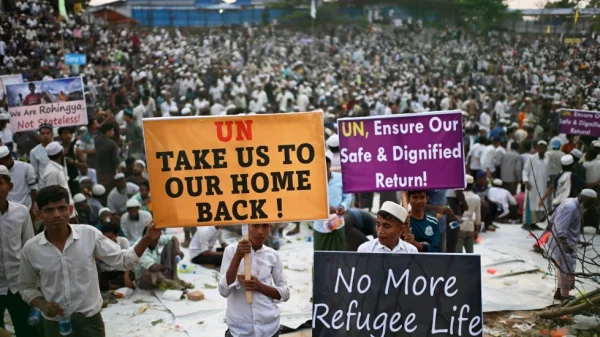
In the vast camps of Cox’s Bazar, home to around 1.2 million Rohingya who fled persecution in Myanmar, education once served as one of the few safeguards protecting children from trafficking, child labor, and early marriage. That fragile safety net has now largely collapsed.
Among those affected is Hasina, a teenage Rohingya girl who lost her father during Myanmar’s military crackdown in 2017 and escaped to Bangladesh with her mother and sisters. For years, school offered her structure, hope, and a refuge from abuse and exploitation inside the camp. That protection vanished abruptly in June, when her teacher announced that funding had been cut and the school would shut down.
Within weeks, Hasina—then 16—was married off, one of hundreds of underage girls whose families feared that worsening conditions and shrinking aid would leave them even more vulnerable. She is now trapped in an abusive marriage, her education cut short and her future derailed.
“I wanted to become someone useful for my community,” she said quietly. “Now everything is gone.”
A System Under Strain
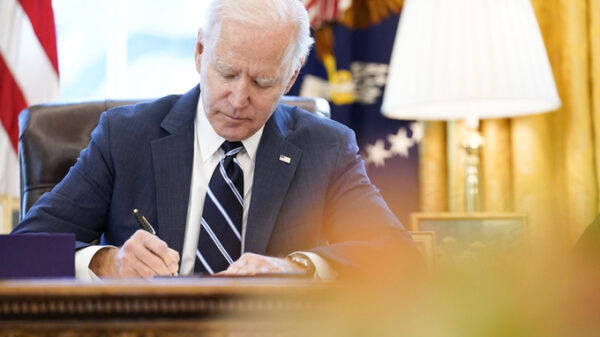
The closures stem from sharp reductions in international funding, including cuts implemented this year by the United States under President Donald Trump, alongside scaled-back contributions from other donor nations. Aid agencies say the impact has been immediate and severe: thousands of learning centers and youth programs have been suspended, while services designed to prevent child marriage, trafficking, and exploitation have been drastically reduced.
Children across the camps are now working to support their families, selling food, collecting plastic waste, or performing other dangerous jobs. Aid workers warn that the absence of schools and safe spaces has made children easier targets for criminal networks operating inside and beyond the camps.
Girls are especially at risk. Without education or protective services, many families see early marriage as the only way to secure their daughters’ safety, even though such unions often expose them to violence and lifelong harm.
Growing Risks for a Stateless Generation
Human rights groups say the Rohingya crisis is entering a dangerous phase. Nearly a decade after their mass displacement from Myanmar, refugees remain stateless, unable to work legally, travel freely, or access formal education. Aid cuts have intensified these long-standing vulnerabilities, leaving children to bear the heaviest burden.
“Education was one of the last lines of defense for Rohingya children,” said a humanitarian worker in Cox’s Bazar who was not authorized to speak publicly. “When that disappears, exploitation fills the vacuum.”
Despite repeated warnings from the United Nations and international NGOs, funding gaps continue to widen. Without urgent intervention, aid groups fear a generation of Rohingya children will be lost to forced labor, early marriage, abuse, and criminal exploitation.
For girls like Hasina, the damage is already done. Her schoolbooks are gone, replaced by fear and isolation. “I still cry when I think about my classroom,” she said. “That was the only place where I felt safe.”