


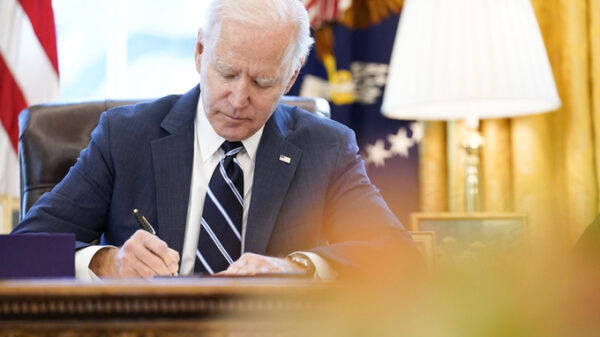














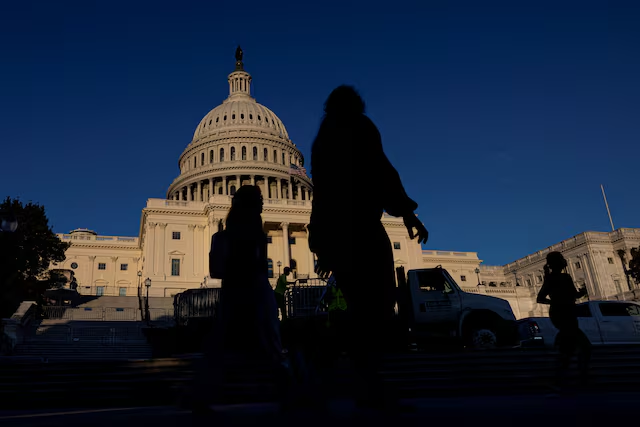
The U.S. Congress has approved a sweeping defense policy bill authorizing $901 billion in military spending, clearing the way for President Donald Trump to sign the legislation into law. The measure, known as the Fiscal Year 2026 National Defense Authorization Act (NDAA), reflects strong bipartisan support while also including several provisions that diverge from the administration’s stated foreign policy priorities.
The Senate passed the bill by a decisive 77–20 vote, following earlier approval in the House of Representatives by 312–112. Lawmakers from both parties emphasized the importance of maintaining the annual tradition of passing the NDAA, which has continued uninterrupted for more than six decades.
Record Defense Spending and Troop Pay Raise
The NDAA sets a historic high for U.S. defense spending and includes a 4% pay increase for active-duty service members. It also advances reforms to the Pentagon’s procurement system, aiming to modernize how military equipment is acquired and to strengthen the United States’ strategic position against global rivals, particularly China and Russia.
Strong Support for Ukraine and European Security
Despite President Trump’s recent reassessment of U.S. relations with Europe, the bill allocates $800 million for Ukraine, split evenly over the next two years through the Ukraine Security Assistance Initiative. The funding will support the purchase of U.S.-made weapons for Ukraine’s armed forces.
The legislation also reinforces America’s commitment to European security by approving $175 million for the Baltic Security Initiative, benefiting Latvia, Lithuania, and Estonia. Additionally, it restricts the Pentagon from reducing U.S. troop levels in Europe below 76,000 personnel and preserves the U.S. European Command’s leadership role within NATO.
Policy Shifts on Syria, Venezuela, and War Powers
Among its notable policy changes, the NDAA repeals the “Caesar” sanctions on Syria, which were imposed during the rule of former Syrian leader Bashar al-Assad. The bill also tightens congressional oversight of military operations linked to Venezuela by conditioning part of the defense secretary’s travel budget on the release of unedited footage of U.S. strikes targeting alleged drug-trafficking operations.
In a move aimed at reasserting legislative authority over military engagements, the bill repeals the 1991 and 2002 Authorizations for the Use of Military Force (AUMFs) related to Iraq, long criticized as outdated legal justifications for modern conflicts.
Domestic Measures and Cultural Provisions
The legislation does not include funding to rename the Department of Defense as the “Department of War,” an idea previously promoted by President Trump. However, it does incorporate several domestic policy provisions, including restrictions on participation by transgender women in women’s athletic programs at U.S. military academies.
The NDAA also formally enshrines executive actions that eliminated diversity, equity, and inclusion (DEI) initiatives within the Pentagon, aligning with priorities championed by conservative lawmakers.
Broad Agreement, Lingering Debates
While some lawmakers raised concerns about military safety reforms following a recent fatal aviation incident, those issues were not included in the final bill. Congressional leaders have indicated that safety measures will be addressed separately in future legislation.
Overall, the passage of the NDAA underscores Congress’s willingness to assert its own defense and foreign policy priorities, even as it works with the White House to ensure continued funding and oversight of the U.S. military.