






















China’s factory sector posted an unexpected return to growth in December, ending a prolonged downturn as businesses ramped up production ahead of the Lunar New Year. Official data released on Tuesday showed that short-term demand linked to holiday stockpiling helped stabilize activity, even as economists cautioned that deeper structural challenges remain unresolved.
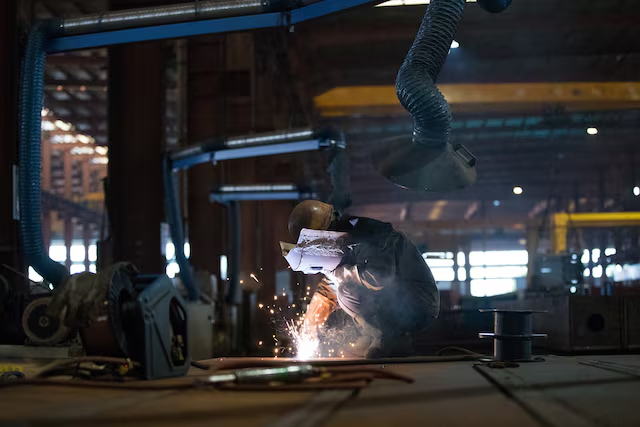
According to figures from the National Bureau of Statistics (NBS), China’s official manufacturing Purchasing Managers’ Index (PMI) rose to 50.1 in December, up from 49.2 in November. A reading above 50 indicates expansion. The result exceeded market expectations and marked the first expansion after eight consecutive months of contraction.
The rebound was driven primarily by a rise in production and new orders. The production index climbed to 51.7, while new orders reached 50.8, their strongest levels in several months. Improved supplier delivery times also contributed to a more optimistic outlook among manufacturers, with business expectations rising to their highest point since early 2024.
Holiday Demand Offers Temporary Relief
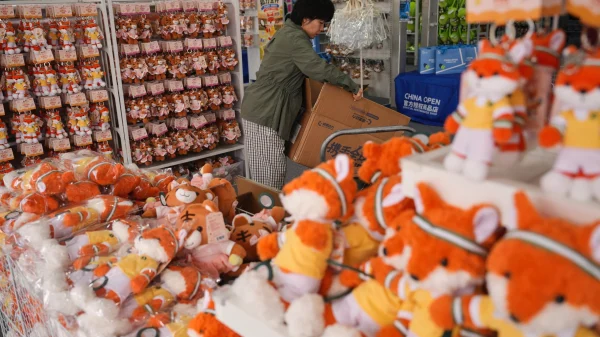
Officials attributed much of the improvement to pre-holiday restocking, as companies prepare for the Lunar New Year celebrations scheduled for February. Increased activity was particularly visible in food processing, agriculture-related manufacturing, and beverage production—sectors that typically benefit from seasonal demand.
A private-sector survey released the same day echoed the official data, showing modest growth in December. That report pointed to stronger domestic demand and output, though it also highlighted continued weakness in overseas orders.
Export activity remained a drag on the overall picture. New export orders stayed below the growth threshold, signaling ongoing pressure from a sluggish global economy and rising trade barriers. Analysts note that uncertainty surrounding U.S. trade policy and tariffs continues to weigh on Chinese manufacturers that rely heavily on foreign markets.
Economists Warn of Limited Momentum
Despite the encouraging headline figures, many economists remain skeptical about the durability of the recovery. Analysts say the December improvement is likely tied to short-term fiscal spending cycles and seasonal factors rather than a sustained turnaround.
Structural issues—including a prolonged property sector downturn, excess industrial capacity, and soft consumer confidence—are expected to persist into next year. These challenges have constrained private investment and limited households’ willingness to spend, reducing the effectiveness of supply-side improvements.
Recent data underscore those concerns. Industrial profits fell sharply in November, marking the steepest annual decline in more than a year. The drop suggests that weaker demand continues to squeeze corporate margins, with consumers not yet stepping in to offset slowing export growth.
Services and Construction Stabilize
China’s non-manufacturing PMI, which covers services and construction, also improved in December, rising to 50.2 after dipping into contraction territory the previous month. The recovery indicates modest stabilization in sectors that are crucial for employment, although growth remains fragile.
The combined PMI, which blends manufacturing and non-manufacturing activity, rose to 50.7, signaling broader economic stabilization at the end of the year.
Policy Focus Shifts Toward Consumption
Chinese policymakers have increasingly acknowledged the need to rebalance the economy away from heavy reliance on production and exports. At key policy meetings in December, officials emphasized boosting household income, stimulating consumption, and addressing imbalances between supply and demand.
Authorities have also pledged to curb aggressive price competition, reduce excess capacity in certain industries, and promote what they describe as “anti-involution” measures—aimed at discouraging inefficient expansion.
President Xi Jinping recently reiterated that consumption, rather than overinvestment, should serve as the long-term engine of economic growth. While similar commitments have been made in the past, investors and economists are watching closely for concrete policy actions in 2026.
Outlook for 2026
China’s economy, valued at roughly $19 trillion, is still on track to meet its annual growth target of around 5%. However, analysts warn that without stronger consumer demand and deeper structural reforms, the recent uptick in factory activity may prove short-lived.

For now, December’s data provide a measure of relief for policymakers seeking to stabilize growth without triggering new deflationary pressures. Whether that momentum can carry into the new year remains an open question.