
















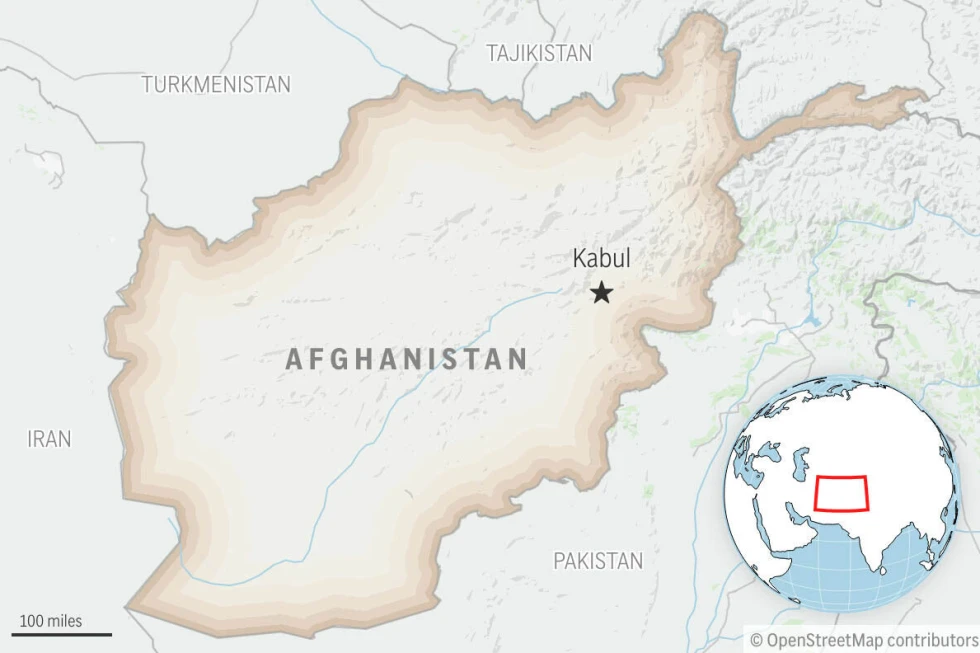
Pakistan and China have jointly called for “visible and verifiable” measures to dismantle terrorist organizations based in Afghanistan, warning that militant activity emanating from Afghan territory continues to threaten regional and global security.
The demand was outlined in a joint statement released Monday following talks between Pakistan’s Foreign Minister Ishaq Dar and Chinese Foreign Minister Wang Yi. The meeting took place in Beijing on December 4 and focused on security cooperation, counterterrorism, and regional stability.
According to the statement, both countries stressed the need to ensure that Afghan soil is not used to launch attacks against any neighboring or distant state. They underscored that armed groups operating from Afghanistan remain a serious concern, calling for decisive action to curb their activities.
Afghanistan’s authorities in Kabul did not immediately respond to the statement.
Security concerns and Chinese interests
China commended Pakistan for what it described as comprehensive counterterrorism efforts, particularly measures aimed at safeguarding Chinese citizens and projects linked to the China–Pakistan Economic Corridor (CPEC). CPEC is a flagship component of China’s Belt and Road Initiative, designed to improve transport and trade links between China’s Xinjiang region and Pakistan’s Gwadar port on the Arabian Sea.
Thousands of Chinese engineers and workers are involved in CPEC-related infrastructure projects across Pakistan. Security has been a persistent concern, especially after a suicide car bombing in northwest Pakistan in 2024 killed five Chinese nationals traveling on a bus.
Stalled regional cooperation
In August, senior diplomats from Pakistan, China, and Afghanistan met in Kabul and agreed in principle to explore extending CPEC into Afghanistan. However, there has been little visible progress on that initiative since the talks, amid rising regional tensions and security challenges.
Pakistan has repeatedly accused Afghanistan’s Taliban-led government of providing safe haven to the Tehrik-e-Taliban Pakistan (TTP), a banned militant group blamed for a surge in attacks inside Pakistan since 2021. The TTP is distinct from Afghanistan’s Taliban, which returned to power in 2021 and has consistently denied allowing its territory to be used for cross-border attacks.
Escalating tensions and fragile ceasefire
Relations between Islamabad and Kabul deteriorated sharply in early October after Pakistan carried out airstrikes on what it said were TTP hideouts inside Afghanistan. Pakistani officials claimed dozens of militants were killed. Afghan forces later retaliated by firing on Pakistani military positions, asserting that 58 Pakistani soldiers were killed. Pakistan acknowledged the loss of 23 troops.
The hostilities subsided following a ceasefire brokered by Qatar in Doha. Subsequent talks in Istanbul aimed at easing tensions and addressing security concerns, but those discussions failed to produce any substantive breakthroughs.
Despite the pause in fighting, the joint Pakistan-China statement signals continued pressure on Afghan authorities to take concrete steps against militant groups, highlighting counterterrorism as a central issue shaping regional diplomacy.