













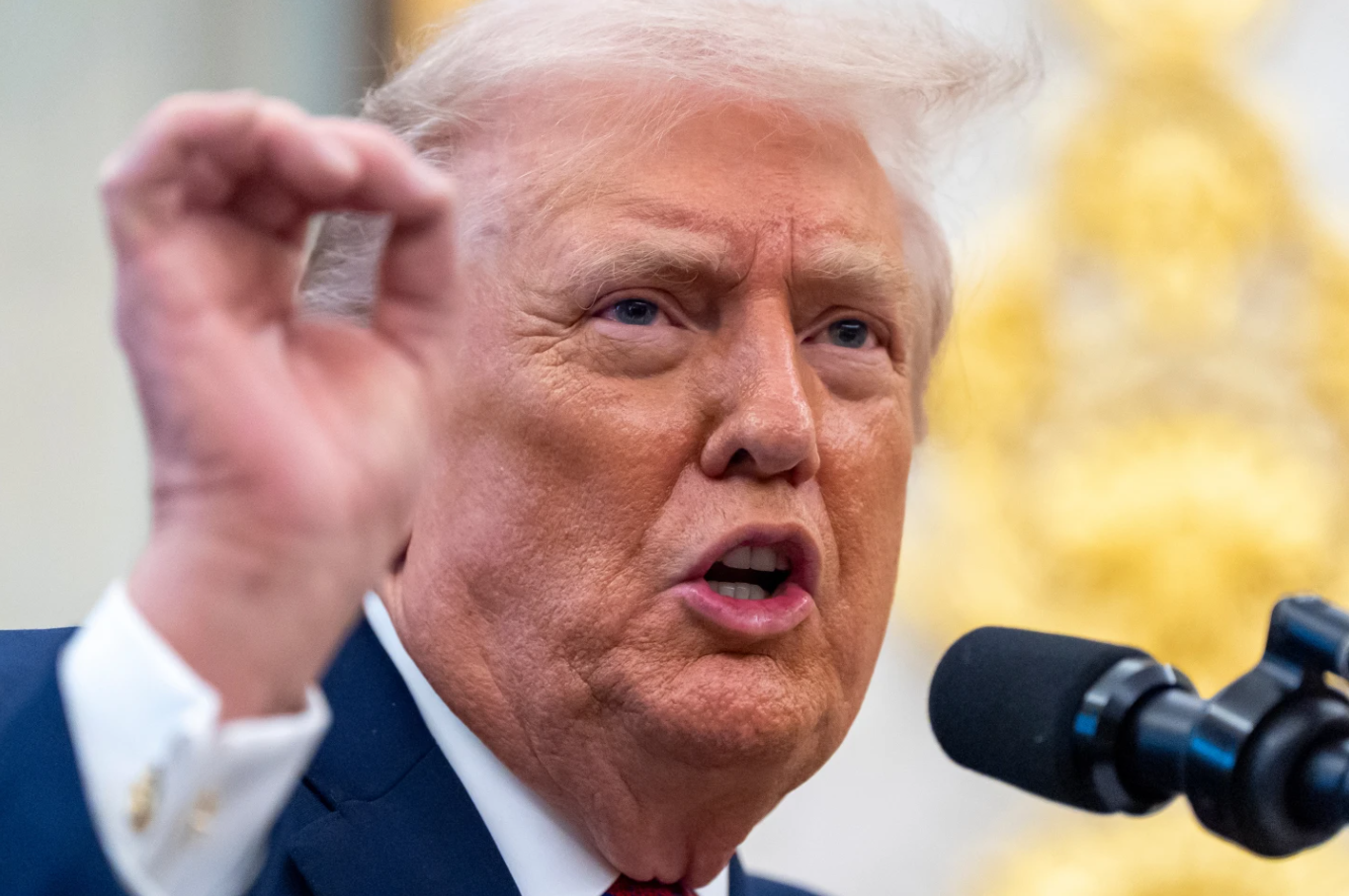
COPENHAGEN, Denmark (AP) — President Donald Trump suggested Friday that the United States may impose tariffs on countries that do not support U.S. efforts to control Greenland, escalating tensions with allies over the Arctic territory.
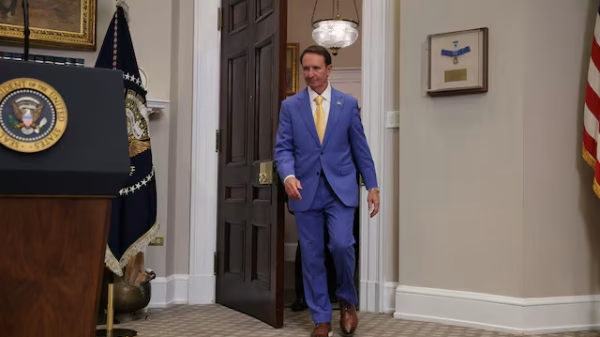
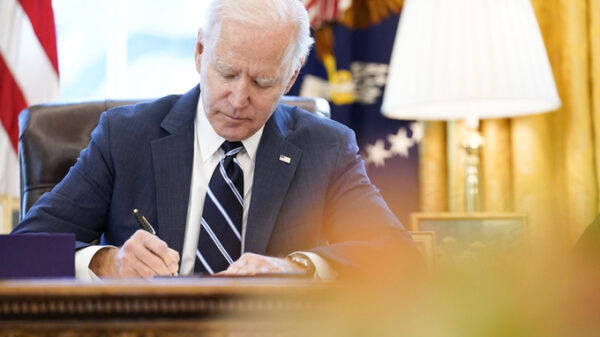
Speaking at a White House event on rural health care, Trump framed the potential tariffs as a national security measure. “I may put a tariff on countries if they don’t go along with Greenland, because we need Greenland for national security,” he said, without providing further details.
Trump has repeatedly argued for U.S. control of Greenland, a semiautonomous territory of NATO ally Denmark, citing concerns about China and Russia seeking influence in the Arctic. While the White House has not ruled out military options, European leaders insist that any decisions regarding Greenland rest with Denmark and Greenland itself.
Congressional Delegation Seeks Diplomacy
Meanwhile, a bipartisan delegation of U.S. lawmakers traveled to Copenhagen to ease tensions with Danish and Greenlandic officials. The group met with Prime Minister Mette Frederiksen, Greenlandic politicians, and members of the Danish parliament.
Sen. Lisa Murkowski, R-Alaska, stressed that Greenland should be treated as a strategic partner rather than a U.S. asset. “It is a relationship that we need to nurture,” she said, noting that most Americans, roughly 75%, oppose U.S. acquisition of Greenland.
Sen. Chris Coons, D-Delaware, emphasized the longstanding alliance between the United States and Denmark. “We had a strong and robust dialog about how we extend that into the future,” he said.
The delegation also highlighted bipartisan legislation introduced by Murkowski and Sen. Jeanne Shaheen, D-New Hampshire, which would prohibit U.S. annexation of Greenland—or any NATO ally territory—without that nation’s consent or North Atlantic Council approval.
Greenlandic Leaders Voice Opposition
Greenlandic leaders and Indigenous representatives have strongly opposed the U.S. stance. Greenland’s Prime Minister Jens-Frederik Nielsen reaffirmed loyalty to Denmark and NATO, stating, “If we have to choose between the United States and Denmark here and now, we choose Denmark. We choose NATO. We choose the Kingdom of Denmark. We choose the EU.”
Sara Olsvig, chair of the Inuit Circumpolar Council, criticized White House statements as reflecting a dismissive view of Indigenous peoples and smaller nations. “The issue is how one of the biggest powers in the world views other peoples that are less powerful than them,” Olsvig said, calling the approach “concerning.”
The U.S.-Greenland dispute underscores growing geopolitical competition in the Arctic, where critical mineral resources and strategic positions are increasingly in demand.