

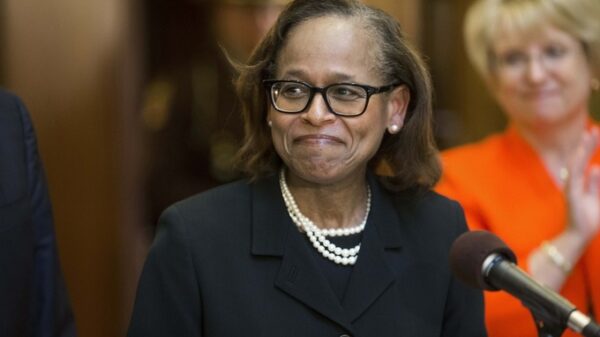






Venezuelan opposition leader and Nobel Peace Prize laureate María Corina Machado met with U.S. President Donald Trump at the White House on Thursday, marking a rare and politically charged encounter as Washington reshapes its approach to Venezuela following the removal of former President Nicolás Maduro.
After the meeting, Machado told reporters that she symbolically presented her Nobel Peace Prize medal to Trump as a gesture of gratitude for what she described as his decisive role in advancing Venezuela’s freedom. According to Machado, the medal was offered as a personal tribute rather than a formal transfer of the award.
President Trump later acknowledged the gesture on social media, calling the meeting an honor and praising Machado’s resilience and leadership. The White House also released an image from the Oval Office showing Trump holding the framed medal, accompanied by a message describing it as a sign of appreciation from the Venezuelan people.
However, the symbolic exchange unfolded against a backdrop of political uncertainty. While the White House praised Machado as a courageous figure in Venezuela’s opposition movement, officials emphasized that Trump’s skepticism about her ability to govern the country remains unchanged. Administration representatives reiterated that any transition toward elections would occur “when the time is right,” without offering a specific timeline.
Machado said discussions with Trump included Venezuela’s political future but offered few details, suggesting that firm commitments on elections were not made. Still, she struck an optimistic tone as she greeted supporters outside the White House, telling them they could rely on U.S. backing.
Following her visit, Machado met privately with a bipartisan group of U.S. senators on Capitol Hill. Lawmakers said she warned that prolonged delays in democratic reforms could deepen instability, particularly with interim President Delcy Rodríguez maintaining control of day-to-day governance. Several senators noted that no concrete assurances were given by the administration regarding an election schedule.
The meeting comes amid heightened U.S. involvement in Venezuela, including expanded efforts to control oil exports and the recent seizure of sanctioned vessels in the Caribbean. U.S. officials say interim authorities in Caracas have cooperated with Washington, including the release of detained Americans and renewed diplomatic engagement.
Despite international recognition and her role in mobilizing opposition to Maduro during the disputed 2024 elections, Machado has yet to secure Trump’s endorsement as Venezuela’s future leader. The president has repeatedly questioned her domestic support, signaling a willingness to work pragmatically with interim authorities instead.
For Machado, the Washington visit underscored both her global stature and the political limits she faces at home. While the Nobel medal presentation captured international attention, the path toward democratic elections in Venezuela remains uncertain, with key decisions still firmly in U.S. hands.