























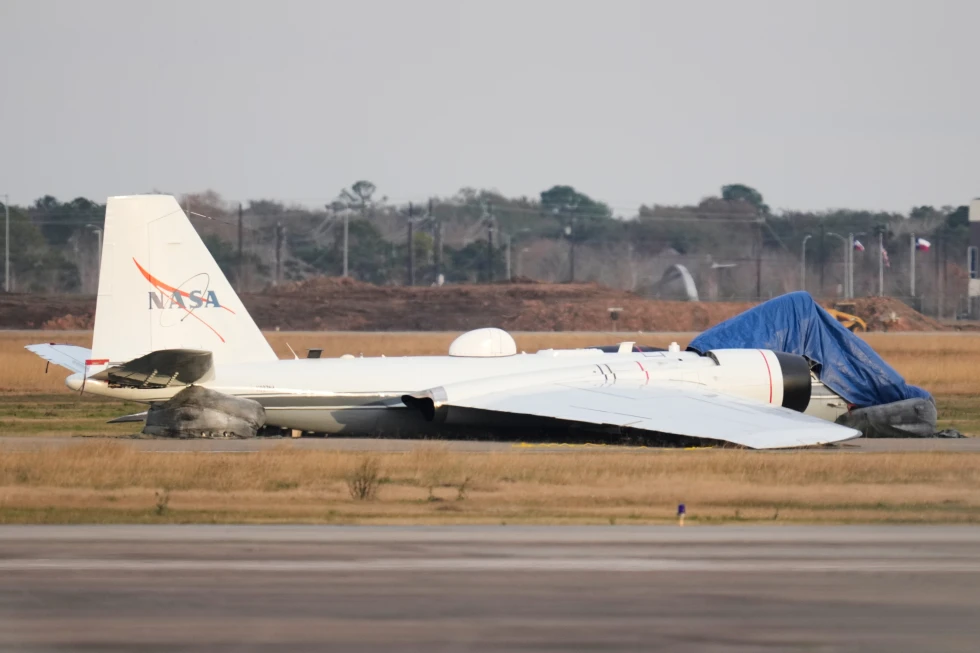
A NASA research aircraft made a dramatic emergency landing in Texas on Tuesday after experiencing a mechanical failure, touching down without its landing gear and producing visible flames and smoke along the runway.
The incident occurred at Ellington Airport, located southeast of Houston. NASA confirmed that both crew members aboard the WB-57 research plane are safe. The agency described the situation as a “mechanical issue” and said a full investigation is underway.
Social media footage captured the aircraft descending toward the runway before striking the tarmac on its belly. Flames erupted from beneath the plane as it skidded along the runway, trailing smoke while emergency crews responded. Local news outlets, including KHOU 11, reported that the aircraft eventually came to a stop, with fire trucks and first responders attending the scene.
The WB-57, a high-altitude research plane, has been part of NASA’s fleet since the 1970s. Its thin fuselage and two-seat cockpit allow it to conduct missions at altitudes exceeding 63,000 feet (19,200 meters), with flight durations of up to six and a half hours. The aircraft continues to support scientific research in atmospheric studies, Earth observation, and other specialized missions.
NASA emphasized that safety protocols were followed, and the swift response of the crew and emergency teams prevented injuries or more serious damage. The agency will assess the mechanical issue to determine the cause and prevent similar incidents in the future.
The dramatic landing highlights the ongoing challenges faced by specialized research aircraft, even decades after their introduction, and underscores the skill and training required of NASA pilots to manage high-risk emergency situations.