














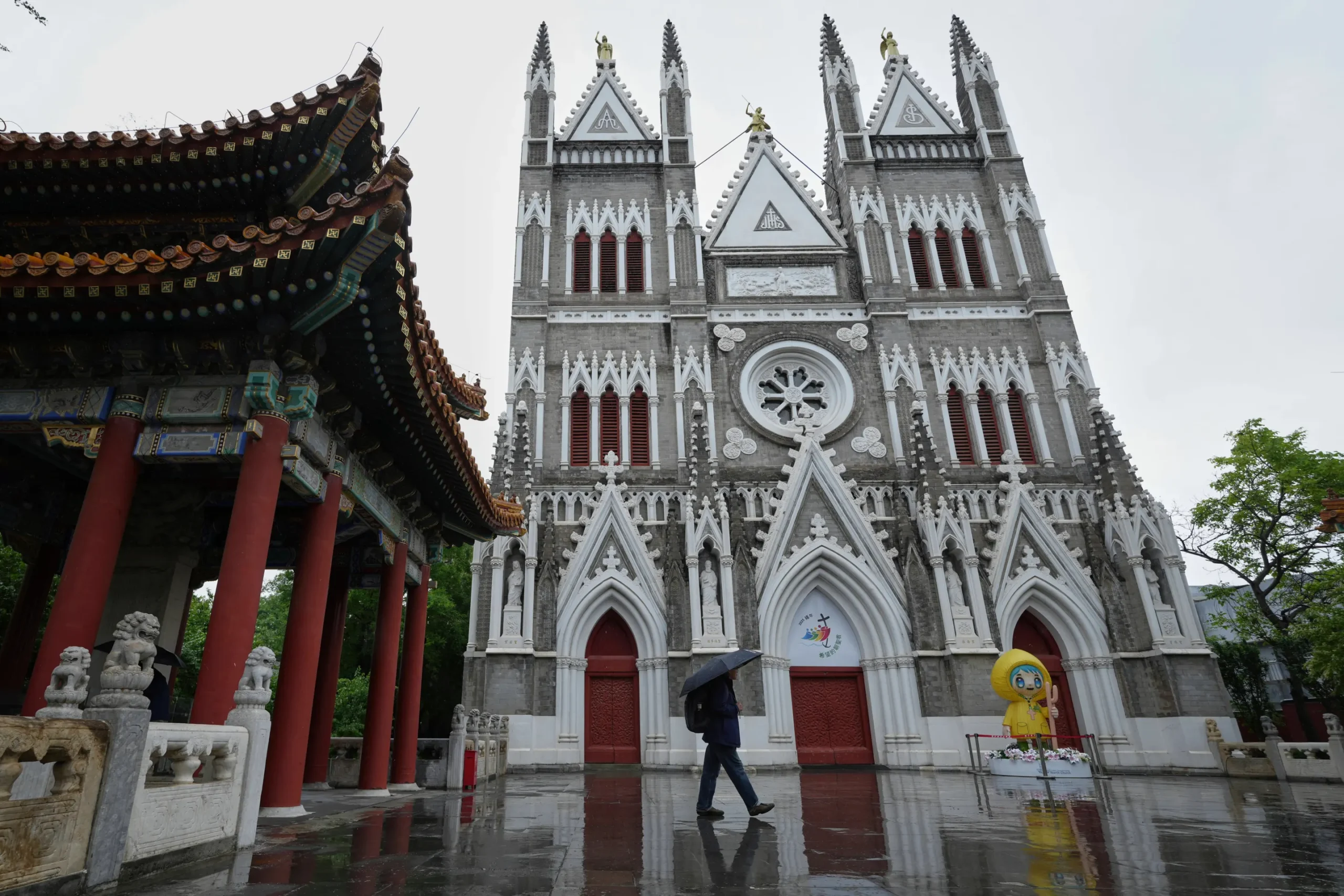
Chinese authorities are intensifying pressure on underground Catholic communities to align with the state-controlled church while expanding surveillance and restrictions on religious activity nationwide, according to a new report by Human Rights Watch.
The findings highlight what the rights group describes as a growing campaign to bring all religious practice under tighter government oversight, affecting an estimated 12 million Catholics in China.
Growing Divide Between State and Underground Churches
Catholicism in China has long been split between the state-approved Chinese Catholic Patriotic Association and underground communities that remain loyal to the Vatican.
The underground church has historically operated outside government control, often facing restrictions, harassment, or persecution for refusing to sever ties with Rome.
Human Rights Watch says recent measures indicate increased pressure on these communities to register with state authorities and abandon allegiance to the Holy See.
Report Points to Expanded Surveillance and Restrictions
According to the report, Chinese authorities have expanded monitoring of Catholic clergy and worshippers, including tighter control over religious gatherings and foreign travel.
The organization also alleges that some underground clergy have faced detention, house arrest, or enforced disappearance as part of efforts to compel compliance with state regulations.
The Chinese government has not publicly responded to the claims.
Vatican-China Agreement Under Scrutiny
The issue unfolds against the backdrop of a 2018 agreement between the Holy See and Beijing on the appointment of bishops. The deal allows Chinese authorities to propose candidates while giving the pope the ability to approve or veto appointments.
The agreement, reached under earlier Vatican leadership, was intended to reduce tensions between the two sides. However, its details have never been fully disclosed, and its effectiveness remains widely debated.
Since taking office, Pope Leo XIV has continued limited engagement with the arrangement, signaling ongoing dialogue while acknowledging the complexity of the relationship.
Sinicization Policy Shapes Religious Control
The report links current restrictions to China’s broader “Sinicization” policy introduced under President Xi Jinping. The policy seeks to align religious practice with Communist Party ideology and strengthen state supervision over faith groups.
Under these measures, authorities have reportedly demolished churches, removed religious symbols, restricted access to religious texts, and tightened control over unauthorized worship spaces.
Officially, China recognizes five religions, including Catholicism, but requires all religious activity to operate under state-approved organizations.
Broader Crackdown on Independent Faith Groups
Human Rights Watch says the pressure on Catholics mirrors a wider crackdown on independent religious communities, including Protestant house churches, Tibetan Buddhists, and Muslim minorities.

The report cites cases of detained clergy and increased enforcement actions against unregistered congregations that refuse to join official state structures.
Religious rights advocates argue that these measures have significantly reduced space for independent worship and religious expression across the country.
International Reactions and Ongoing Concerns
Human rights organizations and advocacy groups have urged greater international attention to religious freedoms in China, calling for diplomatic pressure to address reported abuses.
The Vatican has not yet issued a formal response to the latest report, though it has previously described relations with China as complex and subject to ongoing dialogue.
Experts say the situation leaves China’s Catholic community in a difficult position between state authority and religious allegiance to Rome.
A Longstanding Tension With No Clear Resolution
The divide between underground and state-sanctioned Catholic communities continues to define religious life in China, with little indication of resolution in the near term.
As Beijing strengthens ideological control and international scrutiny grows, the future of religious autonomy for Chinese Catholics remains uncertain.