














CONCORD, N.H. — For many adults who once spent their summers in school band camps, the music never truly stopped—it just paused. Now, a growing number of music programs across the United States are giving them a chance to pick up their instruments again, reconnect with old passions, and build new friendships.
From symphonic ensembles to jazz retreats and community orchestras, adult-focused music camps are expanding nationwide as retirees and midlife learners rediscover the joy of playing together.
From Childhood Band Camps to Adult Music Retreats
For participants like 71-year-old Lori Guess, the experience feels like a return to a familiar world. She first attended a youth music camp in Maine in the 1970s and now returns to the same lakeside setting through an adult program that allows her to continue playing—and even learn new instruments like the trumpet.
Guess, a retired attorney, says the appeal lies in both the music and the environment. Surrounded by nature and fellow musicians, she describes the experience as both grounding and deeply social.
“I love this place,” she said, noting that much of the atmosphere remains unchanged from her youth.
A Growing Movement in Adult Music Education
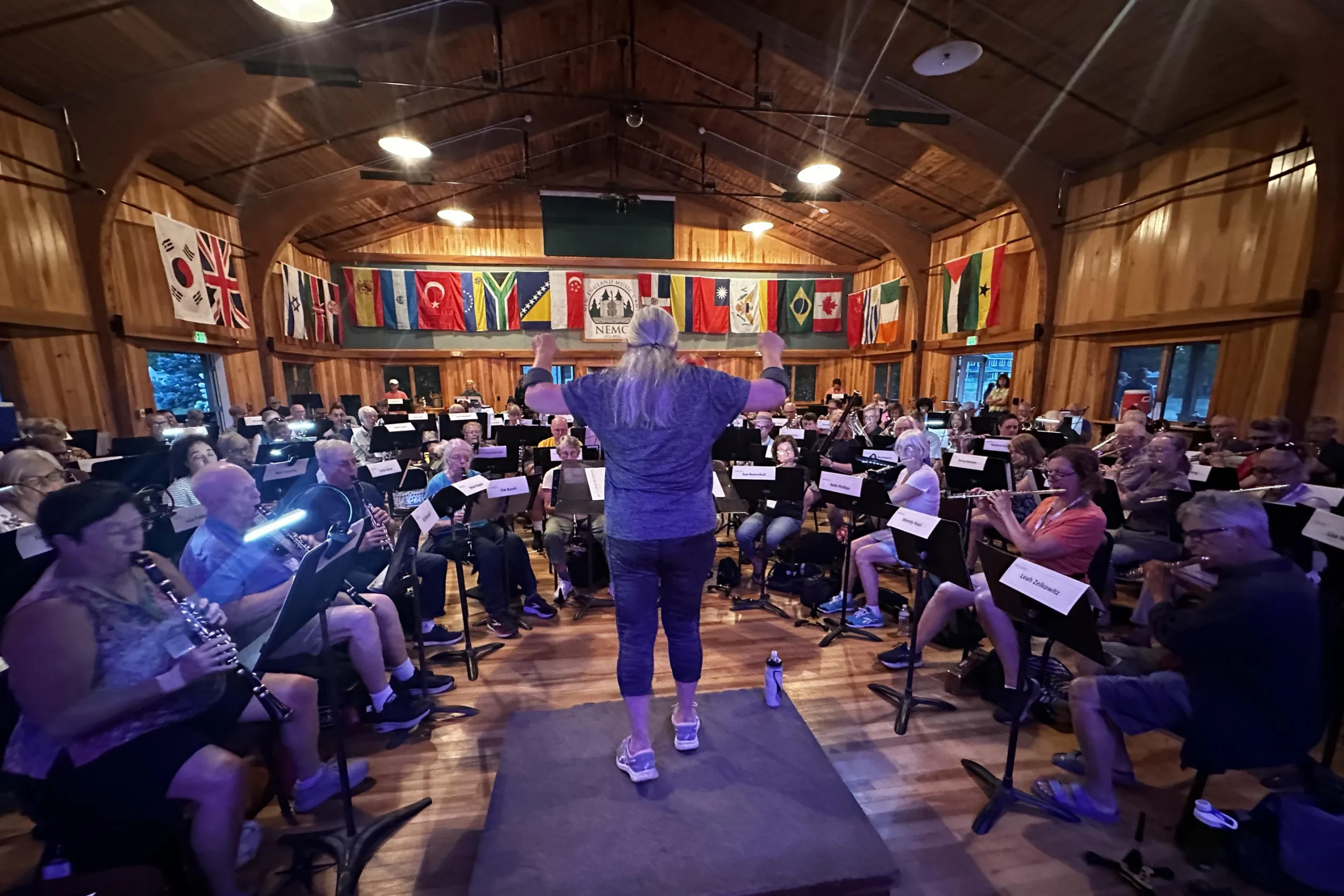
Across the country, institutions are expanding opportunities for adult musicians of all skill levels. Programs range from beginner-friendly ensembles to advanced orchestral camps, often held at universities and arts centers during the summer.
Well-known programs such as the Interlochen Center for the Arts in Michigan now include dedicated adult symphonic camps. Other long-running retreats, including events in Washington state and Pennsylvania, offer structured ensembles, rehearsals, and public performances.
At the same time, organizations like the New Horizons International Music Association have built global networks of community bands, orchestras, and choirs specifically designed for adult learners—welcoming both experienced musicians and complete beginners.
Music as a Tool for Health and Connection
Experts say the benefits of returning to music later in life go beyond recreation.
Psychotherapists and wellness specialists note that playing instruments can support memory, coordination, and emotional well-being. Studies in neuroscience also suggest that musical practice helps strengthen brain pathways linked to attention and cognitive resilience.
“Emotionally, making music is good for the soul,” said California-based forensic psychiatrist Carole Lieberman, who also plays multiple instruments. “It can boost mood and creativity while reducing stress.”
Participants in adult camps often describe similar effects, emphasizing the social bonds formed during rehearsals, performances, and informal gatherings.
A Second Chance at Creativity
Many attendees return to music after decades away—often after careers, parenting, or retirement. Some rediscover instruments they once abandoned in school, while others start fresh entirely.
Camp organizers say it is common to see participants relearning forgotten skills or transitioning to new instruments in supportive, judgment-free environments.
The guiding philosophy at many programs is simple: progress matters more than perfection.

More Than Music: Community and Belonging
Beyond rehearsals and concerts, adult music camps often include shared meals, outdoor activities, and social events that strengthen community ties. From campfire gatherings to informal jam sessions, the experience blends performance with connection.
Instructors say that sense of belonging is one of the most important outcomes.
Many participants report that ensemble playing helps counter isolation and creates meaningful friendships—particularly among retirees seeking new social networks.
Growing Demand Among Older Adults
Participation in adult ensembles has risen steadily in recent years. Some local music programs report doubling enrollment among musicians over 60, reflecting broader interest in lifelong learning and creative engagement.
Organizers say demand continues to grow as more adults look for structured, enriching activities that combine physical, mental, and social benefits.
A Lifelong Relationship With Music
For many, returning to band camp is less about nostalgia and more about continuity.
Whether performing in symphonies, small jazz groups, or community orchestras, adult musicians describe the experience as a way to reconnect with identity and rediscover joy through collaboration.
As one longtime participant put it, playing music with others allows people to “rise above the noise of everyday life” and find something deeply shared