













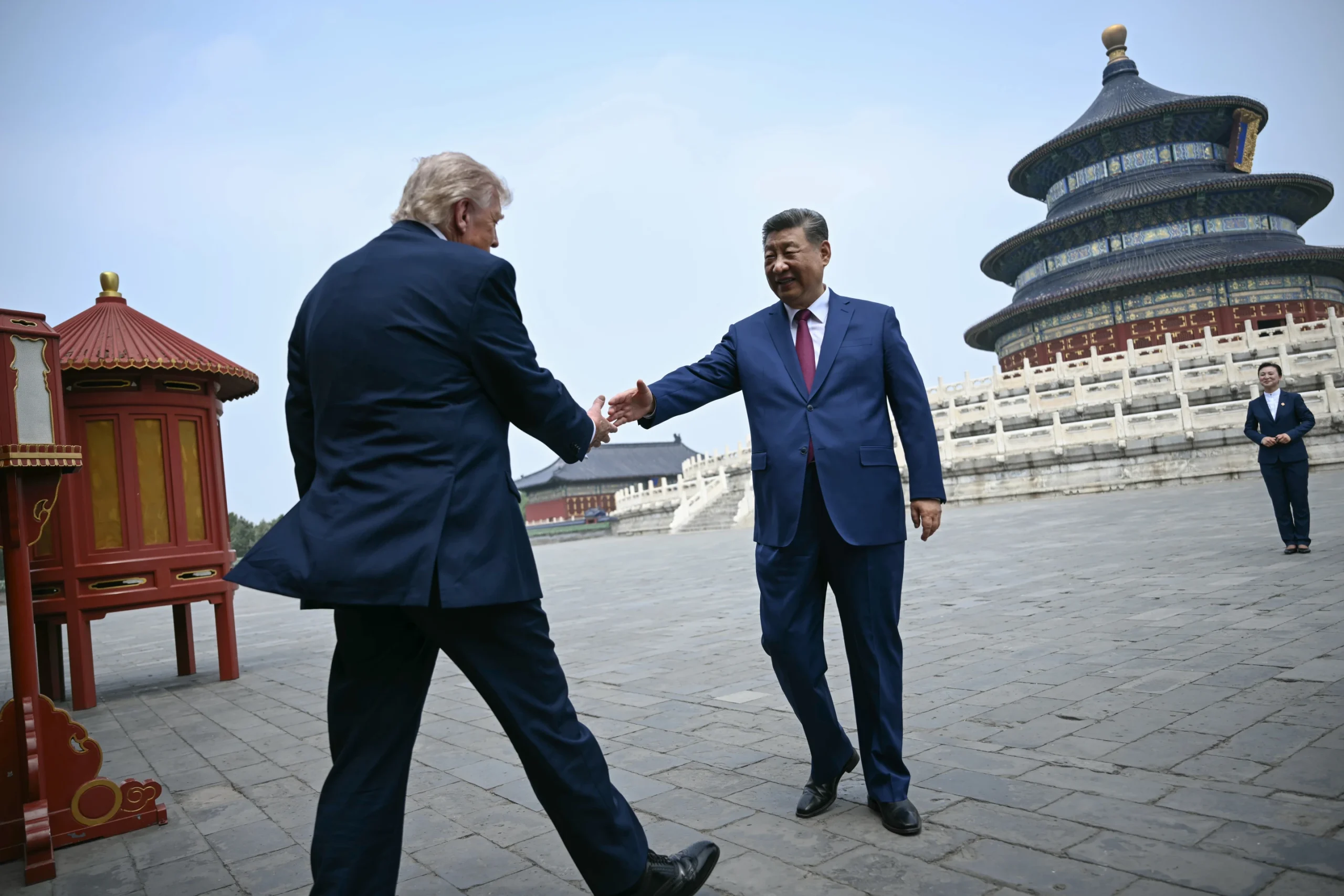
U.S. President Donald Trump and Chinese President Xi Jinping held high-level talks in Beijing on Thursday as tensions surrounding Taiwan, global trade, and the Middle East conflict dominated discussions between the world’s two largest economies.
The closely watched summit showcased contrasting diplomatic styles, with Trump emphasizing friendship and cooperation while Xi delivered firm warnings about the risks of confrontation between Washington and Beijing.
Xi Issues Strong Warning on Taiwan
During meetings at Beijing’s Great Hall of the People, Xi Jinping stressed that Taiwan remains the most sensitive issue in U.S.-China relations and warned that mishandling the matter could destabilize ties between the two nations.
Chinese officials said Xi cautioned that continued tensions over Taiwan could lead to direct conflict if not managed carefully.
The warning comes as the Trump administration moves forward with a major weapons package for Taiwan worth billions of dollars. China strongly opposes U.S. military support for the self-governed island, which Beijing considers part of its territory.
Xi also referenced the “Thucydides Trap,” a geopolitical theory suggesting that conflict often occurs when an emerging global power challenges an established one.
“Cooperation benefits both sides, while confrontation harms both,” Xi said during the summit.
Trump Takes Softer Diplomatic Approach
President Trump adopted a noticeably warmer tone during public appearances with Xi, praising the Chinese leader and expressing optimism about future relations between the two countries.
“It’s an honor to be your friend,” Trump said while describing Xi as a strong and respected leader.
The summit featured a formal state welcome ceremony in Beijing, including military honors, performances by schoolchildren, and a later visit by both leaders to the historic Temple of Heaven.
Despite the ceremonial atmosphere, officials from both countries acknowledged that major disagreements remain unresolved.
Trade Negotiations Continue Amid Economic Uncertainty
Trade discussions remained a key focus during the summit as both governments attempt to stabilize economic relations following years of tariffs and commercial disputes.
The White House is reportedly seeking expanded Chinese purchases of American products, including soybeans, beef, and aircraft, while also exploring the creation of new trade coordination mechanisms between the two nations.
Chinese officials signaled a willingness to continue economic cooperation and attract international business investment despite rising geopolitical tensions.
Analysts noted that neither side announced any major breakthrough agreements following the talks.

Iran Conflict Adds Pressure to Global Economy
The ongoing conflict involving Iran also cast a shadow over the summit.
The disruption of shipping through the Strait of Hormuz has caused global energy prices to rise sharply, increasing concerns about inflation and slowing economic growth worldwide.
China remains one of the largest buyers of Iranian oil, and U.S. officials have reportedly encouraged Beijing to use its influence to help stabilize the region and restore secure shipping routes.
However, Trump appeared cautious about publicly linking U.S.-China relations to Iran negotiations, even as concerns over energy markets continue to grow.
Taiwan Welcomes Continued US Support
Taiwanese officials responded positively to continued backing from Washington, emphasizing that U.S. support remains important for regional security and stability.
Observers say the Beijing summit demonstrated that while both superpowers are seeking to avoid direct confrontation, major disputes over Taiwan, trade, and global influence continue to shape the increasingly fragile relationship between the United States and China.