














Health authorities in eastern Democratic Republic of the Congo are facing growing challenges after a second Ebola treatment facility was attacked and set on fire by angry residents, intensifying fears over the spread of the deadly virus in the region.
The latest incident occurred in the town of Mongbwalu, located in Congo’s Ituri province, where a temporary Ebola treatment tent operated by Doctors Without Borders was burned late Friday night. According to local health officials, the attack caused panic among medical staff and patients, leading to the escape of 18 people suspected of carrying the virus.
Panic Grows as Ebola Patients Go Missing
Dr. Richard Lokudi, director of Mongbwalu Hospital, confirmed that the suspected patients fled during the chaos and have not yet been located. Authorities fear the individuals may have mixed with the general population, increasing the risk of further transmission.
Health workers condemned the violence, warning that attacks on medical centers are severely disrupting efforts to contain the outbreak. No casualties were reported during the incident, but officials described the situation as highly dangerous.
The attack came just days after another Ebola treatment facility in Rwampara was also burned down following tensions between local families and health officials over Ebola burial procedures.
Funeral Restrictions Trigger Community Anger
The Ebola outbreak has created growing frustration among local communities, particularly over strict burial protocols imposed by health authorities. Ebola victims remain highly contagious after death, forcing officials and Red Cross teams to carry out controlled “safe and dignified burials” under heavy security.
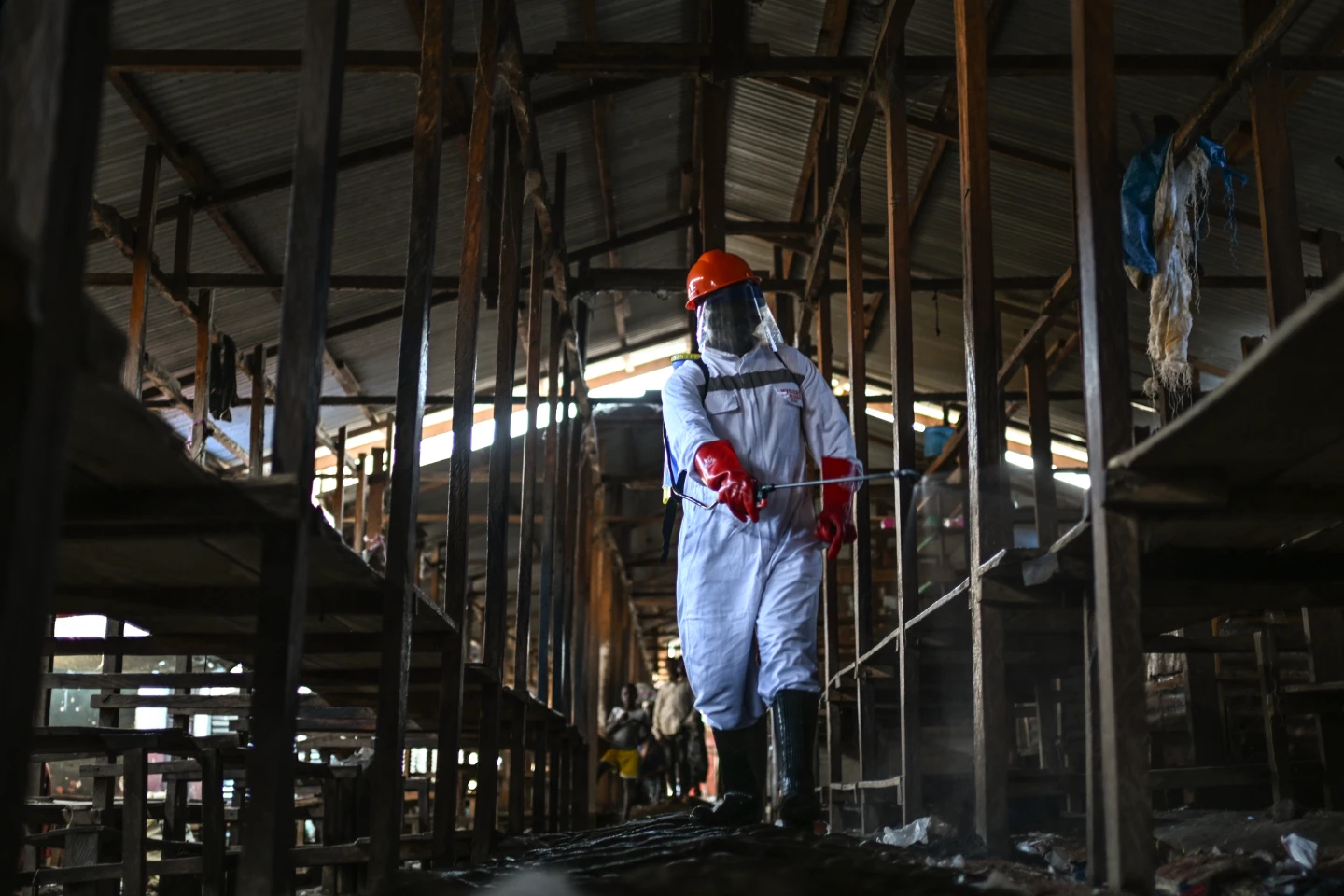
On Saturday, armed police and soldiers guarded a communal burial operation in Rwampara while humanitarian workers in protective suits buried Ebola victims in sealed coffins. Grieving family members watched from a distance as tensions remained high.
Red Cross officials said some local residents resisted the burial procedures, forcing emergency teams to request security assistance for protection.
To slow the spread of the virus, authorities in northeastern Congo have temporarily banned funeral wakes and gatherings of more than 50 people.
WHO Raises Ebola Risk Level in Congo
The World Health Organization has upgraded the outbreak risk level inside Congo from “high” to “very high,” although global risk remains low for now.
WHO Director-General Tedros Adhanom Ghebreyesus stated that at least 82 confirmed Ebola cases and seven confirmed deaths have been officially recorded so far. However, health experts believe the actual number of infections could be far higher due to underreporting and delayed detection.
Officials also reported around 750 suspected infections and 177 suspected deaths linked to the outbreak as surveillance operations continue to expand across affected communities.
Rare Ebola Strain Complicates Response
The outbreak involves the rare Bundibugyo strain of Ebola, for which no approved vaccine currently exists. Health experts say the virus spread undetected for several weeks because initial testing focused on more common Ebola variants and returned negative results.
The lack of an available vaccine has complicated containment efforts, placing additional pressure on healthcare workers already struggling with security threats and community mistrust.
The Africa Centres for Disease Control and Prevention emphasized that restoring trust with local communities will be critical to controlling the outbreak.

Red Cross Volunteers Among Victims
The International Federation of Red Cross and Red Crescent Societies confirmed that three of its volunteers in Mongbwalu died after reportedly contracting Ebola while handling bodies during a humanitarian mission in March.
If confirmed, these infections may indicate the outbreak began earlier than previously believed, potentially pushing back the timeline of the first known cases in Ituri province.
United States Introduces Entry Restrictions
Meanwhile, the United States announced new restrictions targeting green card holders who recently traveled to Ebola-affected countries, including Congo, Uganda, and South Sudan.
According to U.S. health officials, the temporary measures are intended to strengthen Ebola screening, quarantine monitoring, and contact tracing procedures.
The decision has raised questions internationally, particularly because South Sudan has not officially confirmed Ebola cases linked to the current outbreak.
Health experts continue to warn that continued attacks on medical centers and growing distrust toward health workers could significantly hamper efforts to stop the virus from spreading further.