




















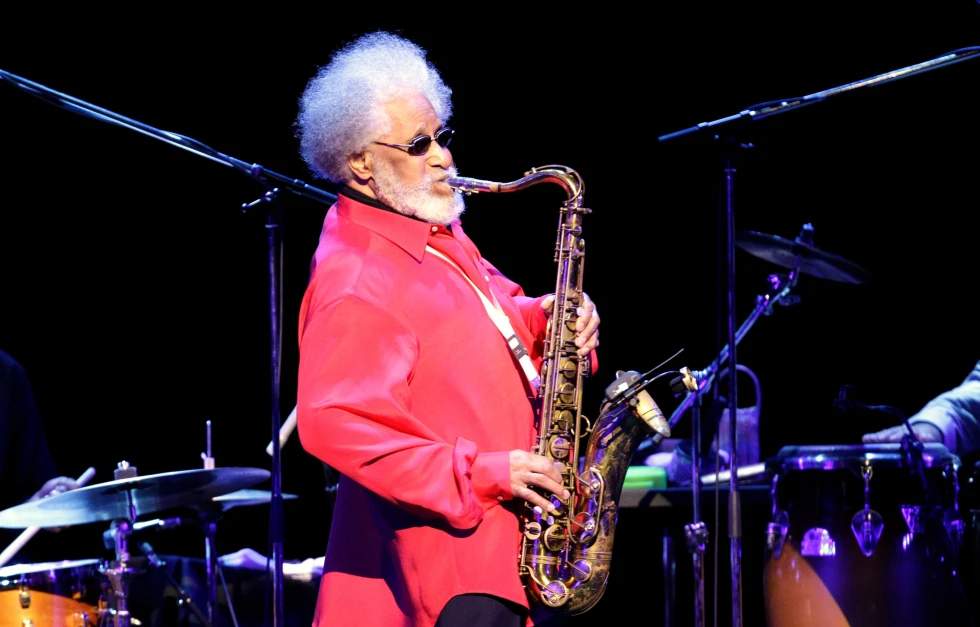
The world of jazz has lost one of its most influential and innovative figures with the death of legendary saxophonist Sonny Rollins, who passed away Monday at the age of 95.
According to his spokesperson, Rollins died at his home in Woodstock, New York, after dealing with a series of health complications in recent years. Widely regarded as one of the greatest tenor saxophonists in music history, Rollins spent more than five decades redefining jazz through fearless improvisation, technical brilliance, and an unwavering commitment to artistic evolution.
A Giant of the Bebop Era
Born Theodore Walter Rollins in Harlem in 1930, the future jazz pioneer emerged during the golden age of bebop and quickly gained recognition as a prodigy. Alongside legendary musicians such as John Coltrane and Charlie Parker, Rollins became one of the defining saxophone voices of the 20th century.
His bold tone, rhythmic creativity, and unmatched improvisational style made him a central figure in modern jazz. Even as trends shifted across decades, Rollins continuously experimented with new sounds rather than relying on past success.
Throughout his career, he described himself as “a work in progress,” refusing to become complacent with his artistry.
Landmark Albums Shaped Modern Jazz
Rollins produced some of the most celebrated recordings in jazz history, including the iconic album Saxophone Colossus, widely considered a masterpiece of hard bop music.
He later pushed musical boundaries further with innovative projects such as Way Out West and Freedom Suite, where he explored minimalist ensembles and freer improvisational structures.
Rollins also gained mainstream recognition outside the jazz world through his memorable saxophone contribution to Tattoo You by The Rolling Stones. His solo performance on the song Waiting on a Friend became one of the track’s defining features.
Career Marked by Reinvention and Reflection
Despite his fame, Rollins frequently stepped away from public performance to focus on self-improvement and musical exploration. One of his most famous sabbaticals came in the late 1950s when he withdrew from the spotlight to practice alone on the Williamsburg Bridge in New York City.
When he returned to performing in the 1960s, he embraced experimental and free jazz styles that divided some longtime fans but reinforced his reputation as a fearless innovator.
His interest in spirituality and self-discovery also shaped his life and music. During travels in Japan, Rollins developed an interest in Zen Buddhism, which later influenced another extended break from recording and touring.
Health Struggles Led to Retirement
In his later years, Rollins continued recording acclaimed albums and performing internationally well into his 80s. However, pulmonary fibrosis eventually forced him to retire from live performances. He gave his final concert in 2012 and stopped playing saxophone entirely two years later.
Even after leaving the stage, Rollins remained deeply respected across the global music community. His influence extended far beyond jazz, inspiring generations of musicians across multiple genres.
From Harlem Roots to Global Recognition
Raised in a musical household in Harlem, Rollins initially studied piano before discovering his passion for the saxophone at age 11. Largely self-taught, he rapidly developed into a standout performer and began playing professionally while still a teenager.
Over the course of his extraordinary career, he collaborated with some of jazz’s biggest names, including Thelonious Monk, Miles Davis, and Bud Powell.

Rollins also overcame serious personal struggles, including heroin addiction during the early years of his career. After seeking treatment in the 1950s, he experienced what he later described as a spiritual awakening that transformed both his life and music.
Lasting Influence on Jazz History
Over the decades, Sonny Rollins earned numerous honors, including Grammy Awards, a Guggenheim Fellowship, and induction into the DownBeat Hall of Fame.
Although he often remained critical of his own work, fellow musicians and critics consistently regarded him as one of jazz’s greatest living masters.
His passing marks the end of an era for jazz music, but his recordings, performances, and influence will continue to shape generations of artists and listeners worldwide.