























Artificial intelligence-powered meeting assistants are becoming increasingly common in workplaces, offering professionals quick summaries, transcripts and action plans within moments after a discussion ends. However, as adoption grows, privacy experts and legal professionals are raising concerns about how these tools collect, store and use sensitive conversations.
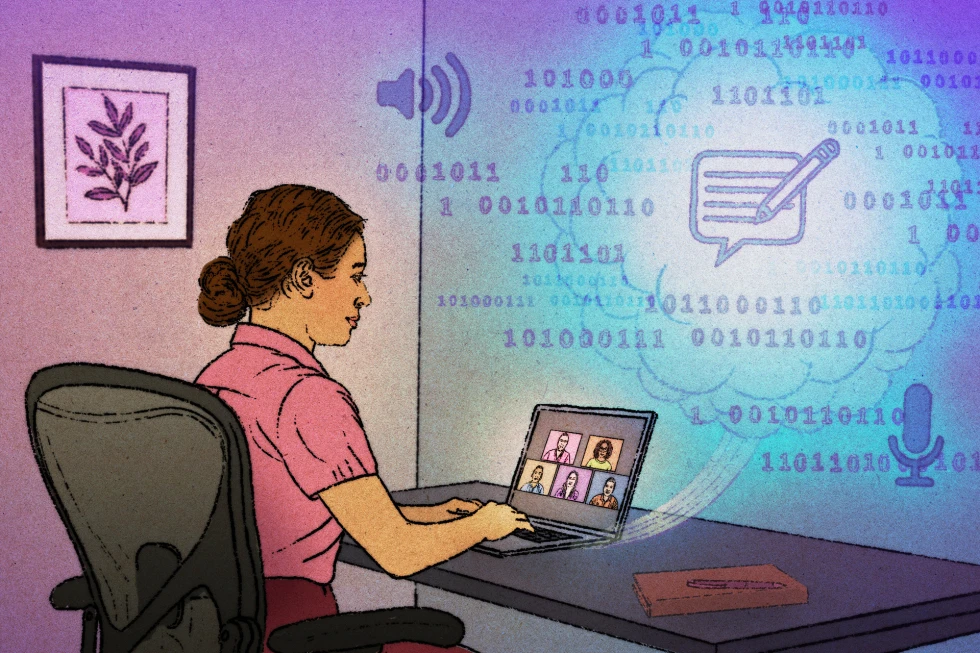
AI notetakers use speech recognition technology and advanced language models to record meetings, convert conversations into text and generate summaries. Supporters say the tools improve productivity by helping employees focus on discussions instead of manually writing notes. Critics, however, warn that the convenience comes with potential risks involving confidential information, personal data and corporate security.
“Organizations need to understand the risks before allowing these tools into sensitive conversations,” privacy and workplace experts say.
Confidential discussions could become vulnerable
During business meetings, employees often discuss information such as company strategies, financial plans, personnel matters and legal issues. When AI tools process these conversations, the information becomes digital data that may be stored by outside companies.
One of the biggest concerns is uncertainty about what happens after a meeting ends. Questions remain about how long recordings and transcripts are kept, whether companies use the information to improve AI systems and who has access to stored data.
Legal professionals have also warned that AI-generated transcripts could create complications in confidential discussions, including conversations protected by attorney-client privilege. Sharing sensitive information with third-party technology providers may create legal challenges if data handling practices are unclear.
Voice data creates another layer of privacy concerns
Many AI meeting assistants identify different speakers by analyzing unique characteristics of their voices. This process can create voice profiles, sometimes known as voiceprints.
Privacy advocates compare voiceprints to other biometric identifiers because they are linked to an individual’s identity. If improperly protected, voice data could potentially be misused for fraud, unauthorized access or identity-related crimes.
Some jurisdictions have introduced rules requiring organizations to provide notice and obtain consent before collecting certain types of biometric information. Experts encourage companies to establish clear policies explaining how voice data is collected, stored and deleted.
Employees should check for AI assistants before meetings begin
Experts recommend that participants make it a habit to check whether an AI notetaking tool is active before discussing sensitive topics.
In many cases, these assistants appear as meeting participants or trigger notifications when recording begins. However, some third-party tools may operate separately from the meeting platform, making their presence less obvious.
Privacy specialists suggest asking directly if an AI assistant is being used and requesting consent before recording or transcribing discussions.
A simple statement such as, “This meeting should not be recorded according to company policy,” can help establish boundaries without creating unnecessary conflict.
Companies should understand how AI vendors handle information
Before approving AI meeting tools, organizations should carefully review the provider’s data policies. Important questions include:
- Are recordings and transcripts permanently stored?
- Is meeting information used to train AI models?
- Who can access the collected data?
- How quickly is information deleted after use?
- Are security measures in place to protect sensitive conversations?
Experts say businesses should avoid treating AI tools like ordinary productivity software because meeting transcripts can contain highly valuable information.
Text-based summaries may also create additional risks because written records are easier to search, copy and distribute compared with audio or video files.

Balancing productivity with responsible AI use
AI meeting assistants can provide significant benefits by reducing administrative work and helping teams track decisions. However, experts say convenience should not outweigh privacy responsibilities.
Organizations that choose to use these tools should create clear guidelines, educate employees and ensure participants understand when AI systems are recording or analyzing conversations.
As artificial intelligence becomes more integrated into workplaces, finding the right balance between efficiency and data protection will remain a major challenge for businesses and employees alike.