





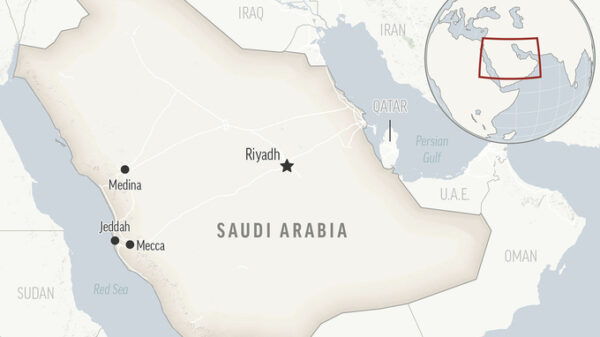












The Saudi-led military coalition backing Yemen’s internationally recognized government has warned the Southern Transitional Council (STC) against any military actions in the eastern province of Hadramout that could jeopardize ongoing de-escalation efforts, according to Saudi state media.
Coalition spokesperson General Turki al-Malki said the alliance would take necessary measures to protect civilians if armed movements by STC-affiliated forces threaten stability in the region. The warning came after Rashad al-Alimi, chairman of Yemen’s Presidential Leadership Council, formally requested coalition intervention, citing alleged violations by armed groups linked to the STC in Hadramout.
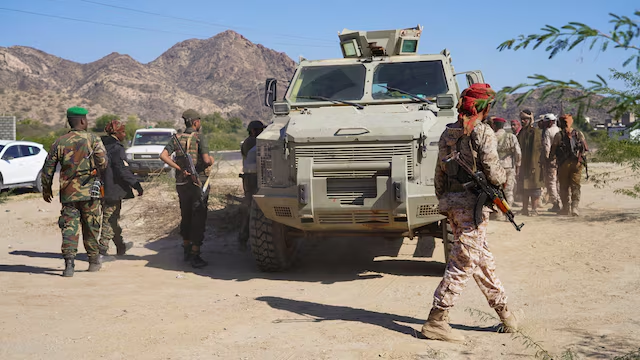
The STC, a powerful southern separatist faction backed by the United Arab Emirates, has expanded its influence across southern Yemen in recent weeks. Earlier this month, the group consolidated control over large parts of the south after forcing the Saudi-backed government out of its headquarters in Aden.
Tensions intensified after the STC rejected a Saudi request to withdraw from areas it seized in December. The group said it would continue what it described as security operations in the eastern provinces of Hadramout and Mahra, raising concerns about renewed internal conflict.
Saudi Arabia’s Defence Minister, Prince Khalid bin Salman, urged restraint and dialogue in a public message, calling on the STC to engage with Saudi-Emirati mediation efforts. He appealed for the withdrawal of armed forces from camps in Hadramout and Mahra and for their peaceful transfer to local authorities.
Prince Khalid emphasized that the long-standing “southern issue” must be addressed as part of a comprehensive political settlement in Yemen. He warned that unilateral military actions could deepen divisions and ultimately benefit Yemen’s adversaries rather than its people.
The situation underscores the fragile balance within Yemen’s anti-Houthi camp, where rival factions remain divided despite years of war. As diplomatic efforts continue, regional powers are pressing for consensus-driven solutions to prevent further destabilization in strategically important eastern provinces.