






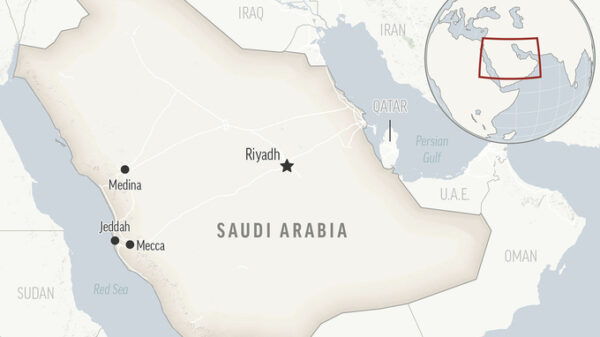

















Scientists have uncovered remarkably preserved mummified cheetahs in caves in northern Saudi Arabia, offering rare insight into populations of the world’s fastest land animal that vanished from the region centuries ago.
The discovery was made near the city of Arar, where researchers excavated seven cheetah mummies alongside skeletal remains from at least 54 additional individuals. Radiocarbon dating indicates the remains span a wide timeframe, ranging from approximately 130 years old to more than 1,800 years old.
Natural mummification occurs when environmental conditions slow or halt decomposition. While ancient Egyptian mummies are the most famous examples, similar preservation can happen naturally in extremely dry deserts, frozen glaciers, or oxygen-poor wetlands. In this case, scientists believe the caves’ arid climate and stable temperatures helped preserve the cheetah bodies over centuries.
The mummified animals show striking features, including clouded eyes and desiccated limbs, giving them a shriveled, husk-like appearance. Experts say such preservation is exceptionally rare for large mammals, which are usually consumed by scavengers long before mummification can occur.
Researchers are still investigating why so many cheetahs were found in the same cave system. One leading theory suggests the caves may have served as denning sites where females raised their cubs. Avoidance of scavengers such as hyenas and birds would have been crucial for the remains to stay intact.
According to the study, published in Communications Earth and Environment, this is the first time naturally mummified large cats have been discovered in such numbers. Scientists were also able to extract genetic material from the remains, a significant breakthrough for ancient wildlife research.
Genetic analysis revealed that the cheetahs were most closely related to modern populations found in Asia and northwest Africa. These findings could play an important role in future conservation planning, including potential reintroduction efforts in regions where cheetahs have long been extinct.
Cheetahs once occupied vast territories across Africa and parts of Asia, including the Arabian Peninsula. Today, they survive in only about 9% of their historical range. In Arabia, the species has not been reliably documented for decades, largely due to habitat destruction, overhunting, and declining prey populations.
Researchers say the discovery provides unprecedented physical evidence that cheetahs were once an established part of the Arabian ecosystem. Beyond its scientific value, the find also underscores how dramatically wildlife distributions have changed over time—and how fragile large predator populations can be.