
















Americans’ sympathies in the Israeli-Palestinian conflict are now roughly evenly divided, according to new polling from Gallup — a dramatic shift after decades of stronger support for Israel.
The survey found that 41% of Americans now say their sympathies lie more with the Palestinians, compared with 36% who say they sympathize more with the Israelis. Three years ago, 54% sided more with Israelis and 31% with Palestinians.
“It’s the first time they have reached parity, which is really quite striking,” said Benedict Vigers, a senior global news writer at Gallup. The poll has a margin of error of plus or minus 4 percentage points, meaning support is statistically about even.
Shift Accelerated During Gaza War
The change in public opinion accelerated during the war in Gaza, which began after Hamas’ Oct. 7, 2023 attack on Israel that killed around 1,200 people and took more than 250 hostages. Israel’s subsequent military campaign has killed more than 72,000 Palestinians, according to Gaza health officials, and caused widespread destruction.
While support for Israel has historically been strong in the U.S., it has grown increasingly contentious, especially within the Democratic Party.
Democrats Drive the Change
About two-thirds of Democrats now say they sympathize more with Palestinians, while only about 2 in 10 say they side more with Israelis. As recently as 2016, roughly half of Democrats sympathized more with Israelis.
Gallup’s trend data suggests the shift began around 2017, during the tenure of Israeli Prime Minister Benjamin Netanyahu. His favorability ratings among Americans declined significantly between 2017 and 2024.
Netanyahu’s close ties with Donald Trump — including U.S. recognition of Jerusalem as Israel’s capital and sovereignty over the Golan Heights — also contributed to partisan polarization over Israel.
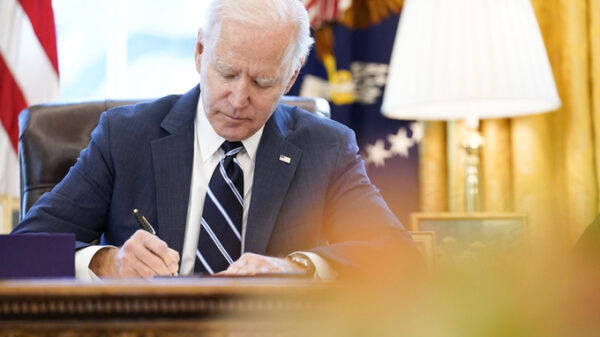
During the administration of Joe Biden, the war in Gaza became a major flashpoint among Democrats. Some progressive lawmakers and activists have described Israel’s military campaign as genocide, a charge Israel denies.
Independents have also shifted. For the first time in Gallup’s tracking, independents now express more sympathy for Palestinians than Israelis, with about 4 in 10 siding more with Palestinians and roughly 3 in 10 with Israelis.
Republicans remain overwhelmingly supportive of Israel, with about 7 in 10 saying they sympathize more with Israelis — though that represents a slight dip from before the war.
Generational Divide Widens
Age differences are also pronounced.
About half of Americans ages 18 to 34 say they sympathize more with Palestinians, compared with about a quarter who favor Israelis. Sympathy among younger adults has been trending toward Palestinians since around 2020.
For the first time, Americans ages 35 to 54 also express slightly more sympathy for Palestinians than Israelis. Among those 55 and older, Israel still holds an advantage, though the gap is narrowing and is the smallest it has been since 2005.
Student protests on college campuses during the war reflected some of these generational divides, with demonstrators calling on universities to divest from companies tied to Israel.

Support for Palestinian Statehood Remains Majority View
The poll also found that 57% of U.S. adults support the establishment of an independent Palestinian state in the West Bank and Gaza Strip — consistent with levels seen since 2020.
However, party divisions are stark:
- About three-quarters of Democrats support an independent Palestinian state.
- Roughly 6 in 10 independents do.
- Only about one-third of Republicans support the idea.
Despite growing sympathy for Palestinians, Americans still view Israel more favorably overall: 46% have a favorable opinion of Israel, compared with 37% who say the same about the Palestinian territories.
Interestingly, support for a two-state solution is lower among those living in the region. According to the Gallup World Poll conducted in 2025, only about 3 in 10 Israelis and Palestinians in the West Bank and east Jerusalem support a two-state framework — highlighting a disconnect between U.S. public opinion and views on the ground.
Political Implications
The shift has major implications for U.S. foreign policy and domestic politics. U.S. aid to Israel has become a dividing line in Democratic primaries, and partisan polarization on the issue is at or near record highs.
What was once a relatively bipartisan consensus in Washington is now one of the most politically charged foreign policy issues in the country — and public opinion appears to be undergoing one of its most significant realignments in decades.