

















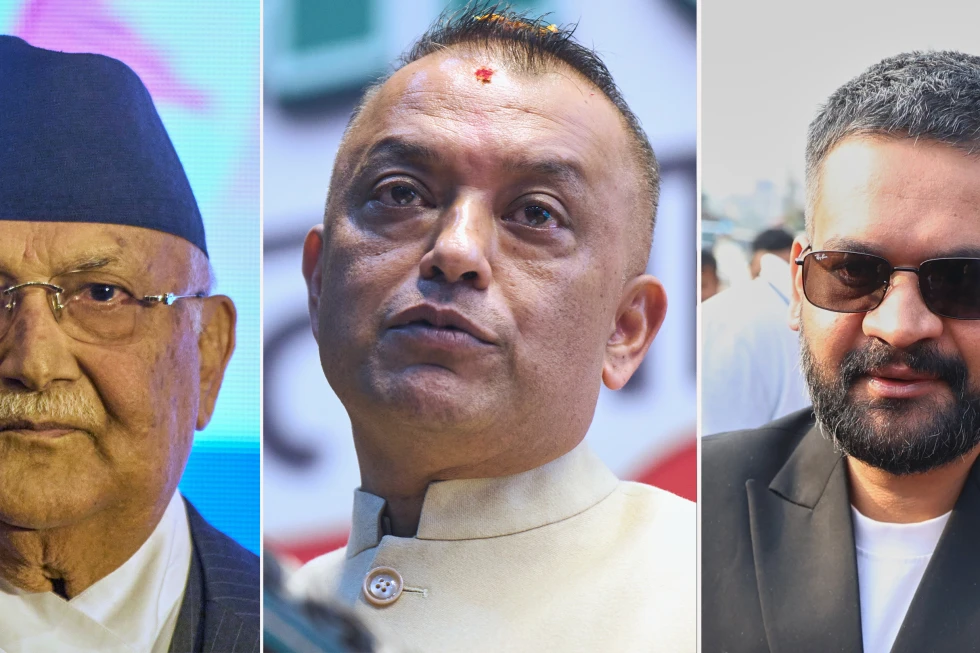
Nepal is preparing for its first national election since last year’s deadly youth-led protests toppled the government, with three high-profile candidates vying to lead the Himalayan nation through a period of political uncertainty and economic strain.
Voters will elect members of the House of Representatives, the powerful lower chamber of parliament. The next prime minister will be chosen by securing a majority in the house — a process that will determine the country’s 16th prime minister in less than 20 years, highlighting Nepal’s chronic political instability since the monarchy was abolished in 2008.
A Vote Shaped by Youth Anger
The election follows months of unrest that culminated in the resignation of then-Prime Minister Khadga Prasad Oli in September. The protests, largely driven by young Nepalis frustrated with corruption, unemployment and entrenched political elites, left dozens dead and hundreds injured.
With roughly one in five young adults unemployed, public anger over limited economic opportunities and perceived inequality has reshaped the political landscape.
Now, three main contenders are competing to form the next government.
Balendra Shah: The Outsider Turned Frontrunner
Balendra Shah, widely known as “Balen,” has emerged as a leading candidate. A 35-year-old structural engineer and former rap artist, Shah first rose to prominence in 2022 when he won the Kathmandu mayoral race as an independent candidate, capitalizing on public dissatisfaction with established parties.
Later aligning with the Rastriya Swatantra Party, Shah left the mayor’s office to pursue national leadership.
His tenure in Kathmandu drew praise for efforts to address illegal construction, manage waste and improve infrastructure. However, critics questioned some demolition drives that they said lacked proper planning.
Campaigning across the country in his signature black attire and sunglasses, Shah has pledged sweeping reforms focused on public services.
“Our agenda is to ensure full education for those with empty pockets and access to health care for the poorest citizens,” he recently told supporters.
Gagan Thapa: Reformist Voice Within an Old Party
Gagan Thapa, 49, leads the Nepali Congress, Nepal’s oldest major political party.
Long regarded as a rising figure within the party, Thapa secured the leadership earlier this year after challenging senior figures in a push for generational change. Although the Nepali Congress was part of the coalition government ousted during last year’s unrest, Thapa has positioned himself as a reformer committed to restoring public trust.
He has vowed to tackle corruption within five years and strengthen government accountability.
The party traditionally maintains close ties with India, reflecting Nepal’s complex geopolitical balancing act.
Khadga Prasad Oli: Veteran Seeks Comeback
Former prime minister Khadga Prasad Oli, head of the Communist Party of Nepal (Unified Marxist–Leninist), is seeking a return to power.

Oli remains a polarizing figure. Critics blame his administration for the deadly crackdown during last year’s protests, while supporters credit him with strong leadership and defending national interests.
His popularity previously surged in 2015 when he took a firm stance during an economic blockade imposed by India, which led to shortages of fuel and essential supplies.
Oli argues that Nepal’s fragile economy requires political stability and consistent policy direction, particularly as the country navigates relations with both India and China.
A Nation at a Crossroads
Situated between India and China, Nepal’s political direction carries regional significance. The next government will face pressing challenges, including unemployment, corruption concerns, economic recovery and maintaining balanced foreign relations.
With voter turnout expected to be high, the election represents a pivotal test of Nepal’s democratic resilience after a year marked by unrest and upheaval.
As ballots are cast across the country, many Nepalis are hoping this vote will deliver not only new leadership but also lasting stability.