























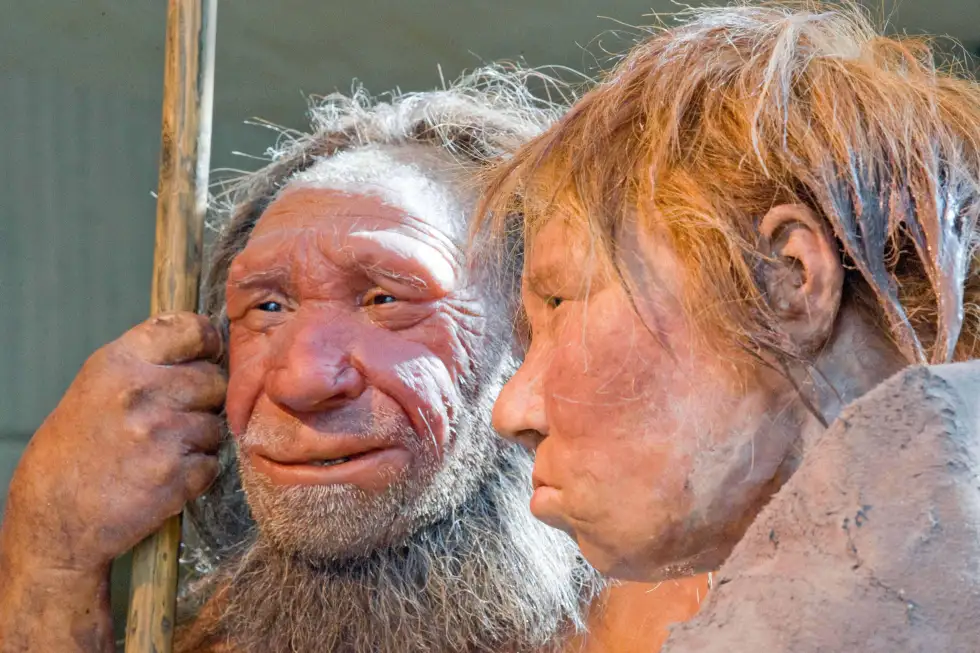
Humans and Neanderthals occasionally interbred tens of thousands of years ago, but new research reveals an intriguing pattern: these encounters were more often between female humans and male Neanderthals.
A genetic analysis, published this week in Science, examined the distribution of Neanderthal DNA in modern humans and the human DNA found in Neanderthal genomes. The results suggest that mating between male Neanderthals and female humans was far more common than the reverse.
“This finding sheds light on the behavior and interactions of our ancient relatives,” said Alexander Platt, a population geneticist at the University of Pennsylvania and lead author of the study. “It suggests that cultural or social dynamics, rather than purely survival advantage, influenced these ancient encounters.”
The evidence comes from examining the human X chromosome, a sex chromosome inherited differently by males and females. Modern humans have comparatively little Neanderthal DNA on their X chromosomes, while Neanderthal genomes show a higher proportion of human DNA on the same chromosome. This mirror pattern strongly indicates that female humans, who contribute two-thirds of X chromosomes to future generations, were more often involved in these interspecies unions.
Population genetics experts caution that other explanations, such as differences in survival rates among offspring, cannot be completely ruled out. Yet the simplest interpretation aligns with the genetic findings: male Neanderthals and female humans were the predominant partners in these ancient pairings.
Understanding these mating patterns is more than a curiosity about human prehistory. Neanderthal DNA in modern humans has tangible effects, influencing immune responses and susceptibility to certain diseases. It also highlights how human behavior—social, cultural, and perhaps even migratory—shaped the genetic makeup of populations over millennia.
“This study fills critical gaps in our understanding of human evolution,” said Joshua Akey, an evolutionary genomics expert at Princeton University not involved in the research. “It’s a fascinating example of how ancient interactions have left a lasting imprint on our DNA.”
Advances in ancient DNA technology continue to refine the story of human evolution, revealing complex interconnections between Homo sapiens and their extinct relatives and offering insights into the forces that shaped our species.