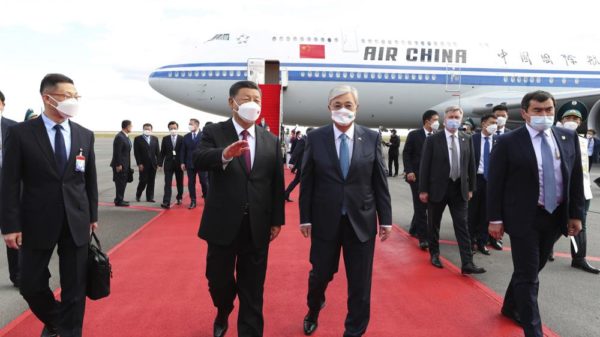












Voters in Kazakhstan went to the polls Sunday to decide on a proposed new constitution that would significantly expand President Kassym-Jomart Tokayev’s authority, consolidating his control over the Central Asian nation’s political system.
The proposed changes would merge the country’s bicameral parliament into a single legislative chamber and grant the president the power to appoint all government officials, including the reintroduction of the vice-presidential post. In addition, a new body called the People’s Council would be created, with members entirely appointed by the president and the authority to initiate legislation and referendums.
Analysts say these reforms could allow Tokayev, currently limited to a single seven-year term ending in 2029, to potentially extend his tenure. “The new constitution could provide Tokayev with a loophole for reelection to another term,” said Temur Umarov, noting that similar constitutional changes have been used by leaders in Russia, Belarus, Uzbekistan, and Tajikistan to reset term limits.
Critics argue that the reforms do little to enhance democracy. “The transition to a single-chamber parliament will not necessarily strengthen democratic governance, especially as the amendments broadly expand presidential powers,” said Mario Bikarski, a senior analyst for Eastern Europe and Central Asia.
The proposed constitution also defines marriage explicitly as a union between a man and a woman, following Kazakhstan’s recent law restricting LGBTQ+ expression. Analysts see this as a signal of the government’s alignment with traditionalist policies seen in other post-Soviet countries.
Tokayev defended the reforms, saying they are necessary to make rapid decisions in a volatile geopolitical environment. “This step is of exceptional importance, especially in the current period, when the geopolitical situation is unstable and challenges and threats to national security are becoming increasingly tangible,” he said at a forum in Astana last week.
The referendum comes amid rising economic pressures in Kazakhstan. Inflation reached 11.7% in February, and recent tax hikes have sparked public frustration. Analysts warn that economic discontent could revive protests similar to the violent nationwide unrest in 2022, which erupted over fuel price hikes and resulted in dozens of deaths. “Preventing a repeat of the 2022 unrest remains a key priority for Tokayev,” Bikarski said, highlighting Kazakhstan’s heightened civil unrest risk, especially in oil-producing regions.
Opposition groups in Kazakhstan have little formal presence in government and have struggled to influence public sentiment since the referendum was announced. Analysts note that protests and civil society activism remain the primary avenues for dissent.
The vote is a crucial moment for Kazakhstan’s political trajectory, potentially reshaping governance and solidifying presidential control for years to come.