
















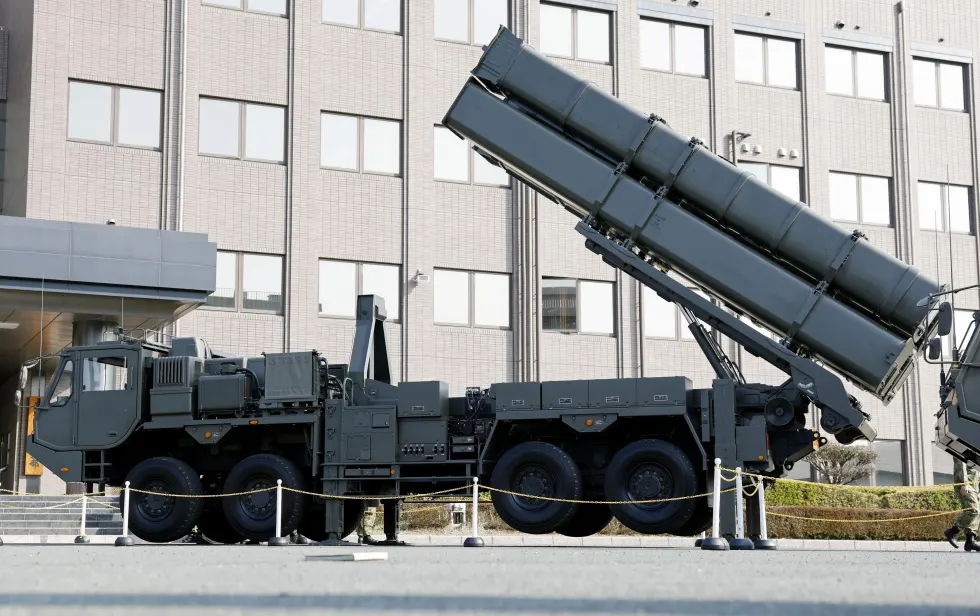
Tokyo, Japan — Japan has officially deployed its first domestically developed long-range missiles, signaling a significant تحول in its postwar defense posture as regional security tensions continue to rise.
The upgraded Type-12 missile, developed by Mitsubishi Heavy Industries, has been stationed at Camp Kengun in Kumamoto prefecture in southwestern Japan. The system is now operational and represents a major enhancement in the country’s military capabilities.
Defense Minister Shinjiro Koizumi said the deployment is critical as Japan faces what he described as its most complex security environment since World War II. He emphasized that strengthening deterrence and response capabilities is essential to national defense.
The upgraded missile system has an estimated range of 1,000 kilometers—five times greater than the earlier version—allowing it to strike targets far beyond Japan’s immediate coastline, including parts of mainland China. This advancement provides Japan with a “standoff” capability, enabling it to neutralize potential threats from a safer distance.
The move marks a notable departure from Japan’s long-standing self-defense-only military doctrine under its pacifist constitution. In recent years, Tokyo has been gradually expanding its defense framework in response to growing regional challenges.
Local opposition has emerged in Kumamoto, where residents have protested the deployment near residential areas. Critics argue that hosting such advanced weaponry could increase the risk of the region becoming a target in the event of a conflict.
In parallel, Japan also deployed a hypersonic glide vehicle at Camp Fuji in Shizuoka prefecture on Tuesday. The advanced system is designed to enhance defense of remote islands and counter emerging threats in the region.
Further deployments of both the Type-12 missiles and hypersonic systems are planned across the country, including in Hokkaido and Miyazaki, by 2028.
Japan is also set to integrate U.S.-made Tomahawk cruise missiles into its naval fleet, with plans to equip the destroyer JS Chokai later this year, followed by additional vessels.
Under Prime Minister Sanae Takaichi, the government has significantly increased defense spending, approving a record budget exceeding 9 trillion yen ($58 billion) for the upcoming fiscal year. The strategy focuses on strengthening coastal defenses, missile capabilities, and unmanned systems.
Japan has increasingly viewed China as its primary regional security concern, particularly amid rising military activity near the East China Sea and Pacific islands. Recent sightings of Chinese aircraft carriers operating near Japanese territory have heightened alarm in Tokyo.
Tensions have further intensified following statements from Japanese leadership suggesting that a conflict involving Taiwan could prompt a military response from Japan.
As the country accelerates its military modernization, the latest missile deployment underscores a broader shift in Japan’s defense policy—balancing its pacifist legacy with the demands of an evolving security landscape.