



















Amid airstrikes, damaged infrastructure and severe financial restrictions, a growing number of digital freelancers in Gaza are continuing to work remotely for international clients, turning laptops and internet access into critical survival tools during the ongoing humanitarian crisis.
Programmers, graphic designers, software developers and online consultants across Gaza are finding ways to stay connected to the global digital economy despite widespread destruction caused by years of conflict.
For many workers, freelancing has become more than just employment — it is now one of the few remaining sources of income in a territory struggling with war, displacement and economic collapse.
Remote Work Becomes a Lifeline in Gaza
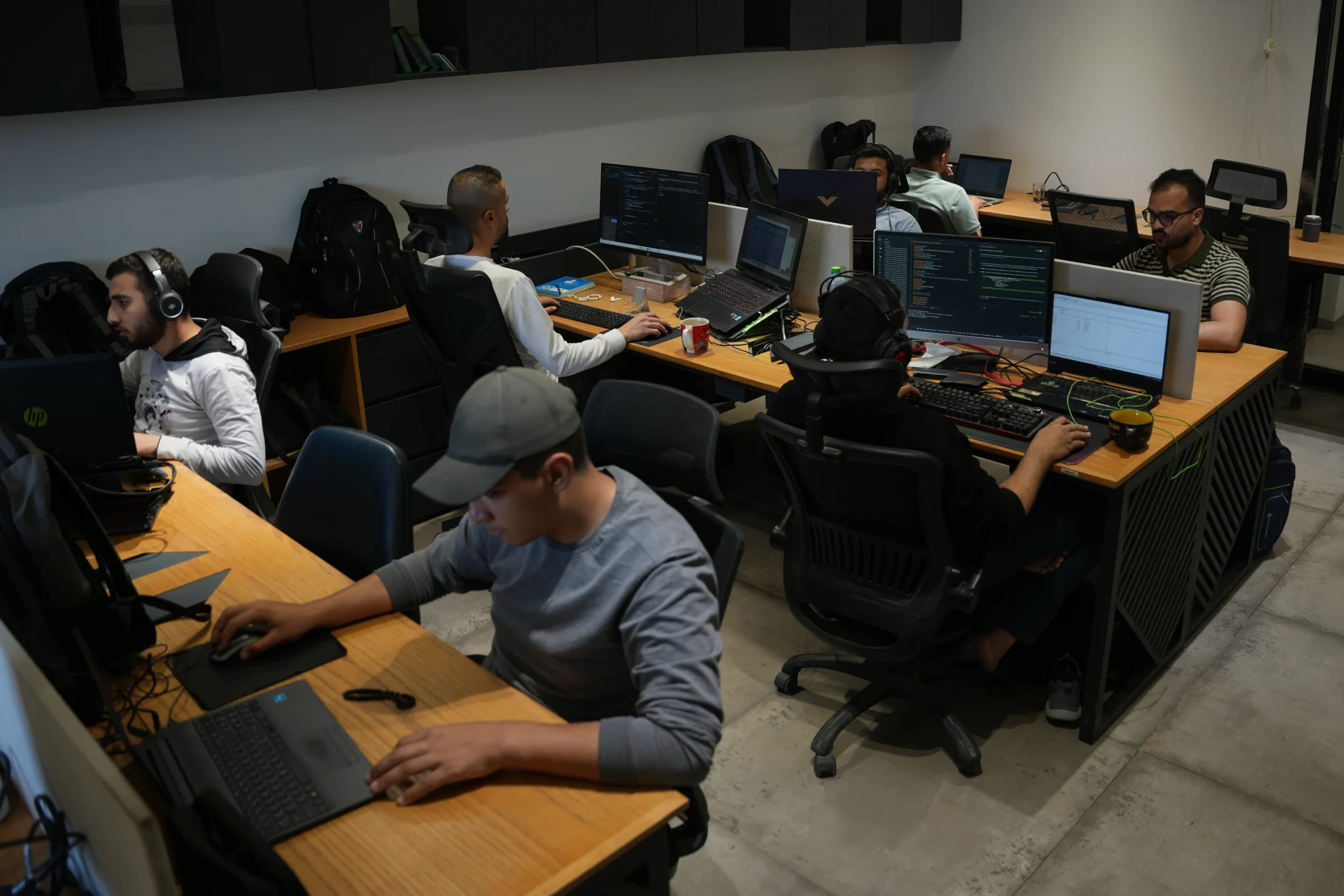
In Gaza City and Khan Younis, shared coworking spaces powered by solar energy and backup internet systems have become essential hubs for freelancers trying to maintain contracts with overseas clients.
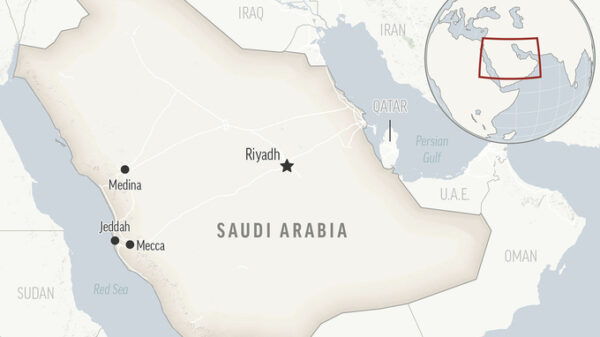
Workers use these spaces to complete coding projects, design websites, develop mobile applications and manage digital marketing campaigns for businesses in countries including Saudi Arabia, Kuwait, Turkey and Canada.
Many freelancers say remote work also offers temporary emotional relief from the constant stress of war.
Software developer Tarik Zaeem explained that focusing on programming helps him escape the daily realities of airstrikes, shortages and displacement while supporting his family financially.
Gaza’s Digital Economy Survives Despite Destruction
Digital freelancing first expanded in Gaza more than a decade ago as traditional industries weakened under economic restrictions and political instability.
With unemployment remaining among the highest in the world, thousands of university graduates turned to online platforms such as Upwork, Freelancer.com and regional freelance marketplaces to earn money from international clients.
Before the war, technology incubators and training programs supported Gaza’s growing tech sector through coding boot camps, startup hubs and coworking centers.
However, much of that infrastructure was heavily damaged during the conflict that followed the October 2023 Hamas attack and Israel’s military response.
According to aid organizations, large portions of Gaza’s telecommunications systems and internet networks were destroyed, making remote work extremely difficult during the height of the war.
Coworking Spaces Help Rebuild the Sector
Despite the destruction, several organizations and local entrepreneurs are attempting to revive Gaza’s freelance economy.
New coworking spaces equipped with solar-powered generators and internet connections now allow freelancers to work in scheduled shifts while avoiding prolonged electricity outages.
Tech community organizers say these spaces are helping workers regain professional skills, rebuild business networks and reconnect with global clients.

Women have become an increasingly important part of Gaza’s digital workforce as many families lost primary income earners during the conflict.
Graphic designer Reem Alkhateeb said freelancing evolved from supplemental income into her household’s main financial support after her husband lost his job amid the crisis.
Payment Restrictions Create Major Obstacles
Receiving international payments remains one of the biggest challenges for freelancers in Gaza.
Banking disruptions, limited financial infrastructure and restrictions on services such as PayPal have forced many workers to rely on relatives abroad or third-party brokers to receive payments, often losing significant portions of their earnings to transfer fees.
To address the problem, local initiatives have emerged to connect Gaza-based freelancers with secure payment solutions and overseas clients.
One platform launched during the war has reportedly helped digital workers generate hundreds of thousands of dollars in combined earnings despite the ongoing instability.
Hope for Economic Independence
Freelancers and tech organizers say the digital economy offers one of the few sectors in Gaza capable of functioning despite damaged roads, destroyed buildings and blocked trade routes.
Many workers say their goals have become simpler after years of war — stable electricity, reliable internet access and the ability to work safely from home.
As reconstruction efforts remain slow and humanitarian needs continue growing, Gaza’s online workforce is increasingly viewed as a rare example of resilience and economic adaptability in one of the world’s most difficult conflict zones.