









Dubai: Iran’s influential Revolutionary Guard commander, Gen. Ahmad Vahidi, has made his first public appearance in months as the country prepares for an extended state funeral honoring late Supreme Leader Ayatollah Ali Khamenei.
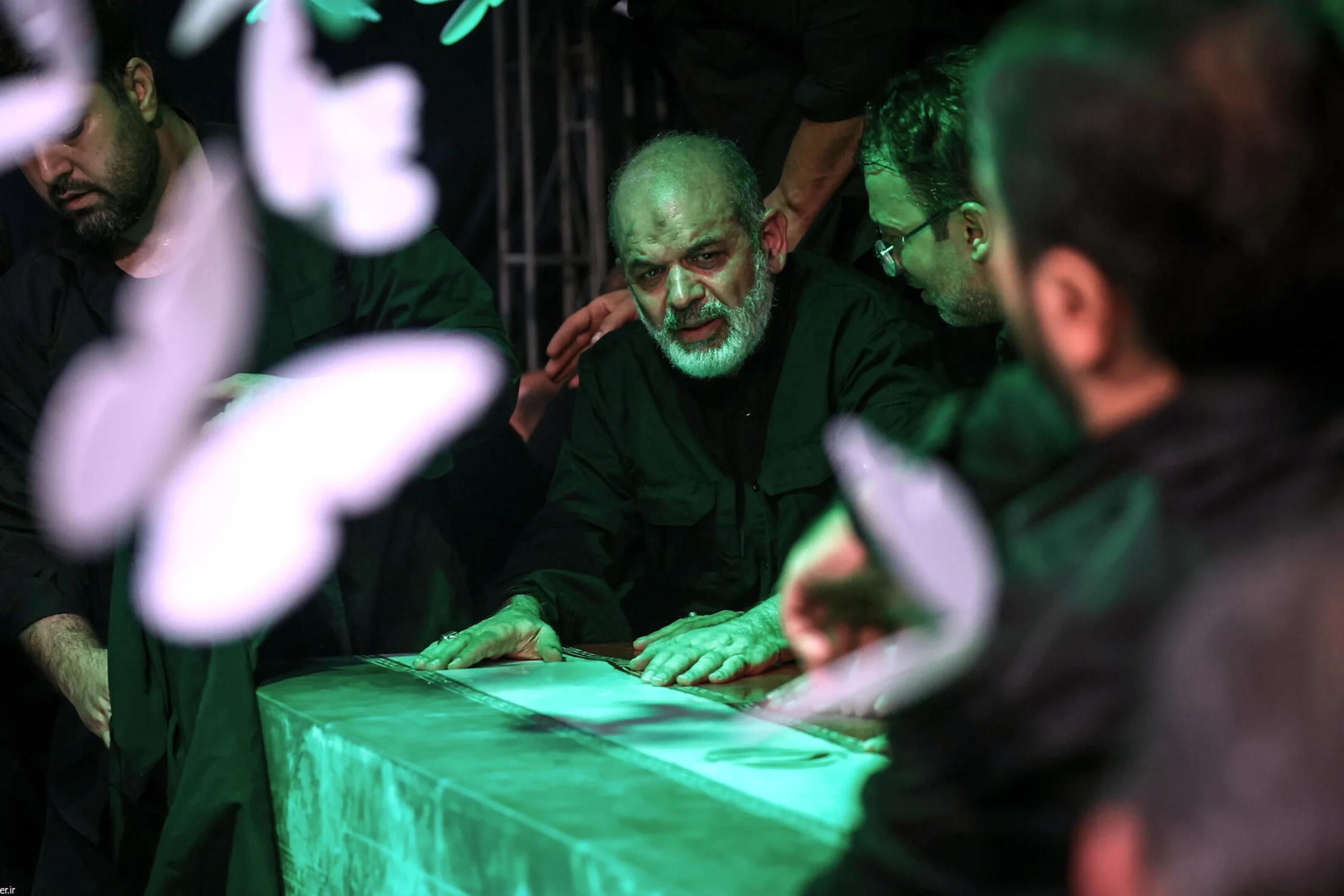
Images released by Iranian state media showed Vahidi participating in an official meeting to coordinate funeral arrangements before attending a private memorial ceremony held near Khamenei’s former residence in central Tehran. He was later seen seated beside the late leader’s coffin during the gathering.
Vahidi had remained out of public view since early February, shortly before the conflict involving Iran escalated. His return to the public spotlight comes at a critical moment as Iran’s leadership oversees one of the most significant state ceremonies in the country’s recent history.
Political analysts believe Vahidi now holds considerable influence within Iran’s security establishment and is playing a key role in shaping the country’s position during discussions over a possible long-term settlement with the United States following the recent conflict. He is also widely believed to be among a small group of senior officials maintaining direct communication with Iran’s new Supreme Leader, Ayatollah Mojtaba Khamenei.
According to Iranian state television, a private mourning ceremony was held Thursday evening at a religious complex associated with the late supreme leader in Tehran. Footage from the event showed Khamenei’s coffin placed prominently on a stage decorated with red tulips and symbolic white butterfly ornaments, while mourners gathered to pay their final respects.
Many attendees were reportedly relatives of those who lost family members during previous military conflicts involving Iran. As part of traditional mourning customs, mourners presented scarves and personal items to be touched against the coffin, a practice believed to convey blessings and remembrance.
The casket was draped with a red flag bearing the inscription “Ya Hussein,” a phrase deeply rooted in Shiite Islamic tradition that commemorates Imam Hussein’s martyrdom. The flag also symbolizes sacrifice, justice, and the pursuit of accountability for those believed to have been wrongfully killed.
On Friday morning, members of Iran’s security forces carried Khamenei’s coffin into Tehran’s Grand Mosalla, where senior religious figures and officials gathered for another memorial service. Family members who were killed alongside the late leader during the conflict were also honored during the ceremony.
Iranian authorities have announced that the official funeral ceremonies will continue for several days, with Khamenei’s remains scheduled to be taken to multiple cities across Iran as well as neighboring Iraq for additional commemorative events.
Security measures have been significantly strengthened throughout Tehran, with officials planning road closures, restrictions on airspace, and heightened security operations to manage the expected arrival of large crowds. The funeral is expected to become one of the largest state events in Iran in recent years, drawing political leaders, religious scholars, military officials, and thousands of mourners from across the region.
The ceremonies mark the end of an era for Iran’s political and religious leadership while highlighting the country’s efforts to demonstrate stability during a period of major regional and geopolitical change.