











A brief, wordless video filmed thousands of miles from Iran has become one of the most powerful symbols of resistance against the Islamic Republic’s latest crackdown on dissent.
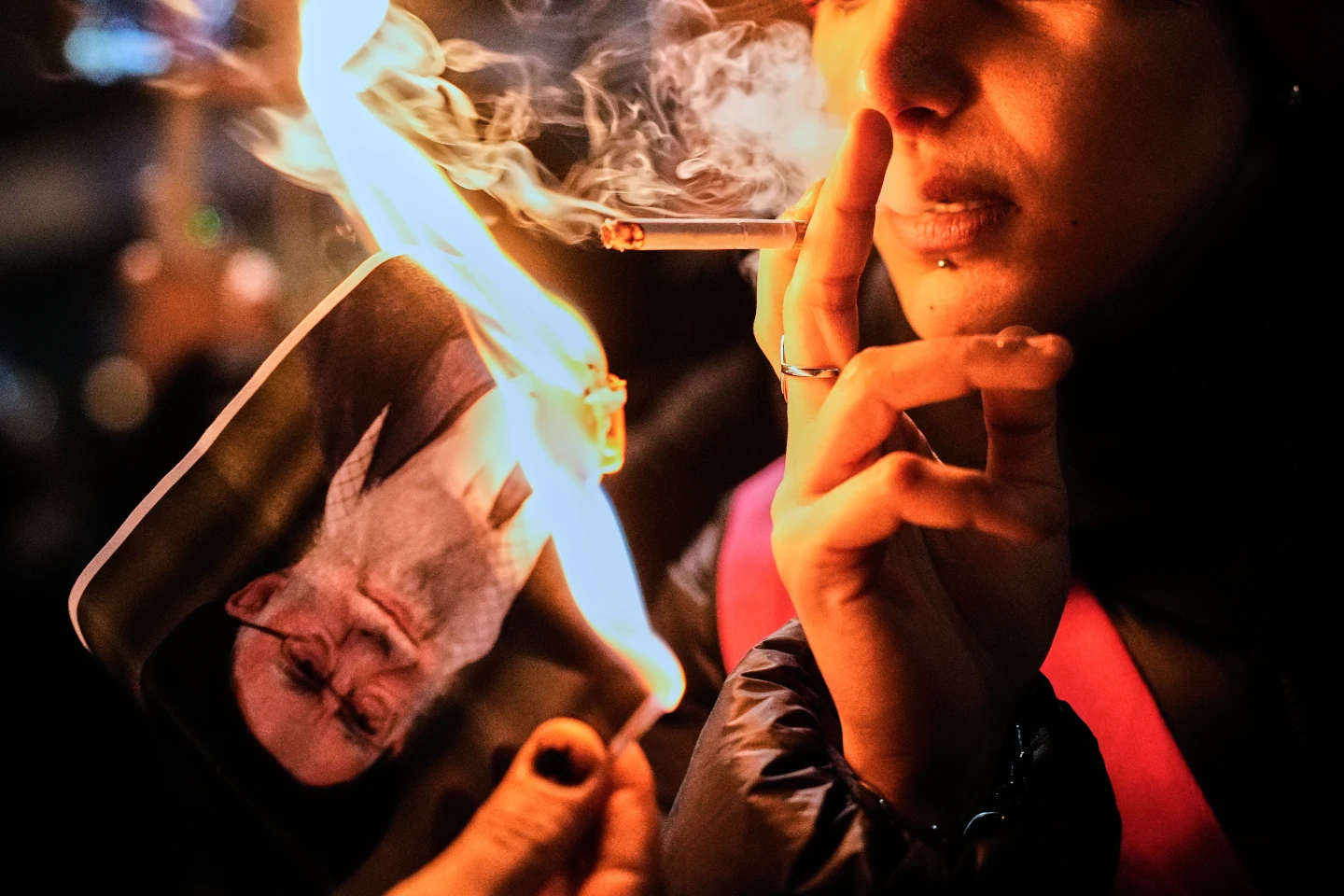
In the footage, widely shared across social media, a young woman flicks a lighter and sets fire to a photograph of Iran’s supreme leader, Ayatollah Ali Khamenei. As the image burns, she calmly lights a cigarette from the flame, takes a single drag, and drops the smoldering remains to the ground. The clip lasts barely half a minute, yet it has reverberated across continents.
The woman, who says she is an Iranian refugee living in Canada, has become known online as the “cigarette girl.” Whether carefully staged or spontaneous, the act has resonated deeply with protesters and critics of Iran’s leadership, transforming into a visual shorthand for defiance as unrest spreads across the country.
A gesture loaded with defiance
Within Iran, each element of the video represents a direct challenge to the state’s authority. Burning an image of the supreme leader is a serious crime, potentially punishable by death. The woman appears without a hijab, defying compulsory dress laws that sparked the “Women, Life, Freedom” movement. Even smoking publicly carries social and legal stigma under Iran’s strict moral codes.
Together, these acts — compressed into a single, striking moment — conveyed autonomy, rebellion, and solidarity. The image quickly migrated from screens to streets, inspiring similar acts at protests in Europe, North America, and the Middle East, where demonstrators lit cigarettes from photos of Iran’s leader in symbolic protest.
A war of narratives online
The video’s rapid spread highlights how social media has become a central battlefield in modern political conflicts. Protesters frame the unrest as a popular uprising driven by economic hardship, repression, and frustration with the ruling system. Iranian authorities, by contrast, have long characterized such movements as foreign-backed plots designed to destabilize the country.
As protests intensified, Iran imposed sweeping internet restrictions, seeking to choke off the flow of images and videos. Despite the blackout, clips like the “cigarette girl” continued to circulate globally, shaping perceptions beyond Iran’s borders.
At the same time, skepticism flourished online. Viewers questioned where the video was filmed, whether it had been digitally altered, or if it was part of a psychological operation aimed at influencing public opinion. In an era of artificial intelligence, disinformation, and information warfare, emotionally charged imagery is often scrutinized as much as it is shared.
No conclusive evidence has emerged to suggest the video was fabricated. The woman later confirmed in interviews that it was filmed in Canada as a gesture of solidarity with protesters inside Iran.
The woman behind the image
The woman has not publicly revealed her real name, citing fears for her family’s safety. Online, she uses the pseudonym “Morticia Addams,” a reference she says reflects her fondness for dark, gothic aesthetics rather than a political persona.
In interviews with international media, she described a history of activism and repression in Iran. She says she was first arrested as a teenager during nationwide protests in 2019, detained again amid demonstrations following the death of Mahsa Amini in 2022, and later arrested in her home in Isfahan after speaking out publicly. She alleges she was subjected to abuse and intimidation before being released on bail.
According to her account, she eventually fled Iran, traveling through Turkey before reaching Canada on a student visa and later obtaining refugee status. The now-famous video was filmed in Toronto shortly before Iran imposed a near-total internet shutdown.
“I wanted my friends to know my heart was with them,” she said in one interview, explaining that the act was meant as a personal expression of solidarity rather than a bid for notoriety.
Symbolism that outgrew its source
As Iran’s security forces continue mass arrests and a violent crackdown that activists say has killed thousands, the image of a burning photograph and a lit cigarette has taken on a life of its own. It has been shared, replicated, debated, and politicized — embraced by protesters and commentators alike as a symbol of resistance.
Whether history ultimately judges the moment as spontaneous defiance or carefully curated imagery, its impact is undeniable. In a conflict where control of the narrative is as fiercely contested as control of the streets, one small flame has illuminated a global conversation about power, protest, and the enduring human urge to resist.