
























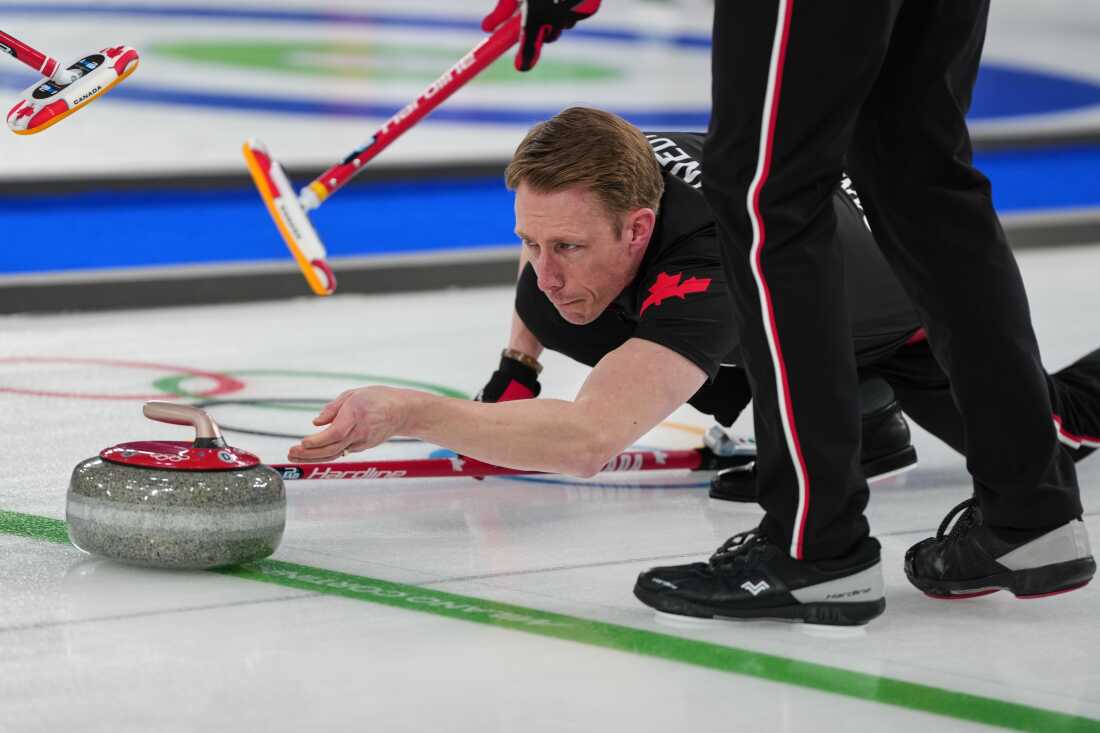
A growing controversy over alleged rule violations has cast a shadow over curling competition at the 2026 Winter Olympics, with accusations of illegal “double-touch” releases involving Canadian and British athletes intensifying scrutiny on the sport.
The dispute, centered on whether players touched a stone twice during delivery, has led to heightened officiating and strained relationships among some of curling’s top teams.
What Triggered the Controversy?
The issue first surfaced during a men’s round-robin match when Sweden’s Oskar Eriksson accused Canada’s Marc Kennedy of touching the stone after release — a violation under international curling rules.
Although Canada secured an 8–6 victory in that game, video footage aired by Swedish broadcaster SVT appeared to show a possible infraction. Kennedy denied intentionally breaking the rules and suggested the accusations may have been part of a broader effort to monitor teams more aggressively.
The controversy escalated the following day during a women’s match between Canada and Switzerland. Canadian skip Rachel Homan was called for the same violation. An umpire halted play and removed her stone, a decision that visibly stunned the Canadian team. Switzerland went on to edge Canada 8–7.
On Monday, similar allegations surfaced against Scotland’s Bobby Lammie during Britain’s match against Germany, reinforcing concerns that the issue is not isolated to one nation.
What Is the Double-Touch Rule?
Following the incidents, World Curling issued a clarification reaffirming that players are not permitted to touch the granite stone once it begins forward motion after release. If a double touch occurs, the stone must be immediately removed from play.
The rule aims to preserve fairness by preventing any potential influence on a stone’s trajectory.
Canada Pushes Back
Canadian players have rejected suggestions of deliberate misconduct. Kennedy said he was uncertain whether a double touch occurred in the heat of the moment but denied intentional wrongdoing. He also implied that increased surveillance may have been designed to catch players off guard.
Homan echoed similar frustration, stating she did not believe she committed any violation and suggesting her team may be facing heightened scrutiny due to earlier accusations involving the men’s squad.
The controversy comes at a difficult time for Canada — historically one of curling’s dominant nations. The country’s mixed doubles team failed to reach the podium, and both the men’s and women’s teams are battling to stay in medal contention during the round-robin stage.
Why This Matters for Olympic Curling
Curling is traditionally known for sportsmanship and mutual respect among competitors. While past equipment debates — such as the sweeping technology dispute nicknamed “Broomgate” — have stirred debate, direct allegations of rule-breaking during Olympic competition are rare.
The tension between longtime rivals Canada and Sweden has been particularly notable. Athletes who once shared a strong off-ice rapport now appear visibly strained in competition.
Beyond individual matches, the controversy touches on broader themes central to the Olympic movement: integrity, transparency and fair play.
What Happens Next?
Officials have increased oversight at the curling venue in Cortina d’Ampezzo, and teams are reportedly reviewing their delivery techniques to avoid further penalties. With medal rounds approaching, every shot carries heightened significance.

Should Canada and Sweden advance to the semifinals, a potential rematch would draw significant global attention — not only for competitive stakes but also for the narrative surrounding these allegations.
As the tournament progresses, the spotlight remains firmly on the ice — and on the officials enforcing the rules.